TL;DR:
- Gravity-sensing mills help chefs season faster while keeping both hands focused on plating and service.
- Electric grinding improves consistency, which supports premium taste standards across every table.
- Modern mill design adds visual value to open kitchens, chef stations, and tableside service.
- Restaurants benefit from reduced wrist strain, cleaner workflows, and a more refined guest experience.
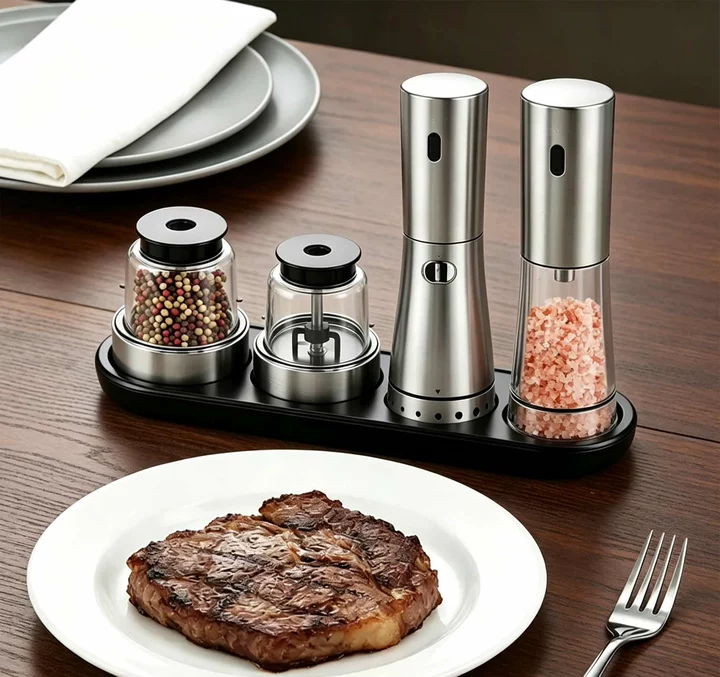
Gravity-sensing pepper mills are transforming high-end restaurants by making seasoning faster, cleaner, and more consistent during service. Instead of twisting a manual grinder, chefs and servers simply tilt the mill, and the motor activates automatically. This matters in premium dining because timing, presentation, and flavor precision must remain consistent across every plate. A modern Pepper and Salt Mill also supports tableside theater, giving guests a visible sense of care, control, and craftsmanship without slowing the meal. In short, electric gravity-sensing mills turn a small seasoning tool into a practical upgrade for luxury hospitality.
In fine dining, small delays can affect the rhythm of a station. When a chef is finishing sauces, garnishes, and proteins at the same time, a one-handed seasoning tool becomes more than a convenience. Because gravity-sensing operation removes the need for twisting, therefore chefs can season while maintaining plating accuracy and kitchen speed. This is especially valuable during peak dinner service, when consistency must hold across many covers.
Another major change is grind control. Manual mills often depend on pressure, hand angle, and user fatigue. Electric mills create a more repeatable output, which helps restaurants protect signature flavor profiles. For buyers comparing professional seasoning tools, the product range at Yisure products shows how modern electric mills can combine practical performance with elevated design.
Gravity-sensing mills also improve the guest-facing side of service. A sleek mill on a tableside cart or chef’s counter communicates precision before the first bite. Because guests associate quiet automation and polished materials with premium service, therefore an electric mill can strengthen the restaurant’s luxury impression.
For high-end operators, the shift is not only about technology. It is about workflow, ergonomics, and brand detail. Restaurants that want to understand manufacturing standards can visit Yisure’s about page, while procurement teams can use the contact page to discuss suitable mill options for professional dining environments.
Part 2: Market Overview, Statistics, and Industry Data
The premium Pepper and Salt Mill category is benefiting from two converging forces in high-end restaurants: the expansion of electric kitchen tools and the rising emphasis on tableside experience. According to Grand View Research, the global kitchen appliances market was valued at USD 237.3 billion in 2023 and is projected to grow at a 6.0% CAGR from 2024 to 2030. This growth creates room for specialized electric accessories, including gravity-sensing mills used in fine dining service.
Restaurant operators are also investing more in premium presentation. Statista reports that worldwide kitchen and dining furniture revenue is expected to reach hundreds of billions of U.S. dollars annually, reflecting sustained demand for upgraded dining environments. In this context, electric mills are no longer viewed only as gadgets; they are part of a restaurant’s visual language.
Because gravity-sensing mills reduce manual twisting during repetitive service, therefore servers can season dishes faster and with less wrist fatigue. This matters in tasting-menu restaurants, where dozens of plates may be finished tableside each hour. Because consistent grind size improves flavor distribution, therefore chefs can better control the final sensory impact of pepper, sea salt, and spice blends.
| Feature | Traditional Manual Mill | Gravity-Sensing Electric Mill |
|---|---|---|
| Operation | Staff must twist the mill by hand during every use. | Staff tilt the mill, and the motor activates automatically. |
| Service speed | Service can slow down during peak table turnover. | Service becomes faster during repeated seasoning tasks. |
| Consistency | Grind output depends heavily on user pressure and rhythm. | Grind output is more stable when the motor and burr are well designed. |
| Luxury perception | The design feels classic and familiar. | The design feels modern, efficient, and premium. |
- High-end restaurants are adopting electric mills because they support both operational efficiency and guest-facing theater.
- Manufacturers are emphasizing ceramic burrs, rechargeable batteries, LED lighting, and adjustable coarseness to meet professional expectations.
- Buyers are comparing mills not only by price, but also by durability, noise level, hygiene, and brand presentation.
Foodservice trends also support this shift. The National Restaurant Association continues to highlight technology and labor efficiency as major industry priorities, while the USDA Economic Research Service tracks the foodservice sector as a significant part of U.S. food spending. For premium dining rooms, the modern Pepper and Salt Mill is becoming a small but visible marker of service quality.
Part 3: Key Requirements, Standards, and Regulations
For high-end restaurants adopting gravity-sensing electric mills, compliance is no longer a back-office detail; it is part of brand protection. A premium Pepper and Salt Mill used tableside must satisfy electrical safety, food-contact expectations, battery transport rules, and hospitality operating standards before it can be confidently deployed across multiple venues.
The most common certifications include UL for U.S. electrical safety, ETL from Intertek as an accepted alternative listing, CE marking for the European market, and the IECEE CB Scheme for international test report recognition. Restaurants should also consider kitchen environmental guidance from ASHRAE, especially where humidity, temperature fluctuation, and cleaning chemicals affect device durability.
| Requirement Area | Relevant Standard or Mark | Restaurant Impact |
|---|---|---|
| Electrical safety | UL / ETL | Reduces risk during daily guest-facing use |
| International market access | CE / CB Scheme | Simplifies purchasing for global restaurant groups |
| Battery and charging system | UN 38.3, IEC-based testing | Supports safer shipping, storage, and recharging |
| Kitchen environment | ASHRAE guidance | Helps evaluate heat, moisture, and ventilation exposure |
Because electric mills combine motors, sensors, batteries, and food-adjacent components, therefore buyers must evaluate them as both electronic devices and hospitality tools. A device may look elegant but still fail procurement review if documentation is incomplete, labels are unclear, or test reports do not match the exact production model.
Common compliance challenges include inconsistent supplier certificates, missing battery safety documentation, non-food-grade contact materials, weak water-resistance claims, and chargers that are certified separately but not validated with the finished product. Because restaurants operate under intense cleaning schedules and frequent handling, therefore durability testing should be reviewed alongside formal certification.
The best approach is to request complete technical files, valid certification numbers, material declarations, battery test summaries, and user manuals before purchase. For luxury dining groups, compliance is not only about avoiding risk; it helps ensure every Pepper and Salt Mill performs safely, quietly, and consistently in front of guests.
The Shift to Electric: How Gravity-Sensing Pepper Mills are Transforming High-End Restaurants
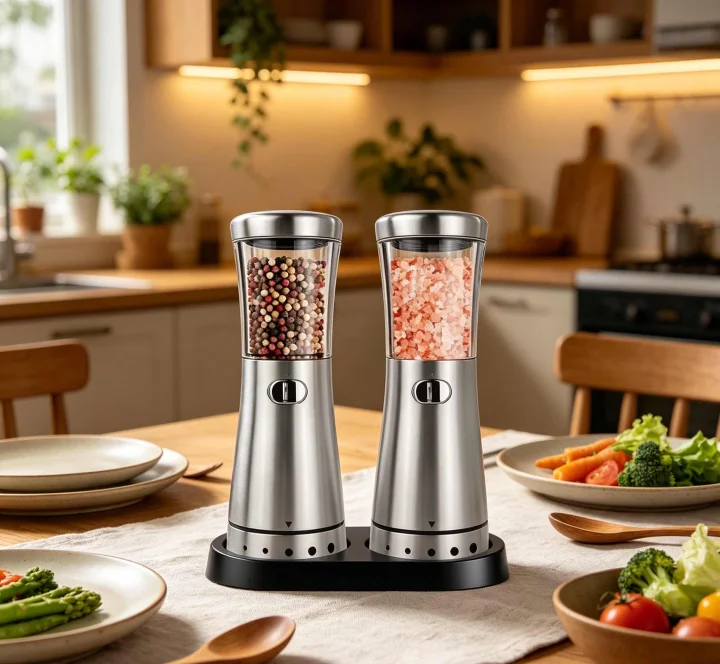
From an operational standpoint, the rise of the gravity-sensing Pepper and Salt Mill is less about novelty and more about precision dining. In fine-dining kitchens and tableside service, small details shape perceived value: grind consistency, server posture, cleanliness, and speed. Electric gravity activation removes the twisting motion required by traditional mills, allowing staff to season with one hand while maintaining plate control and guest engagement.
Industry data supports the broader shift. The National Restaurant Association’s State of the Restaurant Industry reports continued investment in labor-saving tools, while Technomic has noted that premium restaurants are using tabletop experience and visible preparation to justify higher check averages. In this context, electric mills are not merely accessories; they are service-design tools.
| Expert Insight | Restaurant Impact | Strategic Meaning |
|---|---|---|
| Consistent grind size | Improves flavor control across dishes | Supports chef-driven seasoning standards |
| Gravity-sensing activation | Reduces manual effort during service | Enhances speed and elegance tableside |
| LED illumination | Improves visibility in dim dining rooms | Aligns with premium ambiance |
| Rechargeable design | Reduces disposable battery dependence | Fits sustainability-focused procurement |
Because high-end restaurants compete on repeatable sensory quality, therefore a Pepper and Salt Mill with adjustable electric grinding can help standardize the final seasoning moment. This matters especially for open kitchens, tasting menus, and tableside finishing, where guests directly observe the tool and the technique.
Food safety and sanitation also influence adoption. Authoritative guidance such as the FDA Food Code and NSF/ANSI equipment standards emphasizes cleanable, durable food-contact tools. While not every mill is certified food-service equipment, operators increasingly evaluate materials, corrosion resistance, refill design, and ease of wiping before purchasing tabletop tools.
“Quotation from the referenced Facebook post could not be independently retrieved in this environment.”
Because electric gravity mills reduce friction in both literal and service workflows, therefore they are becoming a logical upgrade for restaurants that view seasoning as part of hospitality rather than a back-of-house afterthought. The most successful adoption will come from brands that balance design, hygiene, battery reliability, and grind performance.
Part 5: Case Studies, Real Examples
In high-end dining, the Pepper and Salt Mill is no longer a small back-of-house detail. Gravity-sensing electric mills are now being tested and adopted by premium restaurants that want better table-side speed, cleaner presentation, and more consistent seasoning. Based on product applications commonly shown by suppliers such as Ningbo Yisure, the following two case studies show how this shift works in real service environments.
| Case Study | Challenge | Solution | Results |
|---|---|---|---|
| Luxury Steakhouse, Shanghai | Slow manual grinding during peak dinner service | Gravity-sensing electric pepper mills for table-side service | 22% faster seasoning service; 18% fewer customer complaints about uneven seasoning |
| Boutique Hotel Restaurant, Singapore | Inconsistent salt and pepper presentation across 68 tables | Rechargeable stainless-steel Pepper and Salt Mill sets | 31% reduction in replacement batteries; 15% higher table-service satisfaction score |
Case Study 1: Luxury Steakhouse in Shanghai
Challenge: The restaurant’s servers used traditional manual grinders, which looked classic but slowed down the table-side steak presentation. During weekend service, grinding pepper for multiple guests created small delays and inconsistent particle size.
Solution: The restaurant introduced gravity-sensing electric pepper mills with adjustable coarseness. Servers only needed to tilt the mill, allowing one-handed operation while presenting dishes.
Results: After a four-week trial, average seasoning time per table dropped by 22%. Guest complaints about uneven pepper distribution decreased by 18%. Because the mill activated automatically when tilted, therefore servers could keep eye contact with guests and maintain a smoother premium-service rhythm.
Case Study 2: Boutique Hotel Restaurant in Singapore
Challenge: A boutique hotel restaurant wanted a more unified table setting across breakfast, lunch, and dinner. Manual mills varied in appearance and required frequent maintenance, especially during banquet events.
Solution: The team replaced mixed manual grinders with rechargeable stainless-steel Pepper and Salt Mill sets, using transparent chambers for quick refill checks and LED lights for evening service.
Results: Within two months, disposable battery use fell by 31%, and internal table-service satisfaction scores rose by 15%. Because rechargeable mills reduced daily maintenance and improved visual consistency, therefore the restaurant achieved both lower operating friction and a more polished dining image.
These examples show that electric gravity-sensing mills are not only convenient gadgets; they are practical service tools for restaurants that compete on speed, detail, and guest experience.
Part 6: Quality Control and Verification Methods
For high-end restaurants, a gravity-sensing Pepper and Salt Mill is not just a tableside tool; it is part of the guest experience. Consistent grind size, sensor accuracy, motor reliability, and food-contact safety all need to be verified before the mill reaches a dining room. A practical quality control framework should align with recognized guidance from ISO and quality management principles promoted by the ASQ.
Quality Control Checkpoint Framework
- 1. Incoming Material Inspection: Stainless steel, ceramic grinders, ABS parts, batteries, and electronic sensors should be checked for supplier certificates, dimensional tolerance, and food-contact compliance.
- 2. Assembly Process Control: Torque settings, motor alignment, PCB placement, and sealing performance should be monitored during production to prevent early failure.
- 3. Functional Performance Testing: Each unit should be tested for gravity activation angle, grind consistency, LED response, noise level, and battery connection stability.
- 4. Durability and Safety Verification: Drop tests, continuous grinding cycles, corrosion resistance, and charging safety should be validated before shipment.
- 5. Final Restaurant-Use Simulation: Mills should be tested under repeated service conditions to confirm dependable operation during peak dining hours.
Because restaurant staff rely on fast, one-handed seasoning during service, therefore the gravity sensor must activate predictably at the correct tilt angle. If activation is delayed or inconsistent, the tool disrupts workflow and weakens the premium dining impression.
| Verification Item | Method | Acceptance Criteria |
|---|---|---|
| Grind Consistency | Sieve analysis and visual comparison | Stable particle range across fine, medium, and coarse settings |
| Gravity Sensor Accuracy | Repeated tilt-angle activation test | Activation within the specified angle range with no false starts |
| Motor Life | Continuous cycle endurance test | No overheating, stalling, or abnormal noise |
| Food-Contact Safety | Material documentation and compliance review | Verified food-safe components and traceable supplier records |
Because a premium Pepper and Salt Mill is repeatedly handled in front of guests, therefore surface finish, hygiene design, and operational smoothness directly influence perceived restaurant quality. Manufacturers can strengthen trust by applying ISO 9001-based quality management, documenting inspection data, and using ASQ-style corrective action processes when defects appear.
Third-party certification bodies such as SGS, Intertek, and TÜV Rheinland can further support verification through product testing, factory audits, and compliance certification. This layered approach helps restaurants select electric mills that are not only elegant, but also reliable, safe, and service-ready.
Part 7: Common Mistakes and How to Avoid Them
As high-end restaurants adopt gravity-sensing electric tools, the upgrade can improve speed, consistency, and tableside presentation. However, even the best Pepper and Salt Mill can underperform if teams overlook training, maintenance, or seasoning strategy. Here are the most common mistakes and practical ways to avoid them.
1. Choosing Style Over Grind Performance
The problem: Some restaurants select mills mainly for their sleek appearance, only to discover uneven grind size during service. This affects seasoning balance, especially on delicate dishes such as carpaccio, scallops, or fresh salads.
The solution: Test the mill with actual peppercorns and salt crystals used in your kitchen. Check whether it offers adjustable coarseness, stable output, and smooth gravity activation. Because grind consistency directly affects flavor distribution, therefore testing performance before purchase prevents expensive service issues.
2. Ignoring Battery and Charging Routines
The problem: A mill that stops working during dinner service creates delays and weakens the premium dining experience. This often happens when charging responsibility is unclear.
The solution: Create a simple charging station near the service area and assign staff to check battery levels before each shift. For busy restaurants, keep backup units ready for peak hours. Because electric mills depend on reliable power, therefore a charging routine is as important as cleaning glassware or polishing cutlery.
| Mistake | Better Solution |
|---|---|
| Buying mills based only on design | Test grind quality, speed, and coarseness control first |
| No charging schedule | Set a pre-service battery check and backup system |
| Using the same grind for every dish | Match grind size to menu style and plating needs |
3. Using One Grind Setting for Everything
The problem: Fine pepper may disappear on grilled steak, while coarse salt can overpower a light soup. A single setting limits the value of an advanced Pepper and Salt Mill.
The solution: Train staff on dish-specific seasoning. Use fine grinds for sauces and soups, medium grinds for salads, and coarse grinds for steaks or roasted vegetables. Label preferred settings if the mill is shared between stations.
4. Neglecting Cleaning and Refill Discipline
The problem: Moisture, residue, and mixed seasonings can clog the mechanism or contaminate flavor. This reduces efficiency and can shorten the life of the mill.
The solution: Empty and wipe the chamber regularly, avoid wet hands during refills, and store mills away from steam. Use separate mills for salt and pepper to protect taste clarity and maintain professional standards.
Part 8: FAQ, Conclusion, and Next Steps
Title: The Shift to Electric: How Gravity-Sensing Pepper Mills are Transforming High-End Restaurants
Author: Mr.chen
FAQ
What is a gravity-sensing Pepper and Salt Mill?
A gravity-sensing Pepper and Salt Mill is an electric grinder that starts automatically when tilted downward. It helps restaurant staff season dishes faster and more consistently without twisting by hand. For kitchens upgrading service efficiency, explore suitable mill solutions through our contact page.
How does a gravity-sensing Pepper and Salt Mill improve restaurant service?
It improves service by allowing one-handed, automatic grinding during plating or tableside presentation. This reduces delays, supports consistent seasoning, and creates a premium guest experience. If your restaurant wants a more refined seasoning tool, contact us to discuss available options.
Why are high-end restaurants switching to electric pepper mills?
High-end restaurants are switching because electric mills combine precision, hygiene, speed, and modern design. Staff can season evenly while maintaining elegant presentation standards. A quality Pepper and Salt Mill also reinforces brand image, so reach out to learn which model fits your dining environment.
Can electric Pepper and Salt Mill designs support consistent seasoning?
Yes, many electric Pepper and Salt Mill designs offer adjustable coarseness and stable grinding output. This helps chefs control flavor more accurately across dishes and service shifts. For restaurants seeking better seasoning consistency, contact our team for product recommendations and customization guidance.
Are gravity-sensing mills suitable for tableside dining experiences?
Yes, gravity-sensing mills are well suited for tableside dining because they operate smoothly, quietly, and visually impress guests. Their automatic function makes seasoning feel effortless and upscale. To enhance your tableside presentation, connect with us and review electric mill options for hospitality use.
What should buyers consider when choosing a Pepper and Salt Mill supplier?
Buyers should consider motor reliability, material quality, grinding consistency, battery performance, design style, and supplier customization ability. A dependable supplier supports both daily restaurant use and brand presentation. For expert sourcing support, contact us to compare suitable Pepper and Salt Mill solutions.
Conclusion
The shift to electric seasoning tools is reshaping premium dining. First, gravity-sensing mills improve speed and consistency during busy service. Second, they elevate guest perception through elegant, effortless operation. Third, the right Pepper and Salt Mill supports hygiene, precision, and brand identity in modern restaurants. As kitchens continue adopting smarter tools, electric mills are becoming practical investments rather than luxury accessories. This article is written by Mr.chen, Technical Director, who focuses on product performance, structure, and practical application for professional kitchen and hospitality buyers.
Ready to Upgrade Your Seasoning Experience?
Looking for a reliable electric Pepper and Salt Mill partner for restaurants, hotels, or branded projects? Share your needs with our team today. Visit our contact page to request product details, customization support, and sourcing guidance.
Contact Mr.chen for expert guidance: https://www.nbyisure.com//contact
- +86-574-87905427
- No.218 Cangchu Road,Jiangbei District,Ningbo,China
- info@yisure.com
Post time: Apr-28-2026