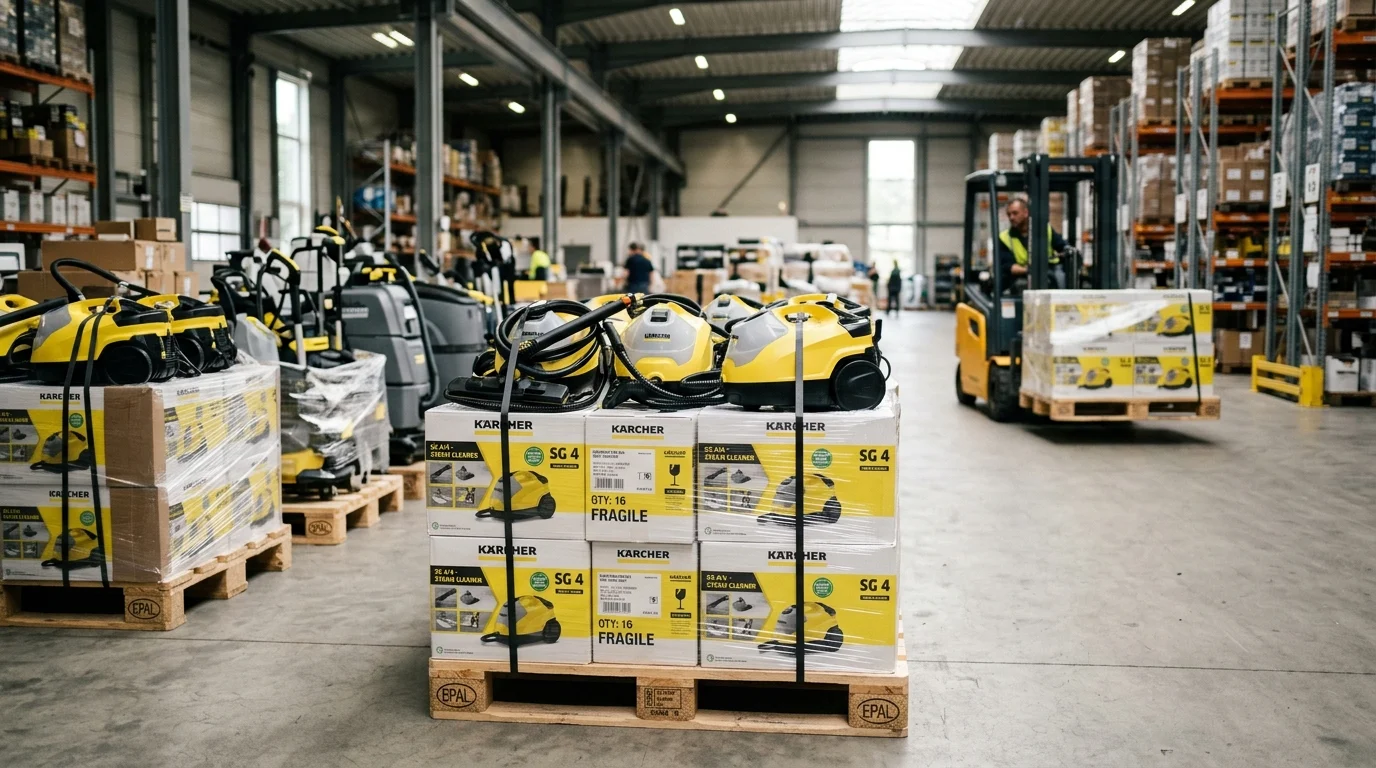
Why the European Green Deal 2026 Matters for Steam Cleaner Sourcing
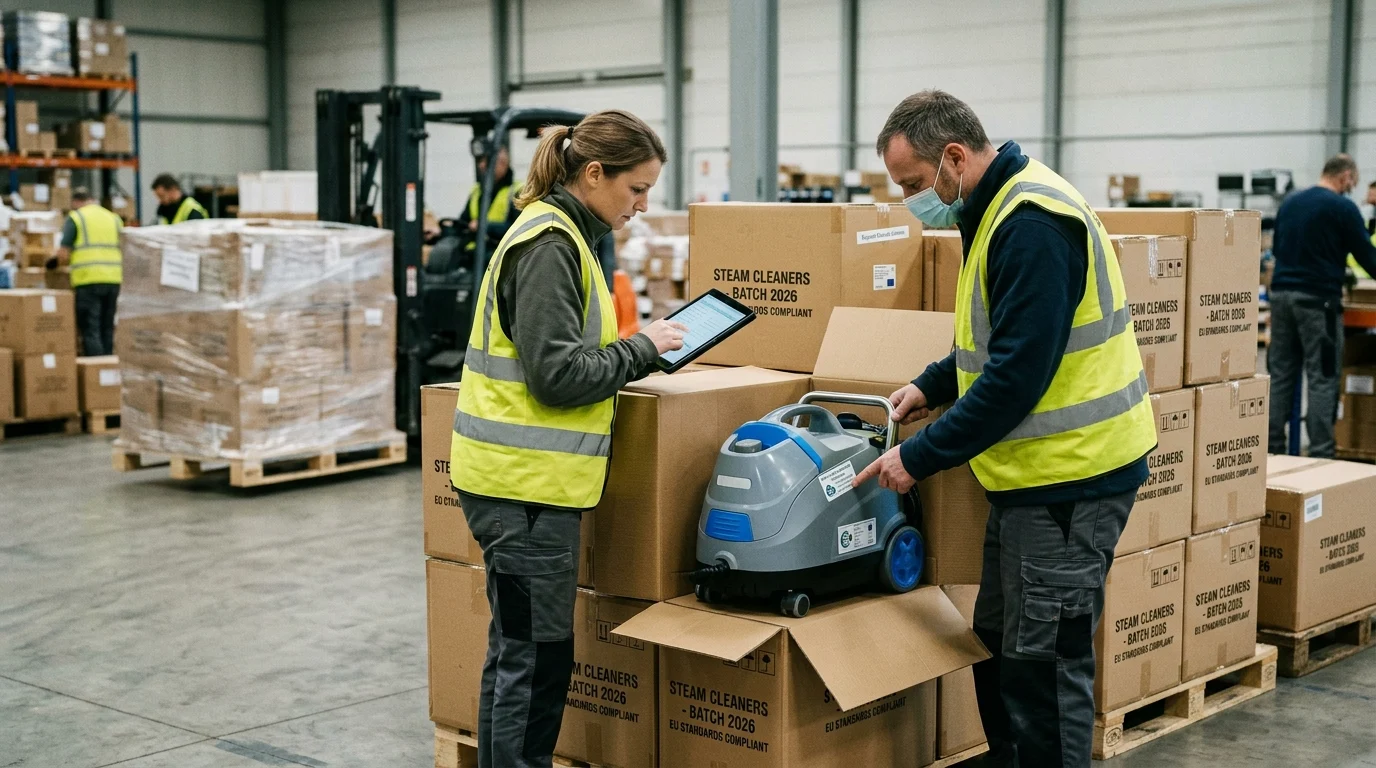
If you source steam cleaners for the European market, the landscape is shifting rapidly. The European Green Deal’s 2026 milestones are moving from theoretical policy to strict customs enforcement. Eco-design directives are rewriting the rulebook for importers, moving beyond basic CE or RoHS compliance into an era of mandatory circularity, repairability, and extreme energy efficiency.
2026 is the hard deadline for new regulations targeting household and commercial appliances. The “Right to Repair” directive and the Ecodesign for Sustainable Products Regulation (ESPR) dictate that steam cleaners must be designed for end-of-life. If factory partners aren’t updating tooling and component sourcing, shipments could face severe delays or rejection at EU borders.
The Green Deal is an immediate supply chain reality. While the transition will disrupt the availability of cheap, low-tier models, forward-thinking B2B buyers can use this opportunity to consolidate vendor lists, elevate quality, and lock in future-proofed suppliers.
Policy impact on sourcing costs and margins
The 2026 regulations will cause a noticeable bump in baseline sourcing costs. Suppliers must invest in better boiler insulation, higher-grade recyclable plastics, and rigorous testing, likely driving a 10% to 15% increase in FOB prices for entry-level models. To protect margins, procurement teams should negotiate longer-term contracts and absorb potential MOQ increases to offset factory compliance investments.
Most exposed steam cleaner categories
The most exposed categories are cheap, low-wattage handheld steamers and entry-level floor mops relying on glued, unrepairable plastic housings. Because new rules emphasize repairability, products where heating elements or batteries cannot be easily replaced are highly vulnerable. Conversely, higher-end canister models with modular designs are better positioned to survive the transition.
Early priorities for EU market access planning
For smooth EU customs clearance in 2026, prioritize supplier audits immediately. Initiate a comprehensive review of current factories’ technical files to verify their roadmap for integrating recycled materials and providing documentation for Digital Product Passports. Waiting until late 2025 to ask these questions risks severe stockouts.
Product Scope and Classification for Steam Cleaners
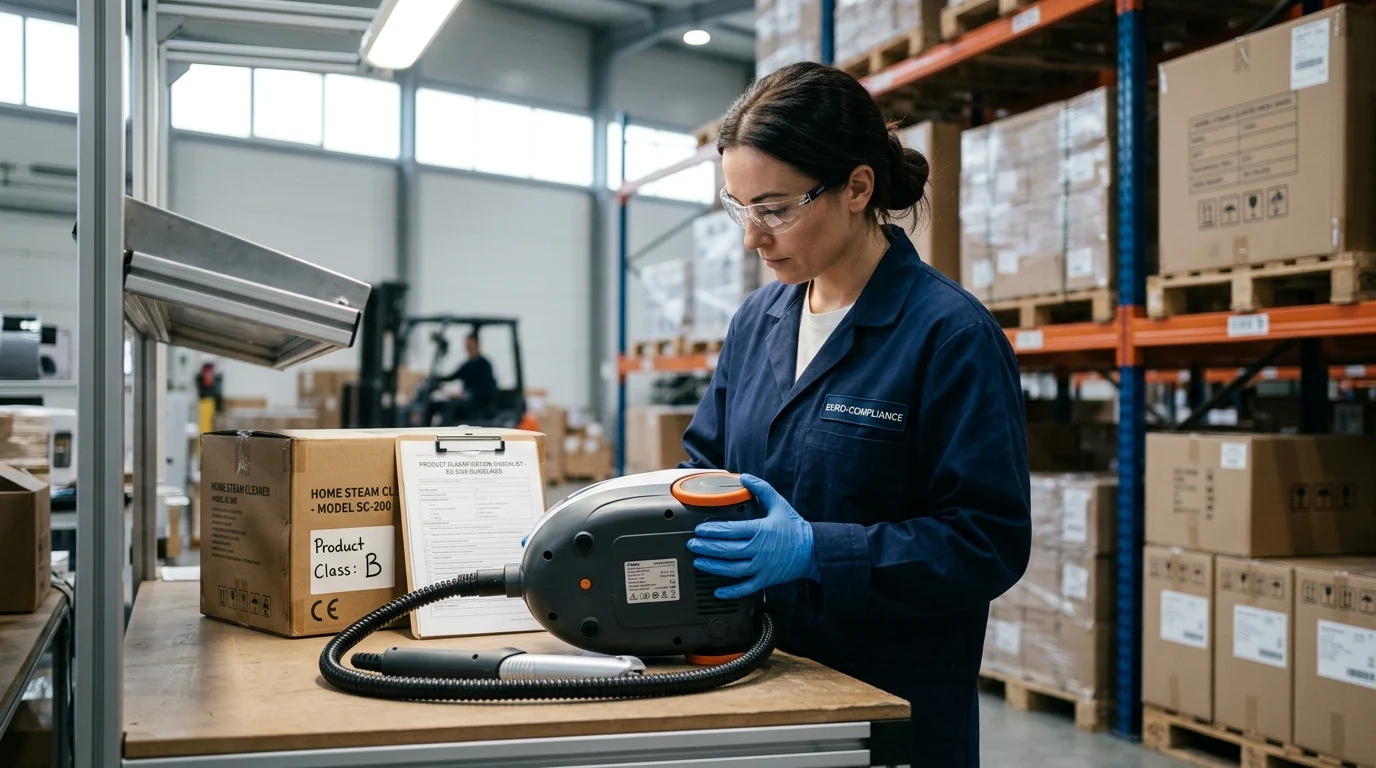
Understanding how steam cleaners are classified under new EU frameworks is critical. Customs and market surveillance bodies categorize products based on intended use, power draw, and water capacity. Getting this classification right dictates the exact testing standards and eco-design criteria suppliers must meet.
Importers often assume a one-size-fits-all approach, but a lightweight domestic steam mop faces vastly different energy labeling and standby power limits compared to heavy-duty Industrial Cleaning Equipment. Using the wrong Harmonized System (HS) code or misrepresenting the duty cycle triggers intense scrutiny from local authorities.
Procurement strategies must involve a granular breakdown of product scope before issuing a Purchase Order. Clearly defining whether an import is a consumer-grade appliance or a professional tool dictates everything from power cord thickness to spare parts availability over the next decade.
Household vs professional product scope
Household steam cleaners face strict consumer protection and energy-efficiency mandates, including standby power limits and mandatory end-user repair manuals. Professional models face tighter scrutiny regarding durability, continuous operation safety, and commercial warranty support. Clearly define the target market in supplier agreements.
Attributes under closer review
Specific attributes are under a microscope for 2026. Regulators demand minimal heat loss for boiler efficiency. Hard-to-recycle mixed plastics are being phased out, and adhesives used to seal water tanks are reviewed for hazardous chemicals under updated REACH guidelines.
Classification risks in cross-border sourcing
“Classification creep” is a major cross-border sourcing risk. If a supplier tweaks a household model to export as a professional unit to bypass consumer energy labels, customs officials may flag the entire container upon finding it lacks professional durability. Always have third-party agencies verify classification pre-shipment.
Key Steam Cleaner Specifications for 2026-Ready Sourcing
Specification sheets for a new B2B Steam Cleaner look vastly different today. Beyond steam pressure and heat-up times, compliance must be engineered directly into the Bill of Materials (BOM). A 2026-ready steam cleaner is fundamentally modular, highly efficient, and transparently sourced.
Repairability mandates dictate that frequently failing components—like water pumps and heating elements—must be accessible using standard tools. Ultrasonic welding on main housings is unacceptable if it prevents switch replacement. Boiler energy efficiency must be optimized to draw less peak wattage while maintaining steam output, requiring better insulation and smarter thermostats.
Focus heavily on documentation. Factories claiming to use recycled ABS plastic must provide traceability certificates. Updating spec sheets is the most critical step to ensure product lines remain legal and competitive in Europe.
Performance specs that affect sourcing decisions
Balance performance with new energy caps. Heat-up time remains crucial, but suppliers must achieve sub-3-minute heat-ups using better thermal blocks rather than simply increasing wattage. Consistent steam pressure (typically 3.5 to 4.5 bar for mid-range models) must be maintained without excessive power cycling.
Material and component choices with compliance impact
Material selection is heavily impacted. Source models utilizing Post-Consumer Recycled (PCR) plastics for non-structural components. Internal wiring and brass fittings must strictly adhere to the latest RoHS exemptions for lead-free components. Insist on universally standardized screws over proprietary fasteners to meet Right to Repair mandates.
Labeling, durability, and repairability requirements
By 2026, labeling will likely require scannable QR codes linking to a Digital Product Passport detailing the environmental footprint and repair instructions. Durability testing must prove units withstand thousands of heating/cooling cycles, and suppliers must legally guarantee critical spare parts availability for 7-10 years post-manufacture.
Legacy vs 2026-ready specification priorities
| Feature | Legacy Sourcing (Pre-2024) | 2026-Ready Sourcing |
|---|---|---|
| Housing Assembly | Glued or ultrasonically welded | Screwed, easily dismantled |
| Plastics | 100% Virgin ABS/PP | Minimum 30% PCR plastics |
| Spare Parts | 1-2 years availability | 7-10 years mandatory availability |
| Boiler Insulation | Basic or none | High-grade thermal wrapping |
How to Evaluate Steam Cleaner Suppliers
Evaluating factories for Export Quality Steamers now requires a deep dive into engineering capabilities, supply chain transparency, and adaptability to EU legislation. Generic certification badges are no longer sufficient.
Look for suppliers treating compliance as a core competency. Ideal factories are familiar with the Ecodesign directive and have R&D staff working on modular designs. An inability to discuss Digital Product Passport strategies is an immediate dealbreaker. Partners must proactively update operations.
Financial stability is paramount. Developing 2026-ready models requires significant capital expenditure for new molds, testing equipment, and certification fees. Prioritize established manufacturers with a proven track record of exporting to strict markets like Germany or France, as they are already absorbing these upgrade costs.
Questions on technical files and test reports
When vetting suppliers, immediately request their Technical Construction File (TCF). Ask who conducts their CE and RoHS testing, if they have in-house lifecycle testing for 10-year durability claims, and if they can provide a full BOM tracing recycled plastics origins. Quick production of these documents indicates strong capability.
MOQ, customization, and landed cost impact
Upgrading to compliant materials often impacts Minimum Order Quantities (MOQs). Factories may require higher MOQs to justify sourcing certified PCR plastics or custom heating elements. Calculate how these MOQs and increased unit costs impact cash flow and total landed costs.
Key supplier red flags
A major red flag is a supplier claiming they can meet all 2026 regulations without price or lead time increases. Compliance costs money. Other warnings include an inability to guarantee spare parts production for 7-10 years or refusing third-party compliance audits of sub-tier component suppliers.
OEM vs ODM under EU compliance pressure
Under new EU rules, the importer holds ultimate liability. Buying off-the-shelf ODM products leaves you at the mercy of the factory’s compliance standards. Shifting toward OEM—where you own the tooling and control the BOM—offers better protection, allowing you to dictate material specs and ensure long-term repairability.
Compliance and Documentation Checks for Importers
Incoming EU regulations bring massive bureaucratic requirements. Importers must manage extensive datasets about purchased products, as clearing customs with a basic commercial invoice and a one-page Declaration of Conformity (DoC) is ending.
Documentation workflows must be airtight. Customs spot checks will require comprehensive proof of eco-design compliance, including detailed lifecycle assessments, energy efficiency test reports from accredited labs, and clear evidence of repairability standards.
Integrate documentation checks into every purchasing stage. Implement strict gateways: no PO is issued without a preliminary compliance review, and no balance payment is released until final, verified test reports are secured. Do not wait until goods are shipped to request REACH certificates.
Core documentation required for EU imports
Your import dossier must include a highly detailed Declaration of Conformity, full CE test reports (LVD, EMC, RoHS, REACH), and updated Ecodesign test results. Moving forward, documentation supporting the Digital Product Passport—including material composition data, carbon footprint estimates, and a spare parts catalog—will be mandatory.
Requirements that may tighten sourcing workflows
The volume of required testing will extend lead times. Accredited labs are bottlenecked as importers rush to certify 2026 ranges. Build an extra 3 to 4 weeks into your sourcing workflow for testing and document verification, adjusting inventory forecasting to avoid stockouts.
Checks before PO approval, shipment, and customs entry
Create a hard checklist. Before PO approval: verify factory ISO certifications and BOM compliance. Before shipment: require pre-shipment inspections checking packaging recyclability and labeling accuracy. Before customs entry: ensure digital files are uploaded to your broker and physical products carry updated energy and CE markings.
Packaging, Logistics, and Total Landed Cost Changes
The EU’s Packaging and Packaging Waste Directive (PPWD) is evolving alongside product regulations. Importers must evaluate the entire physical footprint. Compliant steam cleaners packed in unrecyclable expanded polystyrene (EPS) foam will still face massive fines or border rejections.
Packaging shifts fundamentally change freight economics. Moving from bulky EPS foam to molded paper pulp and optimizing box dimensions eliminates empty space, allowing more units per pallet. This redesign is a crucial lever to offset rising factory costs.
Landed cost models for 2026 must factor in new lines: increased Extended Producer Responsibility (EPR) fees based on packaging recyclability, potential Carbon Border Adjustment Mechanism (CBAM) impacts, and higher upfront costs for eco-friendly materials. This requires a complete recalculation of sourcing math.
Packaging updates for recyclability and protection
Actively phase out single-use plastics in packaging. Replace accessory polybags with paper wrapping and swap EPS foam inserts for molded pulp or corrugated cardboard engineered for high-impact protection. Outer cartons must use water-based inks and clearly display EU-tailored recycling sorting instructions.
Freight economics driven by pack and product design
Forcing suppliers to redesign steam cleaners for modularity (e.g., detachable handles and hoses) can shrink retail box sizes by up to 15%. This reduction translates to better container utilization. Fitting extra units into a 40HQ container dilutes per-unit ocean freight costs, protecting margins against compliance fees.
Cost lines to recalculate for 2026
Overhaul your total landed cost model. Add line items for increased third-party lab testing fees, higher EPR contributions in target EU countries, slightly higher BOM costs for PCR materials, and the administrative costs of maintaining the Digital Product Passport database.
Pre-2026 vs 2026-ready landed cost model
| Cost Component | Pre-2026 Model (Typical) | 2026-Ready Model (Projected) |
|---|---|---|
| Factory FOB Price | Baseline | +10% to +15% (Materials/R&D) |
| Testing & Certification | $1,500 per model | $3,500+ per model (Ecodesign/Lifecycle) |
| Packaging Costs | Low (EPS foam) | Moderate (Molded pulp/Paper) |
| Freight per Unit | Baseline | -5% (Better container utilization) |
| EPR / Compliance Fees | Low | High (Strict waste directives) |
Turning Compliance into Channel Advantage
The 2026 Green Deal is a strategic moat. Suppliers and importers who drag their feet will be flushed out, leaving opportunities for early adapters. Embracing strict eco-design principles achieves compliance and builds a premium narrative around product lines.
For B2B distributors, a fully documented, 2026-ready catalog is a massive selling point. Retailers and commercial buyers fear non-compliant inventory. Proving that Energy-efficient Cleaners meet upcoming Right to Repair and circularity mandates elevates you from a commodity vendor to a strategic partner.
Sustainable Sourcing requires more upfront investment but protects market access. Use compliance status to win accounts previously loyal to legacy brands, proving you can deliver superior, future-proofed technology cost-effectively.
Best-fit channel strategies for compliant ranges
The best channels for compliant ranges are major DIY chains, eco-conscious department stores, and professional B2B catalogs. These buyers have corporate ESG targets. Providing products with verifiable recycled content and energy efficiency data helps them meet sustainability goals, making your range indispensable.
Using compliance to protect margin and win tenders
Government and institutional tenders increasingly require strict green purchasing criteria. If steam cleaners are certified for repairability and low energy consumption, you can qualify for lucrative public sector contracts. This allows commanding a premium price, protecting margins from the consumer retail race-to-the-bottom.
Balancing low-cost sourcing with long-term market access
Chasing the lowest FOB price at the expense of quality is obsolete. The new strategy is “total cost of compliance.” Paying a supplier slightly more per unit for proper materials and testing is cheaper than having a container seized at port. Balance costs by committing larger volumes to fewer, highly capable suppliers.
Key Takeaways and FAQ
Navigating the European Green Deal 2026 requires a proactive procurement approach. The future belongs to modular, repairable, and energy-efficient designs. By auditing suppliers, revamping documentation workflows, and rethinking packaging, you can turn a regulatory hurdle into a competitive advantage.
Time is of the essence. Tooling changes and material sourcing adjustments take months to implement and test. Procurement teams waiting until late 2025 to address Ecodesign and Digital Product Passports will be locked out of the market.
Below are common questions regarding this massive shift in European trade policy.
Immediate actions for procurement teams
Map current SKUs against upcoming Ecodesign requirements. Issue a formal questionnaire to suppliers asking for their 2026 compliance roadmap regarding recycled plastics, repairability, and documentation. Initiate a packaging audit to eliminate EPS foam and single-use plastics immediately.
Will 2026 rules increase MOQ, testing costs, and lead times?
Yes. Expect testing costs to double as lifecycle and energy efficiency tests become more complex. Lead times will increase by 3-4 weeks due to lab bottlenecks. MOQs will rise as factories need larger orders to justify procuring certified PCR materials and custom modular components.
Which suppliers are best positioned for EU buyers?
The best-positioned suppliers already have a strong export footprint in highly regulated markets like Germany, Switzerland, or the Nordics. Look for manufacturers with in-house testing labs, dedicated compliance officers, and a history of producing OEM products rather than off-the-shelf ODM goods.
How to update contracts, quality agreements, and forecasts
Update vendor contracts to include strict clauses on spare parts availability (mandating 7-10 years). Quality agreements must specify acceptable percentages of recycled materials and exact packaging specs. Adjust forecasts for longer testing lead times, ordering earlier to prevent inventory gaps.
Related reading: Industrial Cleaning Equipment