Steam Cleaner Certification Standards for US and EU Markets
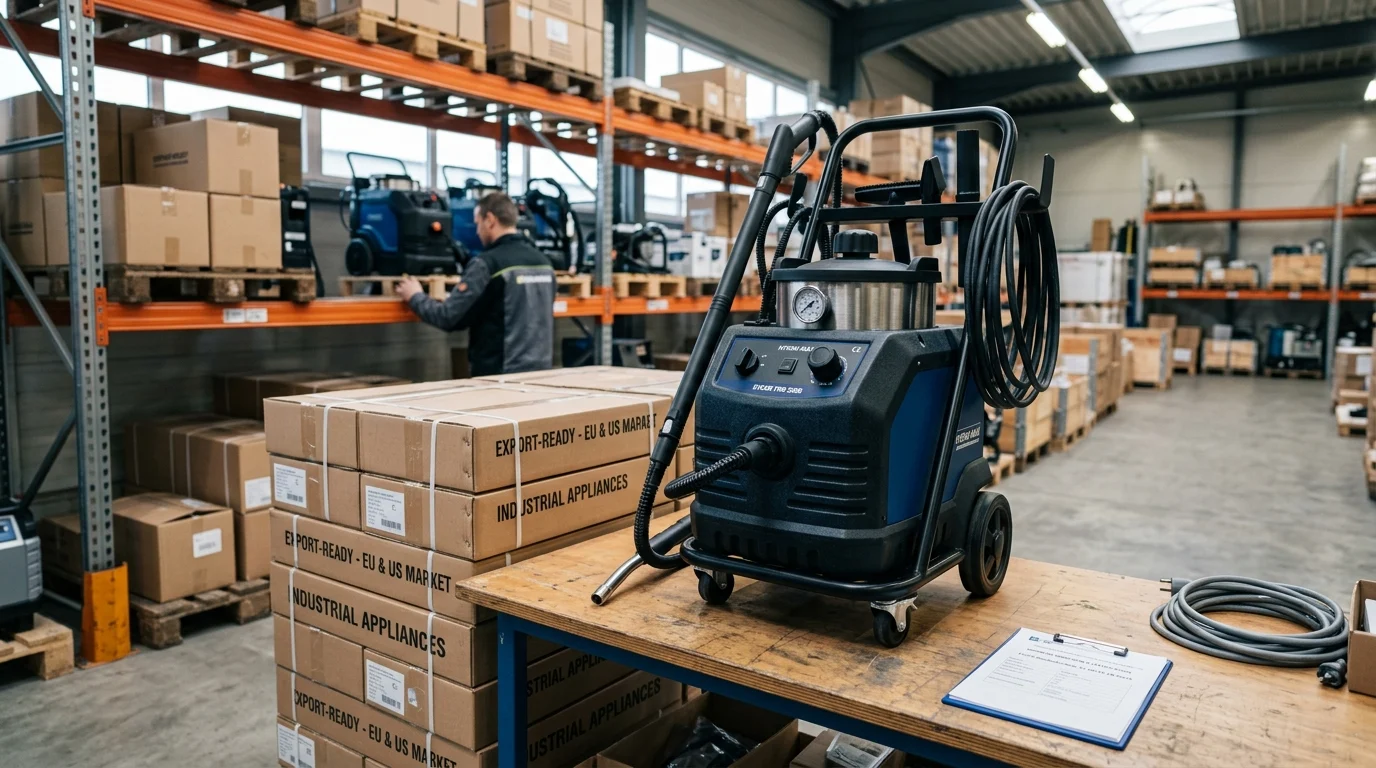
Why Steam Cleaner Certification Matters for US and EU Market Access
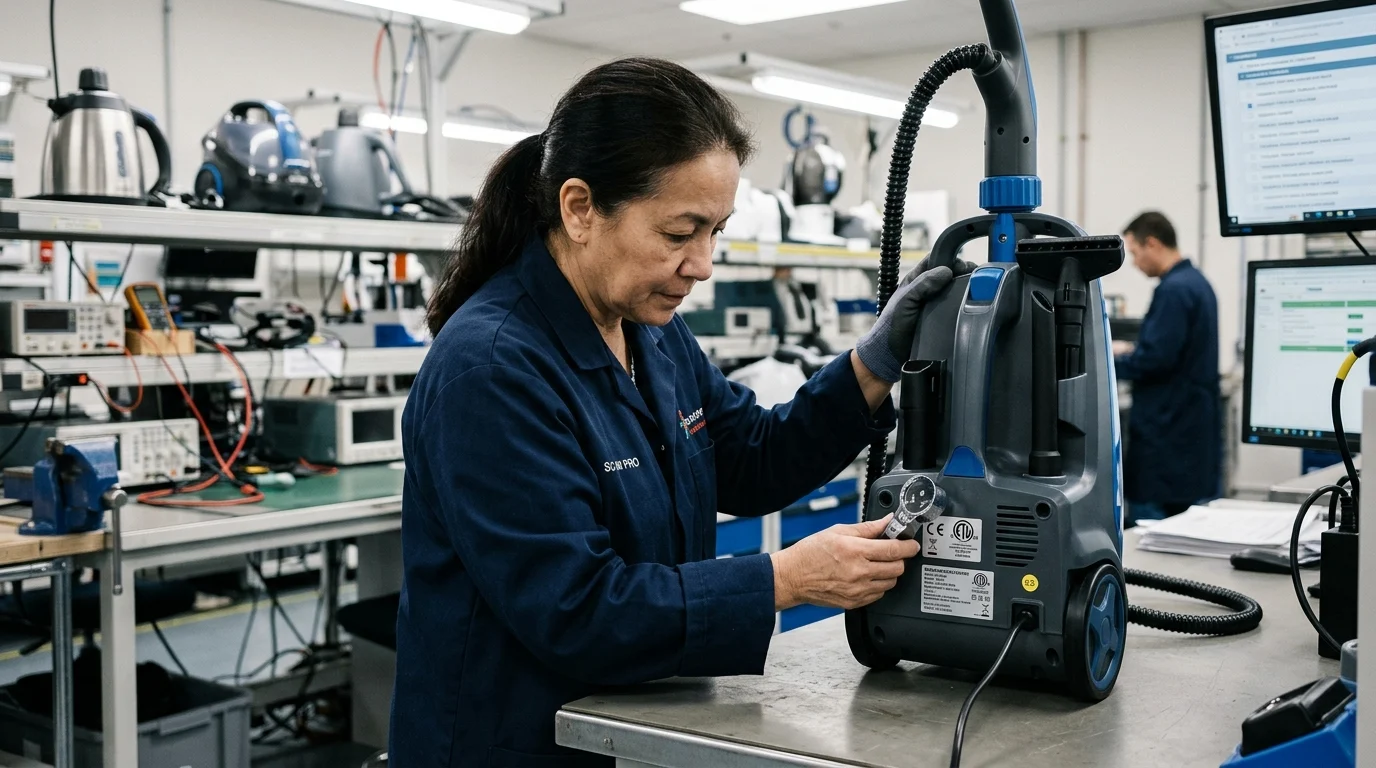
If you have been in the import business for any length of time, you already know that bringing electrical appliances across borders is not something you can just leave to chance. For steam cleaners specifically, the stakes are even higher. We are dealing with products that combine water, high pressure, and mains electricity—a trifecta of potential liability. Without the right certifications, you are not just risking a poor customer experience; you are risking catastrophic product failures, fires, or scalding injuries.
From a procurement standpoint, I always tell my team that compliance is the very first filter we use when evaluating a new factory. If a supplier cannot prove their units meet the strict standards of the US and EU markets, the conversation ends there. Certification is the passport that allows your goods to travel; without it, your investment is dead in the water before it even leaves the port.
Compliance as a Market-Entry and Risk-Control Issue
For wholesale buyers, compliance is fundamentally about risk control. When you import a product, your company assumes the liability of the manufacturer in the eyes of local regulators. Ensuring that your units meet strict safety directives protects your bottom line from massive recall costs, legal settlements, and brand damage. It is your non-negotiable ticket into the market.
Impact on Retailer Acceptance and Customs Clearance
Getting an uncertified electrical appliance past US Customs and Border Protection or onto the shelves of a major retailer like Walmart or Amazon is practically impossible. Customs agencies actively flag high-risk categories like heating appliances. Furthermore, major retail channels demand uploaded proof of testing from recognized laboratories before they will even generate a vendor SKU.
Product Types That Trigger Different Requirements
Not all steam cleaners are treated equally by regulators. A low-wattage handheld steamer for garments will have different testing parameters compared to a high-pressure commercial floor steamer. The larger the boiler tank, the higher the pressure, and the higher the wattage, the more rigorous the safety and pressure vessel directives become in both markets.
Steam Cleaner Product Definitions and Classifications
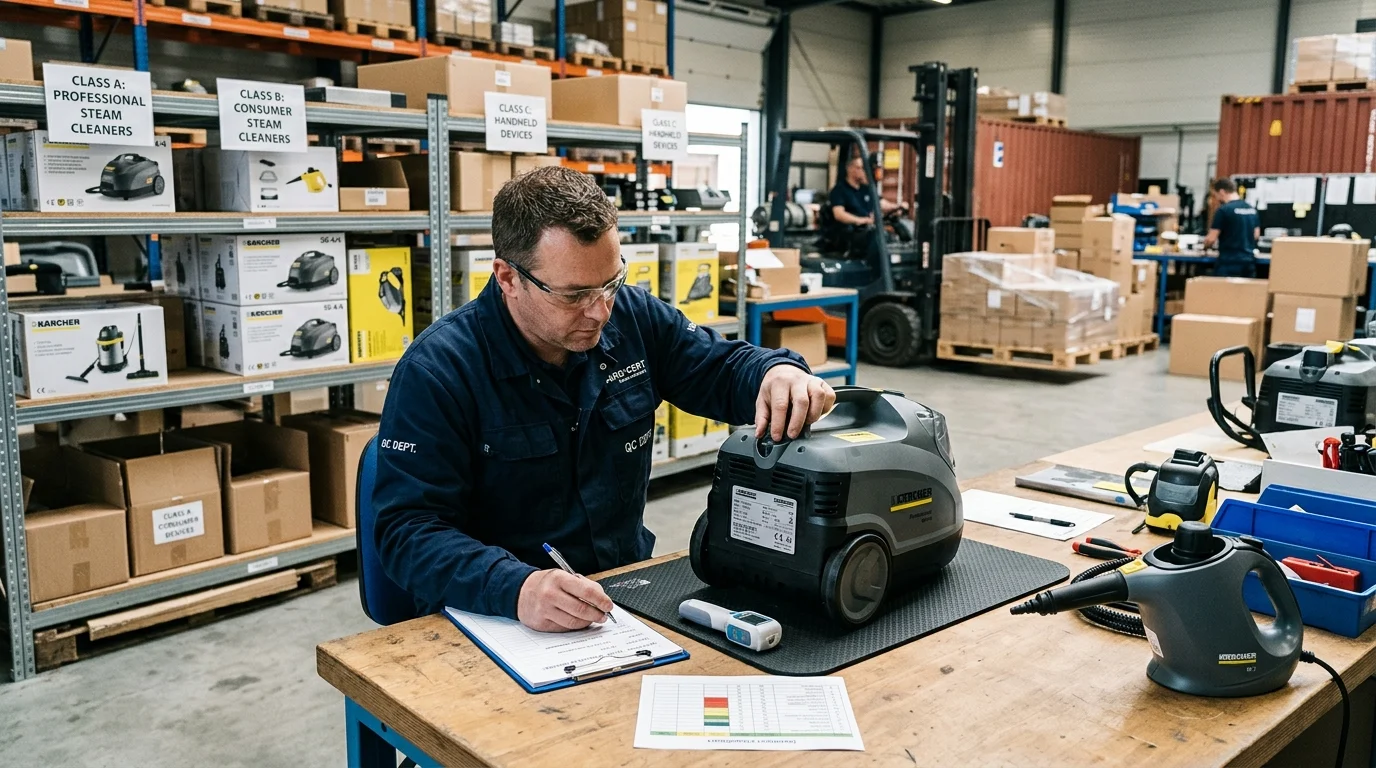
To navigate the compliance landscape, we first need to understand how testing laboratories and customs officials classify these machines. A steam cleaner is generally defined as an electrical appliance that heats water to produce steam for cleaning, sanitizing, or deodorizing surfaces. However, the exact classification dictates which specific clauses of the testing standards apply.
When I review a factory’s catalog, I categorize their offerings by form factor, intended use, and technical specifications. This helps me immediately identify which directives apply. Maintaining Compliance in Cleaning equipment requires a deep dive into the bill of materials (BOM) and the internal workings of the boiler system.
Handheld, Canister, Commercial, and Multifunction Models
Handhelds are lightweight, usually under 1500W, and have small water tanks, making them subject to standard household appliance rules. Canister models are larger, often mounted on wheels, and operate at higher pressures, triggering stricter boiler safety checks. Commercial and multifunction models (like steam vacuums) must meet heavy-duty standards designed for continuous, professional use.
Key Electrical, Pressure, Heating, and Tank Specifications
The core specs that labs test include the wattage of the heating element, the maximum bar pressure of the tank, and the quality of the internal wiring. If a unit operates over a certain pressure threshold (often around 3 to 4 bar for consumer units), it must incorporate specific pressure-relief valves and thermal cut-offs to prevent explosions.
Required Product Documentation and Intended Use
Labs will ask for a comprehensive technical file. This includes the BOM, exploded view diagrams, electrical schematics, and the user manual. The manual is crucial because the “intended use” stated within it determines whether the product is tested against household standards or the much more stringent commercial standards.
Core Steam Cleaner Certification Standards for the US
Tackling the US market requires understanding that while there is no single mandatory “US mark” like there is in Europe, the combination of federal regulations, state laws, and retailer demands creates a highly structured compliance environment. For electrical products mixing water and heat, third-party safety testing is practically a legal requirement if you want to avoid liability.
I always advise my clients to look for a Nationally Recognized Testing Laboratory (NRTL) mark. If you are sourcing UL Listed Equipment, you are generally in a safe position. Let’s break down exactly what the US market expects from your steam cleaner imports.
UL, ETL, FCC, and State-Level Requirements
The primary safety standard for steam cleaners in the US is UL 499 (Standard for Electric Heating Appliances) or UL 1017 for vacuum/blower features. You will need an NRTL mark like UL, ETL, or CSA. Additionally, if the unit has digital displays or smart features, it must comply with FCC Part 15 for electromagnetic interference. Do not forget state-level rules like California’s Prop 65 regarding hazardous chemicals in the plastics.
Labeling, Manuals, Plugs, Cords, and Warning Marks
US standards mandate specific physical components. You need polarized or grounded NEMA plugs and appropriately rated AWG power cords that can handle the high amperage of a water heater. Warning labels concerning scalding and electrical shock must be permanently affixed to the unit, not just printed in the manual.
Test Reports, Technical Files, and Supplier Declarations
Importers must hold the actual test reports, not just a one-page certificate. For FCC compliance, a Supplier’s Declaration of Conformity (SDoC) is required, which must be issued by a US-based responsible party. I always ensure the factory provides the full technical file so we have it on hand for any retailer audits.
Key Steam Cleaner Certification Standards for the EU
When we pivot to Europe, the game changes. The European Union relies heavily on the CE marking system, which is a manufacturer’s declaration that the product meets all applicable EU directives. However, because a steam cleaner is a high-risk appliance, self-declaring without backing it up with solid third-party lab reports is a massive gamble that I never recommend taking.
To legally sell in the EU, your product must navigate a web of environmental and safety directives. Securing CE Marking Cleaning equipment means your factory must have a robust quality control system and deep knowledge of the EN standards.
CE Marking, LVD, EMC, RoHS, REACH, and WEEE
Your steam cleaner must comply with the Low Voltage Directive (LVD) for electrical safety and the Electromagnetic Compatibility (EMC) directive. Environmentally, the plastics and internal components must pass RoHS (restricting hazardous substances) and REACH (chemical registration). Finally, you must register for WEEE to handle the electronic waste lifecycle.
EN Standards, Risk Assessments, and Declarations of Conformity
The specific harmonized standard for steam cleaners is EN 60335-2-54. Labs will test against this standard to ensure the boiler, pressure valves, and electrical insulation are safe. The manufacturer must compile a technical file, perform a risk assessment, and issue a Declaration of Conformity (DoC) that legally binds them to the compliance claims.
Packaging, Language Labeling, and Traceability Requirements
The EU is strict about traceability. The product and packaging must feature the CE mark, the WEEE crossed-out wheelie bin logo, and the manufacturer/importer’s name and address. Crucially, user manuals and safety warnings must be translated into the official language of every specific member state where the product is sold.
US vs EU Steam Cleaner Compliance Comparison
It is a common misconception that if a product is certified for the US, it is good to go for Europe, or vice versa. In my experience, while the physical engineering of a high-quality steam cleaner might pass both sets of tests, the paperwork, voltage ratings, and specific component requirements are vastly different.
You have to treat these as two separate compliance projects. Navigating International Trade Standards requires a clear understanding of where the overlap is and where you have to spend extra money on tooling or testing.
| Feature | US Market (e.g., UL/ETL) | EU Market (CE Marking) |
|---|---|---|
| Voltage | 110-120V / 60Hz | 220-240V / 50Hz |
| Primary Safety Standard | UL 499 / UL 1017 | EN 60335-1 & EN 60335-2-54 |
| Plugs & Cords | NEMA plugs, AWG gauge cords | Schuko/BS plugs, harmonized cables |
| Environmental | Prop 65 (State level) | RoHS, REACH, WEEE (Mandatory) |
Certification, Documents, Labels, and Plug Differences
The most obvious physical differences are the voltage ratings and the plugs. A US unit needs a 120V heating element and a NEMA plug, while the EU unit needs a 240V element and a Schuko or UK plug. Labeling in the US is primarily English and Spanish, whereas the EU requires multi-language compliance depending on the target countries.
Testing Overlap vs Separate Approval Needs
There is some testing overlap if the factory uses the CB Scheme, an international system for mutual acceptance of test reports. A CB test report can serve as a foundation for both UL/ETL and CE certifications. However, you will still need separate national deviations tested, meaning you cannot bypass local lab fees entirely.
Timeline, MOQ, Tooling, and Cost Impact
Because of the differing voltage and plug requirements, factories usually treat US and EU units as separate SKUs. This means you will likely face separate Minimum Order Quantities (MOQs) for each market. Upgrading a non-compliant factory to meet both standards can take 3 to 6 months and cost thousands of dollars in lab fees and new tooling for compliant components.
How to Source a Compliant Steam Cleaner Supplier
Finding a factory that claims they can make a steam cleaner is easy; finding one that actually holds valid, verifiable certifications for your target market is the real challenge. I spend a significant amount of time vetting suppliers before we ever discuss pricing. If their compliance foundation is weak, the cheapest unit price in the world will not save you from a customs seizure.
When looking for a Certified Steam Cleaner manufacturer, you have to be a detective. You must ask for their existing test reports and independently verify them with the issuing labs.
Supplier Screening: Certifications, Components, and Quality Systems
Always ask for the ISO 9001 certificate to ensure they have a stable quality management system. Request the UL/ETL or CE test reports and check the expiration dates and the exact model numbers. Scrutinize their component suppliers—are they using recognized brands for critical parts like thermostats and pressure-relief valves?
Aligning MOQ, Private Label, Packaging, and Spare Parts
Compliant factories often have higher MOQs (typically 1,000 to 2,000 units) because they have to source certified internal components in bulk. When negotiating your private label, ensure that changing the brand name or housing color doesn’t invalidate their existing certification. Also, negotiate a steady supply of certified spare parts for your warranty claims.
Pre-Shipment Testing and Contract Risk Controls
Never pay the final balance without a third-party pre-shipment inspection. For steam cleaners, the inspector must check the high-pot (high potential) electrical safety, run a pressure test, and verify that the correct safety labels are applied. Write these AQL (Acceptable Quality Limit) standards directly into your purchase contract.
Logistics, Packaging, and Channel Considerations
Once you have a fully compliant, manufactured product, you have to get it to your warehouse without breaking it. Steam cleaners are heavy, contain fragile internal heating elements, and feature bulky accessories. Poor packaging can turn a compliant product into a defective, dangerous one during transit.
I always work closely with the factory on the carton design. Retail channels and e-commerce platforms have very different requirements for how these units should be boxed, palletized, and shipped.
Carton Design, Drop Testing, and Pallet Efficiency
Ensure your factory uses double-wall corrugated cartons and custom-molded EPS or EPE foam inserts to protect the boiler tank. Require an ISTA 1A drop test report to ensure the packaging can survive courier handling. Design the master carton dimensions to maximize pallet efficiency, which is critical for controlling your landed costs.
Customs, HS Codes, Importer Roles, and Returns Handling
Steam cleaners typically fall under HS code 8516.79 (Electro-thermic appliances). Ensure your freight forwarder uses the correct code to avoid duty penalties. As the Importer of Record, you are responsible for customs clearance and managing end-user returns. Have a dedicated reverse logistics plan, as returned steam cleaners often contain residual water that can cause mold if not handled properly.
Certification Impact on Retail, E-Commerce, and Distribution
If you are selling on Amazon, they will automatically suppress your listing if you cannot provide a UL/ETL test report or an FCC SDoC upon request. Big-box retailers will demand to see your compliance file during the vendor onboarding process. Having your certifications perfectly organized is a massive competitive advantage in B2B distribution.
Key Takeaways and FAQ
Navigating the world of steam cleaner compliance is complex, but it is entirely manageable if you build it into your sourcing strategy from day one. Do not treat certification as an afterthought. It dictates your factory choice, your product costs, your lead times, and ultimately, your success in the US and EU markets.
Here are a few common questions I get from procurement teams when we start a new steam cleaner sourcing project.
Top Compliance, Sourcing, and Cost Priorities
Your top priority is verifying the factory’s existing test reports with the issuing lab. Second is ensuring the BOM matches the tested unit—no silent component substitutions. Finally, budget for higher costs; certified thermostats, heavy-gauge wiring, and legitimate lab fees add real cost to the unit, but they protect your margin from catastrophic recalls.
Can One Certification Package Cover Both US and EU Markets?
No. Due to the fundamental differences in voltage (120V vs 240V), plug types, and specific testing directives (UL vs EN standards), you must obtain separate certifications for the US and the EU. While a CB report can speed up the process, you still need separate regional approvals.
What Documents Should the Factory Provide?
The factory must provide the full test reports (not just the certificate summary), the CE Declaration of Conformity (for the EU), the FCC SDoC (for the US), the Bill of Materials, electrical schematics, and a copy of the user manual.
How Certification Changes Affect Lead Time and Private Label Rollout
If you alter the internal design, change the wattage, or modify the boiler size for your private label, you will invalidate the factory’s existing certification. Re-testing can add 8 to 12 weeks to your lead time. Always confirm with the testing lab if your cosmetic or branding changes require a formal certification update before you promise a launch date to your buyers.
Related Reading: Certified Steam Cleaner
Key Takeaways
- Wholesale sourcing and supply-chain implications for Steam Cleaner
- Specifications, compliance, and commercial terms buyers should validate
- Actionable recommendations for distributors and procurement teams