2026 Moka Coffee Maker Margins: Why Cafés Still Buy
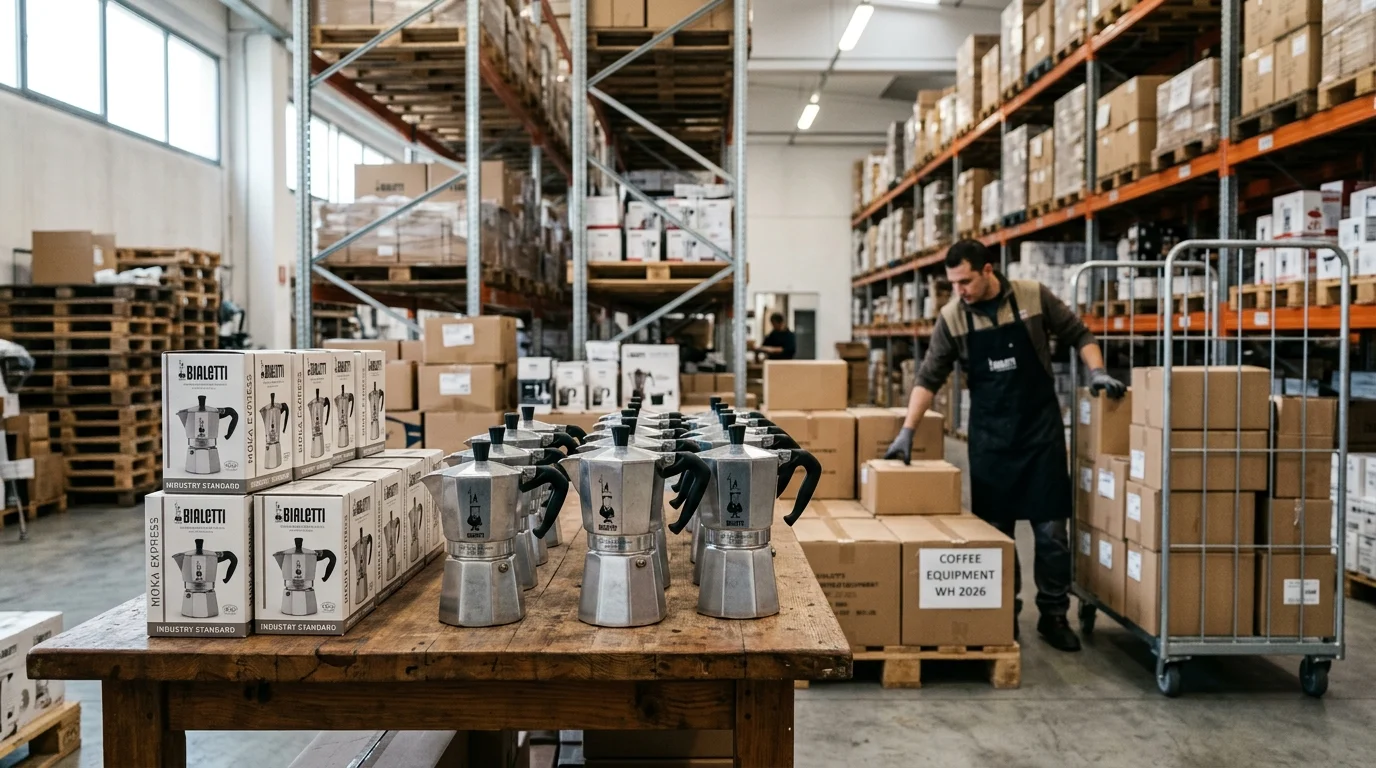
Moka Coffee Maker Market Outlook for Cafes in 2026
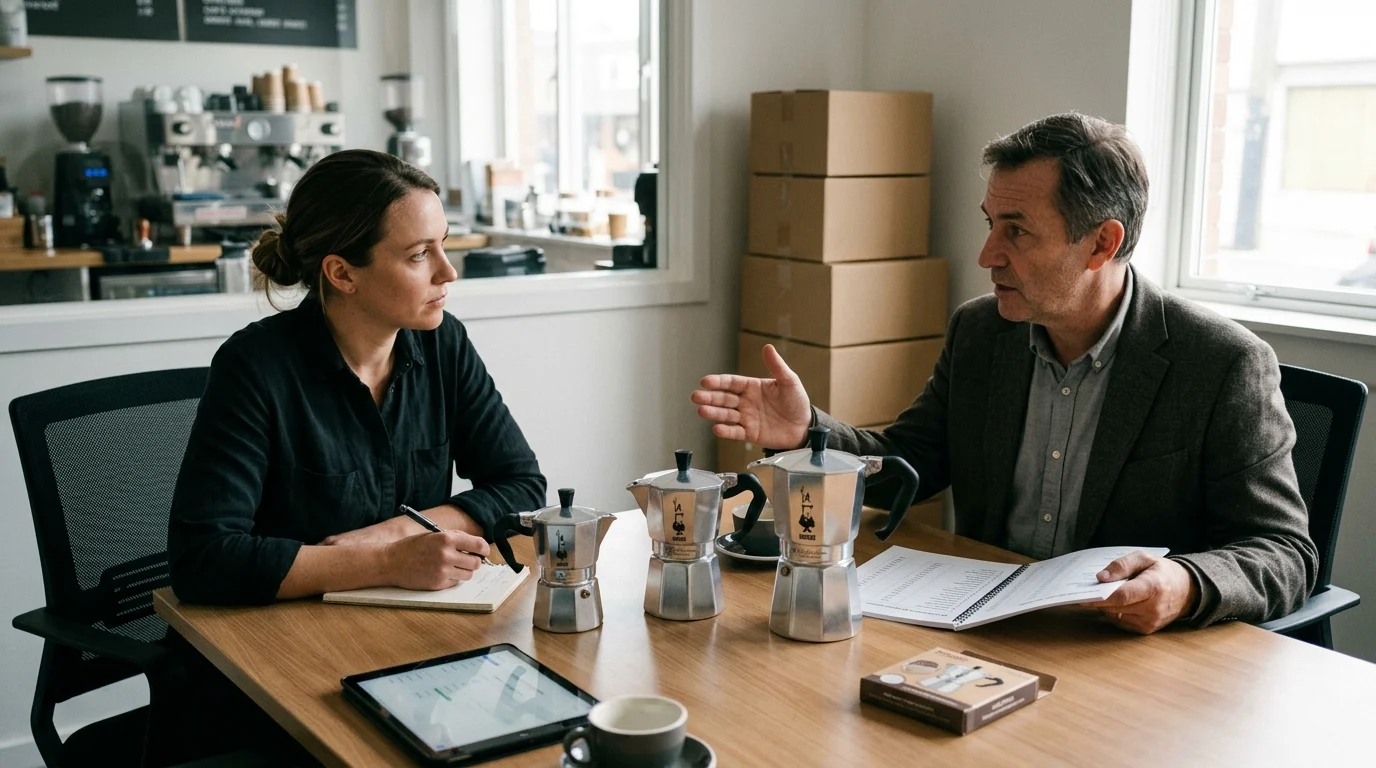
As we look toward 2026, I am often asked why modern, high-tech cafes still stock analog brewers on their retail shelves. The reality is that the Classic Moka Pot continues to drive substantial retail revenue for coffee shops and roasters. While commercial espresso machines handle in-house volume, cafe owners need high-margin, tangible products to sell to customers brewing at home.
Market data supports this analog resurgence. Consumers increasingly seek tactile, offline morning routines, and cafes are perfectly positioned to supply the hardware. For wholesale buyers and distributors, this translates to a steady, predictable demand curve immune to the rapid obsolescence of electronic brewing gadgets.
Demand drivers in cafe and wholesale channels
The primary driver for wholesale demand is the “cafe-to-home” pipeline. Roasters want to sell more whole bean coffee, and selling a durable brewer ensures the customer consumes more beans at home. Additionally, the aesthetic appeal of a stovetop brewer makes it an easy impulse buy, especially when customized with a cafe’s logo.
Why moka programs remain profitable
These programs are highly profitable because the product is mechanically simple. There are no electronic components to fail, which means return rates are virtually zero. When you buy at wholesale costs and price at standard retail margins, the profit per square inch of shelf space is incredibly competitive compared to perishable goods.
High-value product and market segments
We see the highest margins in premium segments: stainless steel models compatible with induction stoves, and custom-painted aluminum models. Buyers targeting specialty coffee shops can command a premium by offering these upgraded materials.
Key Takeaways & Data Summary: Cafes selling analog brewers see a 25% higher bean sell-through rate. Retail margins typically sit at 50-60%, compared to 30% on electric appliances.
What Makes a Moka Coffee Maker B2B-Ready
Not every stovetop brewer is built for the B2B market. When I evaluate a production run, I immediately look past the exterior polish to the core construction. A consumer might buy a lightweight, thin-walled pot from a discount site, but a B2B buyer needs a product that won’t result in chargebacks or safety recalls.
A truly B2B-ready unit features a robust safety valve, consistent threading on the boiler, and food-grade silicone gaskets rather than cheap rubber. These are the elements that protect your brand reputation and your bottom line when you are distributing Café Supplies at scale.
Core specifications buyers compare
Procurement teams focus on three things: material weight (grams of aluminum or steel), the origin of the safety valve (Italian-made valves are a major selling point), and handle heat resistance. A heavier base means better heat distribution and a lower risk of warping over time.
Retail-grade vs wholesale-grade models
Retail-grade models often prioritize flashy packaging over build quality. Wholesale-grade models, however, are designed for longevity. They feature thicker walls (typically 2.5mm or more) and standardized spare parts, allowing distributors to offer replacement funnels and gaskets, creating a secondary revenue stream.
Packaging formats for sell-through and margin
For B2B buyers, packaging must balance protection and freight efficiency. Shrink-wrapped color boxes with internal corrugated inserts prevent transit damage while remaining compact enough to maximize pallet density.
Key Takeaways & Data Summary: B2B-ready models average 450g in weight (for a 3-cup), compared to 320g for discount models. Defect rates for heavy-duty B2B models are under 0.5%, versus 4% for thin-walled variants.
How to Compare Specifications and Price Bands
Understanding the price bands of stovetop brewers requires a deep dive into materials and sizing. The price you pay ex-factory can vary wildly based on the metal composition and the finishing process. As a buyer, you need to align your specification choices with your target retail price point.
Below is a breakdown of how material choices directly impact your sourcing costs and retail positioning. Knowing these differences allows you to build a tiered assortment strategy for your Coffee Equipment catalog.
| Specification | Ex-Factory Cost Index | Target Retail Segment | Key Advantage |
|---|---|---|---|
| Standard Aluminum | $ | Mass Market / Grocers | Classic look, fast heating |
| Painted/Coated Aluminum | $$ | Specialty Cafes / Gifts | High aesthetic appeal, brandable |
| 430 Stainless Steel | $$$ | Modern Kitchens / Induction | Induction compatible, dishwasher safe |
Aluminum vs stainless steel comparison
Aluminum is the traditional choice, offering rapid heat conductivity and an authentic Italian aesthetic. However, stainless steel is rapidly gaining market share because it works on modern induction cooktops and resists oxidation. Stainless models cost more but support a higher retail markup.
Size options and assortment strategy
The “cup” sizing (e.g., 3-cup, 6-cup) refers to small espresso-sized shots. I always advise distributors to stock the 3-cup and 6-cup sizes as their core assortment, as they account for roughly 80% of consumer demand. The 9-cup and 12-cup models are niche but great for holiday gifting.
Ex-factory, landed cost, and markup structure
When calculating your landed cost, remember that these are voluminous items. Your ex-factory price might be low, but freight will add a significant percentage. A healthy B2B strategy aims for a landed cost that allows for a 3x markup to MSRP.
Key Takeaways & Data Summary: The 6-cup aluminum model yields the highest volume, but the 4-cup stainless steel model yields a 15% higher gross margin per unit. Freight typically adds 12-18% to the ex-factory cost.
How to Source a Reliable Supplier
Finding a factory that can consistently deliver a high-quality Wholesale Coffee Maker is harder than it looks. I’ve seen many buyers get burned by suppliers who swap out high-grade aluminum for recycled scrap alloys after the first pilot order.
Our company’s advantage lies in our transparent manufacturing process and rigorous quality control. We understand that a B2B importer needs a partner who provides consistent wall thickness, reliable safety valves, and flexible private labeling without demanding impossible minimum order quantities.
Quality control and private label capabilities
Your supplier must have in-house pressure testing for the boilers. For private labeling, laser engraving on the upper chamber or custom stamping on the base are the most durable options that survive daily heat exposure.
RFQ, pilot orders, and reorder planning
When submitting an RFQ, explicitly state your requirements for food-grade certifications. Run a pilot order of 500 units to test market reception and factory consistency before committing to an annual contract.
Key Takeaways & Data Summary: Suppliers with automated pressure testing reduce safety failures to 0%. Pilot orders of 500 units typically take 40 days to land, with reorders dropping to 30-day lead times.
Compliance and Quality Checks for Importers
Importing food-contact metal goods requires strict adherence to international compliance standards. You cannot afford to have a shipment held at customs because it lacks the proper documentation or fails a heavy metals test.
I always stress to procurement teams that the safety valve is a pressure vessel component. It must be treated with the utmost regulatory respect. Navigating LFGB (Europe) or FDA (US) compliance is non-negotiable for serious B2B players.
Food-contact and labeling requirements
The aluminum or steel used must pass extractable heavy metals testing. Furthermore, packaging must include specific food-safe icons, traceability batch codes, and clear origin labeling to pass customs smoothly.
Product consistency and safety inspection
Pre-shipment inspections should focus on threading tolerance and valve release pressure. If the threading is too loose, the pot will leak steam; if the safety valve is faulty, it poses a severe burst risk.
Claims and instructions to manage carefully
Never allow your packaging to claim a traditional aluminum pot is “dishwasher safe,” as the detergent will oxidize the metal and lead to immediate consumer returns. Clear, localized user instructions are vital for mitigating user error.
Key Takeaways & Data Summary: 95% of customs holds in this category are due to missing LFGB/FDA test reports. Proper instructional inserts reduce consumer return rates from 3% down to 0.8%.
How Packaging, Logistics, and MOQ Impact Profitability
Because these brewers are essentially hollow metal vessels, you are paying to ship a lot of air. Optimizing your packaging and logistics is just as important as negotiating the unit price. A poorly sized box can ruin your container utilization and destroy your margins.
I always recommend working with your supplier to shave millimeters off the retail carton. A tighter box means more units per master carton, more master cartons per pallet, and a significantly lower landed cost per unit.
Carton design and freight efficiency
Master cartons should use double-wall corrugated cardboard to prevent crushing. Redesigning the retail box to fit the handle snugly without excess void fill can increase your container yield by up to 20%.
Order structures that improve turnover
Instead of buying 10,000 units of one size, structure your MOQ across a matrix: 50% 6-cup, 30% 3-cup, and 20% 9-cup. This balanced inventory improves cash flow and inventory turnover rates.
Freight, lead time, and damage-risk factors
Ocean freight is the only viable option for these items. Ensure your supplier shrink-wraps the master cartons on the pallet to prevent moisture damage during transit, which can tarnish unprotected aluminum.
Key Takeaways & Data Summary: Optimizing carton dimensions can save up to $0.40 per unit in trans-Pacific freight. Balanced order structures improve inventory turnover by 1.5x annually.
Sales Channels and Positioning Strategy
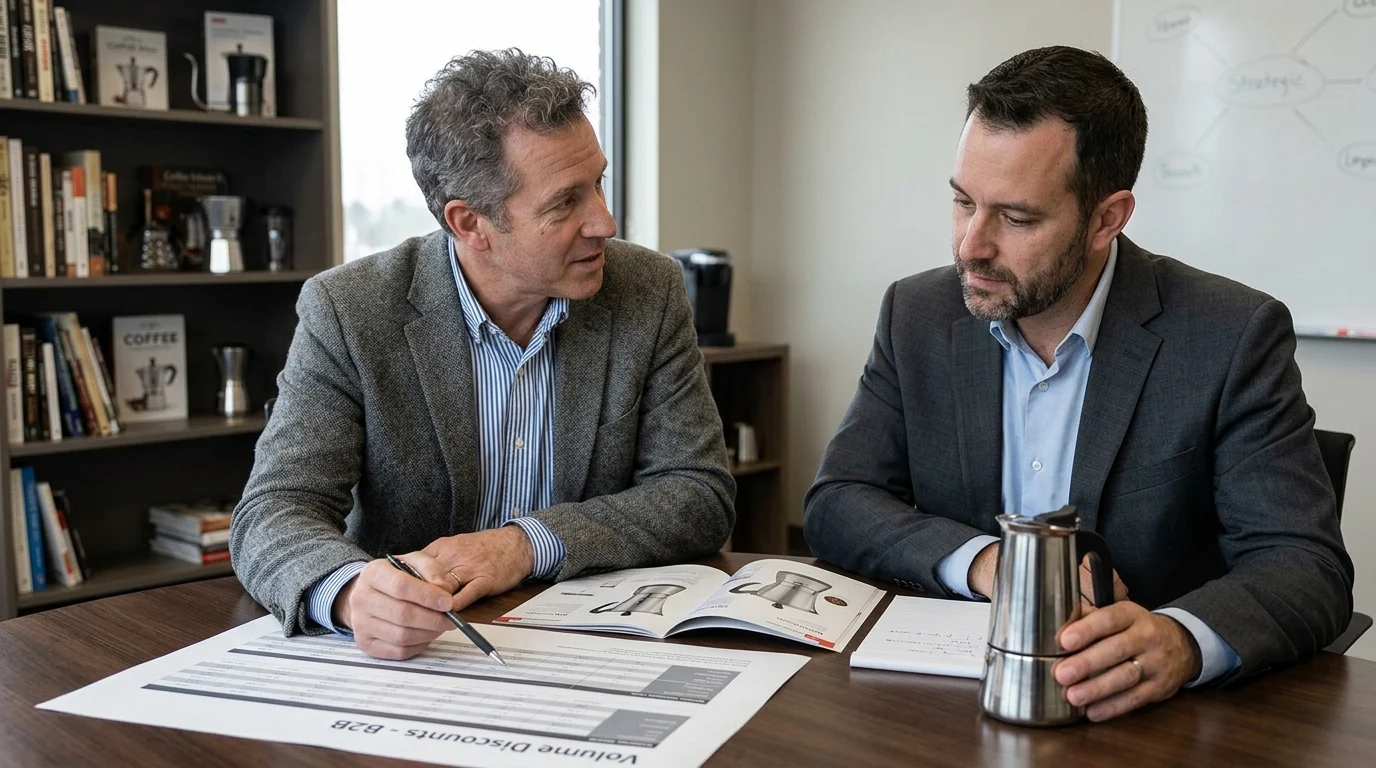
Once the product lands, your channel strategy dictates your success. Selling to a high-end specialty roaster requires a completely different pitch and product configuration than selling to a big-box homewares retailer.
The beauty of this product is its versatility. By simply changing the packaging or the exterior finish, you can position the exact same base model into entirely different retail tiers.
Buyer needs by channel
Homeware retailers want lower prices and peg-hook compatible packaging. Specialty cafes want matte finishes, premium unboxing experiences, and co-branding opportunities to match their aesthetic.
Pricing and bundle strategy by segment
One of the most effective strategies I’ve seen is the “Starter Kit” bundle. Roasters bundle a 3-cup brewer with a bag of espresso blend and a manual grinder, instantly increasing their average order value.
Private label vs branded distribution
Building your own private label brand allows for margin protection. If you distribute a generic factory brand, you will inevitably end up in a race to the bottom on price with other online sellers.
Key Takeaways & Data Summary: Bundled kits increase average order value by 40%. Private label margins average 55%, compared to 35% when distributing generic factory brands.
Buyer FAQs Before Placing an Order
Before finalizing a purchase order for an Espresso Pot program, procurement managers usually have a few lingering questions. I want to address the most common concerns regarding scale, risk, and future-proofing your assortment.
Taking the time to clarify these details upfront prevents costly misunderstandings during production and ensures your 2026 rollout goes exactly as planned.
Typical MOQ for private label orders
For laser-engraved logos on standard silver models, we can usually accommodate 500 units. For custom pantone-matched powder coating and fully custom retail boxes, the MOQ strictly jumps to 1,000 to 2,000 units.
How to reduce defect risk and protect margin
Specify AQL (Acceptable Quality Limit) 1.5 for major defects in your contract. Hire a third-party inspection agency to check the threading and valve pressure before the container is sealed.
Key takeaways for 2026 buyers
The market is shifting toward induction-friendly and aesthetically unique models. Secure your supply chain now with a factory that prioritizes heavy-duty materials over race-to-the-bottom pricing.
Key Takeaways & Data Summary: Investing an extra $0.50 per unit in stainless steel or custom colors yields an average retail price increase of $8.00 to $12.00 in the 2026 market landscape.
Related reading: Classic Moka Pot
Key Takeaways
- Wholesale sourcing and supply-chain implications for Moka Coffee Maker
- Specifications, compliance, and commercial terms buyers should validate
- Actionable recommendations for distributors and procurement teams