Introduction
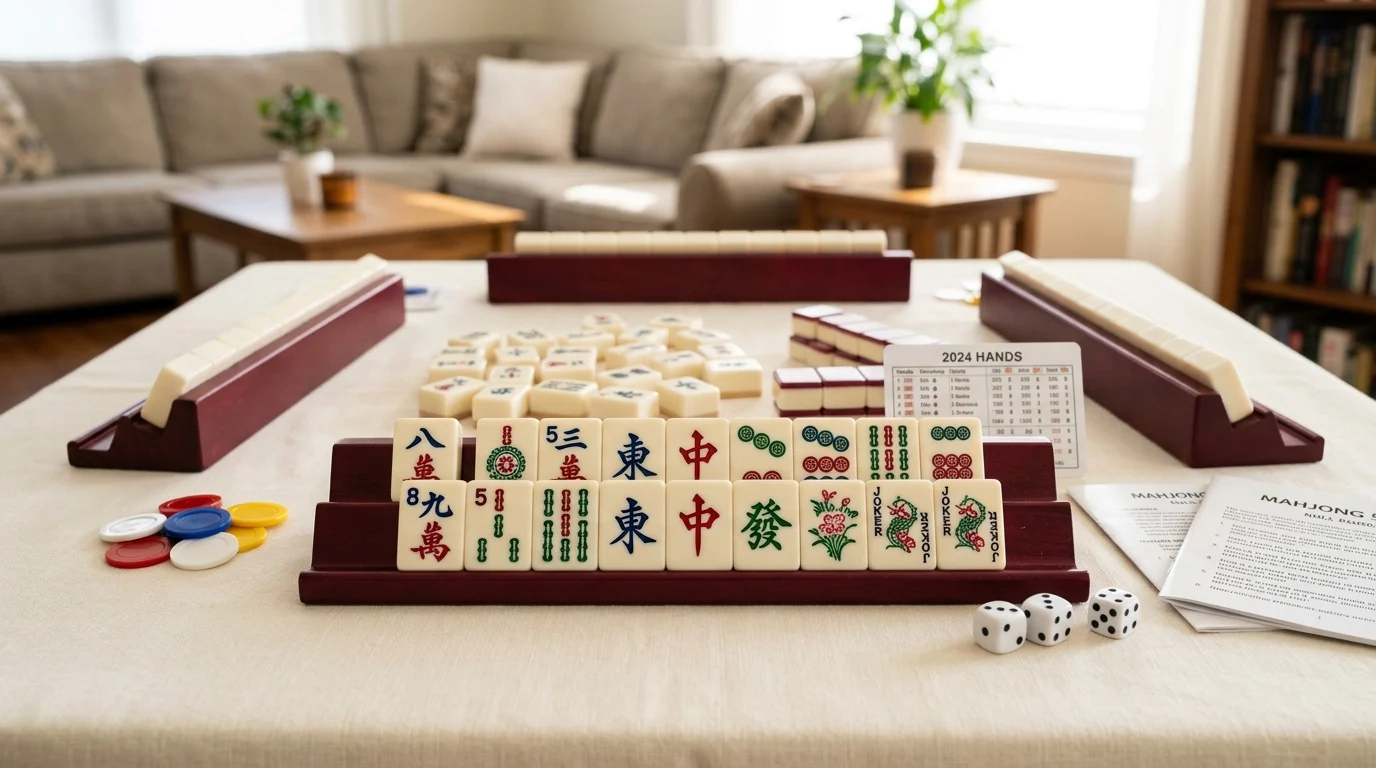
As demand shifts toward premium tabletop products, the American Mahjong set has become a standout category for retailers, gift brands, and private-label buyers seeking stronger margins and differentiated design. Its specialized 166-tile format, gifting appeal, and lifestyle positioning make supplier choice especially important. This article explains what defines a high-quality American Mahjong set, which design and manufacturing details matter most for B2B sourcing, and how the right partner can support consistency, customization, and long-term product value.
Why American Mahjong Sets Matter as a Product Category
The global market for tabletop games has experienced a structural shift, evolving from mass-market disposable entertainment into a sector driven by premiumization and design-forward aesthetics. Within this landscape, the American Mahjong Set has emerged as a high-growth product category. Originally a niche household item, these sets have transitioned into status symbols, luxury gifts, and lifestyle accessories. For B2B buyers, understanding the commercial viability of this category requires analyzing its unique blend of traditional gameplay requirements and modern consumer expectations.
Unlike standard board games, American Mahjong requires highly specific components, most notably the 166-tile configuration mandated by National Mah Jongg League (NMJL) standards. This complexity creates a barrier to entry for low-tier manufacturers, effectively insulating premium suppliers and buyers from race-to-the-bottom price wars. With the luxury tabletop segment projected to maintain a steady compound annual growth rate (CAGR) of over 6.5% through the next five years, sourcing managers are increasingly positioning premium sets as anchor products in their catalogs.
Margin Drivers in Premium Programs
The commercial appeal of premium sets lies heavily in their margin profile. Standard mass-market sets typically yield gross retail margins of 25% to 35%, constrained by aggressive pricing from big-box retailers. In contrast, premium programs characterized by custom acrylic cases, artistic tile engraving, and high-density materials routinely command retail margins between 45% and 60%.
Wholesale pricing for standard sets generally falls in the $25 to $40 range, while premium wholesale sets occupy the $65 to $120 band. At retail, these premium units easily support price points of $150 to over $300. The incremental cost of upgrading materials—such as moving from standard plastics to cast acrylic or adding multi-color pantone paint fills—rarely exceeds $15 to $20 per unit at scale, allowing brands to capture disproportionate value from aesthetic and tactile enhancements.
Buyer Segments for B2B Supply
The B2B demand for high-end sets is highly segmented, requiring suppliers to tailor their product offerings to distinct buyer personas. Specialty gift retailers and boutique game shops represent the largest volume segment, typically placing orders between 500 and 2,000 units per season. These buyers prioritize trend-driven designs, vibrant colorways, and retail-ready packaging.
Luxury department stores and high-end lifestyle brands form a secondary, lower-volume but higher-margin segment. Their procurement teams demand flawless execution, exclusive licensing capabilities, and bespoke packaging, often operating with minimum order quantities (MOQs) of 300 to 500 units per custom SKU. Finally, the corporate gifting sector utilizes these sets as high-value client retention items, prioritizing customization options such as debossed logos on the carrying case or custom-engraved joker tiles.
What Defines a Premium American Mahjong Set
Distinguishing a premium product from a baseline commodity requires a rigorous assessment of material science, dimensional tolerances, and finishing techniques. A true premium set is defined not merely by its visual appeal, but by its tactile feedback, durability, and strict adherence to gameplay standards. Buyers must evaluate these physical properties to ensure the product justifies its luxury positioning in the consumer market.
Core Product Specifications
The foundation of any high-quality set is the material composition of the tiles. Premium sets utilize either high-density melamine or cast acrylic, avoiding the lightweight polystyrene common in budget alternatives. A standard American tile must measure precisely 1-1/8″ x 7/8″ x 1/2″ (29mm x 22mm x 13mm). Maintaining these dimensions across all 166 tiles with a tolerance of less than +/- 0.2mm is critical for seamless racking and stacking.
Weight is a primary indicator of quality. A full premium Mahjong Tiles Set should weigh between 6.5 and 8.5 lbs (excluding packaging and accessories) to provide the satisfying “clack” expected during gameplay. Furthermore, the engraving depth on the tile faces must reach a minimum of 0.4mm. This depth ensures that the enamel paint fill remains protected from friction and wear during the shuffling process, known as the “washing” of the tiles.
How to Compare Premium Options
When comparing options from different manufacturers, procurement teams should scrutinize the secondary finishing processes. Edge finishing is a critical differentiator; premium tiles feature a consistent chamfer radius of approximately 1.5mm, which prevents micro-chipping and ensures a smooth hand-feel. Paint application also separates top-tier suppliers from the rest. High-end sets utilize automated, multi-pass paint filling that eliminates bleeding, bubbling, or incomplete color coverage.
Accessory integration is another vital comparison point. A complete American set requires four racks and pushers. Premium options often feature all-in-one acrylic racks with integrated pushers, utilizing 4mm to 5mm thick acrylic to prevent bowing or snapping under pressure. The inclusion of high-quality betting coins or chips, heavily weighted and cleanly molded, further elevates the unboxing and gameplay experience.
Useful Comparison Criteria
To systematically evaluate potential inventory, buyers should utilize a standardized set of criteria that isolates the differences between mass-market and luxury grades.
| Feature | Standard Grade Specification | Premium Grade Specification |
|---|---|---|
| Tile Material | Injection-molded Urea/Polystyrene | High-density Melamine or Cast Acrylic |
| Tile Weight (Per Tile) | 10g – 12g | 14g – 16g |
| Engraving Depth | < 0.3mm (Prone to paint fading) | 0.4mm – 0.6mm (Highly durable) |
| Paint Application | 1-2 Colors, manual fill | 3+ Colors, automated precision fill |
| Case/Packaging | Nylon zip bag or thin aluminum | Vegan leather, lacquered wood, or heavy acrylic |
| Accessories | Separate thin plastic racks/pushers | Integrated 5mm thick acrylic racks/pushers |
How to Evaluate Quality and Compliance
Maintaining consistency across complex, multi-component products requires sophisticated quality assurance frameworks. Because a single missing or visibly flawed tile renders the entire game unplayable, the acceptable margin for error in mahjong manufacturing is exceptionally narrow. B2B buyers must partner with suppliers who implement rigorous in-line inspections and adhere to international compliance standards to mitigate the risk of costly returns and brand damage.
Production Controls and Sampling
Top-tier facilities implement Acceptable Quality Limit (AQL) protocols tailored specifically to tabletop gaming components. For premium SKUs, the industry standard mandates an AQL of 1.0 for major defects (such as cracked tiles, missing pieces, or broken racks) and an AQL of 2.5 for minor defects (such as slight paint bleed or microscopic surface scratches). The overall defect rate must be aggressively managed to stay below 1.5% across a production run.
Achieving these metrics requires multiple inspection gates. Raw material density checks occur before molding, followed by dimensional tolerance testing post-cooling. The tumbling phase, designed to smooth edges, requires strict time and abrasive-ratio controls. Final inspections must involve a manual or optical-camera verification step to ensure exactly 166 Mahjong Tiles are present, including the precise distribution of suits, winds, dragons, flowers, blanks, and jokers.
Labeling, Safety, and Packaging Requirements
Regulatory compliance focuses heavily on the chemical composition of the materials and the structural integrity of the packaging. Even if marketed exclusively to adults, premium sets should adhere to general consumer product safety standards regarding heavy metals. The enamel paint used for tile engraving must be certified lead-free and phthalate-free, with lead content strictly capped below 90 parts per million (ppm) to satisfy both US and EU regulatory frameworks.
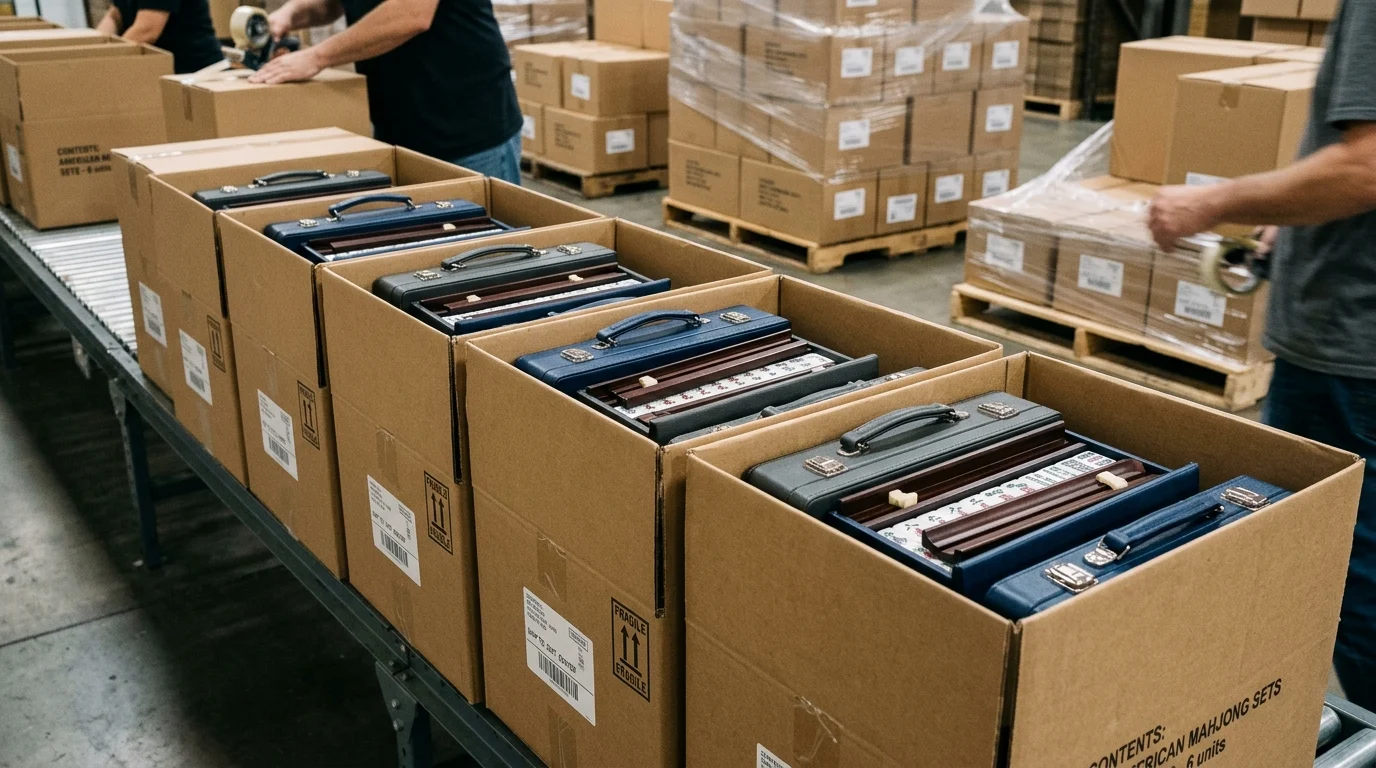
Packaging durability is equally critical due to the high density of the product. A fully loaded set, complete with racks and a premium case, frequently exceeds 10 lbs in volumetric weight. Packaging must pass ISTA 1A drop testing protocols—which involves a series of 10 drops from varying heights and angles—to ensure the heavy tiles do not shatter the internal organization trays or puncture the outer retail carton during transit.
Sourcing, Pricing, and Logistics Trade-Offs
Developing a profitable sourcing strategy requires balancing initial capital outlays against unit costs and transit times. The complex supply chain of a Modern Mahjong Set demands careful orchestration from the initial Request for Quotation (RFQ) to the final delivery at a distribution center. Understanding the cost drivers associated with tooling, customization, and freight is essential for optimizing total landed costs.
MOQs, Tooling, and Customization
Minimum Order Quantities (MOQs) are heavily influenced by the degree of customization required. For off-the-shelf premium designs utilizing existing molds, suppliers typically accept MOQs of 300 to 500 units. However, custom tile dimensions or proprietary engraved designs necessitate new injection or compression molds. Custom tooling costs generally range from $2,500 to $4,500, depending on the complexity and the number of cavities in the mold. When custom tooling is involved, factories typically require an MOQ of 1,000 units to absorb the setup inefficiencies.
Aesthetic customizations also impact unit pricing. Upgrading from a standard two-color paint fill to a custom four-color pantone palette typically adds $0.15 to $0.30 per set in labor and material costs. Similarly, custom-printed vegan leather carrying cases or heavy-duty molded EVA foam inserts can increase the base unit cost by $4.00 to $8.00, though these enhancements significantly boost the perceived retail value.
From RFQ to Order Placement
The timeline from concept to mass production requires strategic planning, particularly for brands targeting specific holiday retail windows. Upon submitting an RFQ, the initial CAD design and virtual rendering phase takes 7 to 10 days. Once approved, physical prototyping—which involves CNC machining sample tiles and hand-painting them to verify color accuracy—adds another 14 to 21 days.
After the buyer approves the physical “golden sample,” mass production commences. For an order of 1,000 to 2,000 premium sets, the manufacturing phase requires 30 to 45 days. This duration accounts for the curing time of the melamine or acrylic, the multi-stage engraving and painting processes, and the final assembly and shrink-wrapping of the components.
Balancing Lead Time and Cost
Because of their high product density, mahjong sets present unique logistical challenges. A standard 40-foot High Cube (40HQ) container can hold approximately 3,500 to 4,000 premium sets, depending on the dimensions of the retail packaging. Ocean freight is the only economically viable method for mass transit; it typically adds 25 to 35 days to the lead time but keeps freight costs manageable at roughly $2.00 to $4.00 per unit.
Conversely, air freight should be reserved strictly for urgent sample approvals or emergency inventory replenishment. Due to the 8+ lbs weight per unit, air freight can easily exceed $25.00 to $35.00 per set, which rapidly erodes profit margins. Sourcing managers must build a 90-to-120-day buffer into their procurement cycle to ensure ocean freight remains the primary logistics channel.
How to Choose the Right Supplier

The distinction between a transactional vendor and a strategic manufacturing partner becomes evident when scaling a premium product line. Selecting the right factory dictates not only the quality of the initial production run but also the brand’s ability to iterate, expand into companion products, and navigate supply chain disruptions.
Signs of a Reliable Manufacturing Partner
A reliable supplier demonstrates deep vertical integration or highly stable subcontractor networks. Key indicators of manufacturing maturity include ISO 9001:2015 certification for quality management and verifiable compliance with social audit frameworks like SMETA or BSCI. On the factory floor, the presence of multi-axis CNC engraving machines and automated, climate-controlled paint-drying rooms signals a commitment to precision and scale.
Capacity is another critical metric. A capable partner should demonstrate a monthly production capacity exceeding 30,000 to 50,000 sets, ensuring they can accommodate seasonal volume spikes without compromising AQL standards. Furthermore, top-tier factories possess the engineering expertise to develop companion Mahjong Accessories, such as custom-printed neoprene playmats, specialized tile pushers, and luxury storage solutions, allowing brands to consolidate their supply chain under one roof.
Supplier Selection Criteria
To mitigate risk during the vendor selection process, procurement teams should score potential partners against a rigorous evaluation matrix.
| Evaluation Criteria | Minimum Acceptable Standard | Premium Partner Indicator |
|---|---|---|
| Quality Assurance | Final random inspection before shipment | In-line inspections at every production node |
| Defect Guarantee | Replaces defective units on next order | Defect rate < 1.0%, immediate credit/replacement |
| Tooling Capability | Outsourced mold creation (15+ days) | In-house CNC and mold engineering (7-10 days) |
| Compliance & Audits | Basic local business licenses | ISO 9001, SMETA/BSCI, SGS material reports |
| Accessory Integration | Sources accessories from open market | Custom manufactures racks, mats, and cases |
Ultimately, the optimal supplier acts as an extension of the brand’s product development team. By prioritizing transparent communication, verifiable quality control metrics, and robust engineering capabilities, B2B buyers can secure a supply chain that consistently delivers high-margin, market-leading products.
Key Takeaways
- The most important conclusions and rationale for American Mahjong Set
- Specs, compliance, and risk checks worth validating before you commit
- Practical next steps and caveats readers can apply immediately
Frequently Asked Questions
What should a premium American Mahjong set include?
A premium set should include 166 NMJL-standard tiles, sturdy racks and pushers, clear engraving, durable paint fill, and a protective case or gift box.
What tile materials are best for premium American Mahjong sets?
High-density melamine or cast acrylic are preferred. They offer better weight, durability, and a cleaner finish than lightweight budget plastics.
What tile size should buyers confirm before ordering?
Check for NMJL-style dimensions: about 1-1/8 x 7/8 x 1/2 inches per tile, with tight tolerances for smooth stacking and racking.
Can nbyisure.com support custom B2B American Mahjong set orders?
Yes, B2B buyers can typically request custom colorways, logo branding, engraved tiles, and retail-ready packaging based on MOQ and project needs.
Why do premium American Mahjong sets offer better margins for retailers?
They support higher retail pricing through upgraded materials, design-led packaging, and gift appeal, helping retailers move beyond low-margin mass-market competition.
Post time: May-20-2026