Introduction
For buyers in the American Mahjong set market, pricing strategy starts long before retail. This article explains how direct wholesale sourcing from manufacturers can reduce landed cost, improve markup, and give brands more control over quality, packaging, and product differentiation. You’ll see why factory pricing often creates a meaningful advantage over domestic distribution, especially in a category where materials, accessories, and presentation strongly influence perceived value. The discussion also sets up the key sourcing factors to evaluate so you can compare suppliers with a clearer view of margin, risk, and long-term profitability.
Why Direct Wholesale Pricing Matters for American Mahjong Sets
The commercial landscape for tabletop games has experienced a distinct shift, with premium lifestyle products commanding unprecedented market share. Among these, the American Mahjong category stands out due to its unique component requirements and highly dedicated demographic. Securing favorable margins in this niche requires retail buyers and brands to move beyond domestic distributors and engage directly with overseas manufacturers. By optimizing the supply chain and leveraging direct wholesale pricing, procurement teams can significantly enhance profitability while maintaining the stringent quality standards expected by discerning consumers.
How factory sourcing affects landed cost and markup
Transitioning from domestic wholesale purchasing to direct factory sourcing fundamentally alters the unit economics of tabletop gaming products. When sourcing through a domestic distributor, buyers typically absorb a 30% to 50% markup embedded in the wholesale price, which covers the distributor’s warehousing, import duties, and operational overhead. By establishing direct relationships with manufacturers, buyers can reduce their landed costs dramatically.
For example, a premium set that wholesales domestically for $65 might carry a direct factory Free on Board (FOB) price of $22 to $28. Even after accounting for ocean freight, customs duties, and drayage, the final landed cost often hovers between $32 and $38. This reduction allows retailers to achieve gross margins exceeding 70% when selling at a standard retail price of $120 to $150. However, accessing these factory-direct pricing tiers requires a substantial capital commitment, as most specialized game manufacturers enforce Minimum Order Quantities (MOQs) ranging from 500 to 1,000 units per production run.
Which market trends are driving demand for premium sets
The demographic profile of the American Mahjong player has expanded significantly over the past decade, driving demand for sets that function simultaneously as playable games and aesthetic centerpieces. Younger demographics and interior design enthusiasts are moving away from standard, mass-produced aesthetics in favor of highly customized, design-forward products. The rise of Luxury Mahjong has created lucrative opportunities for brands offering unique colorways, transparent materials, and modernized typography.
Consumers are increasingly willing to pay a premium—often between $250 and $400—for sets that feature bespoke artwork, magnetic hardware, and premium carrying cases. Recognizing these trends allows sourcing professionals to specify materials and designs that justify higher retail price points. By leveraging direct manufacturing capabilities, brands can cater directly to the high-end market segment, transforming a traditional game into a high-margin lifestyle accessory.
Specifications and Quality Standards for American Mahjong Sets
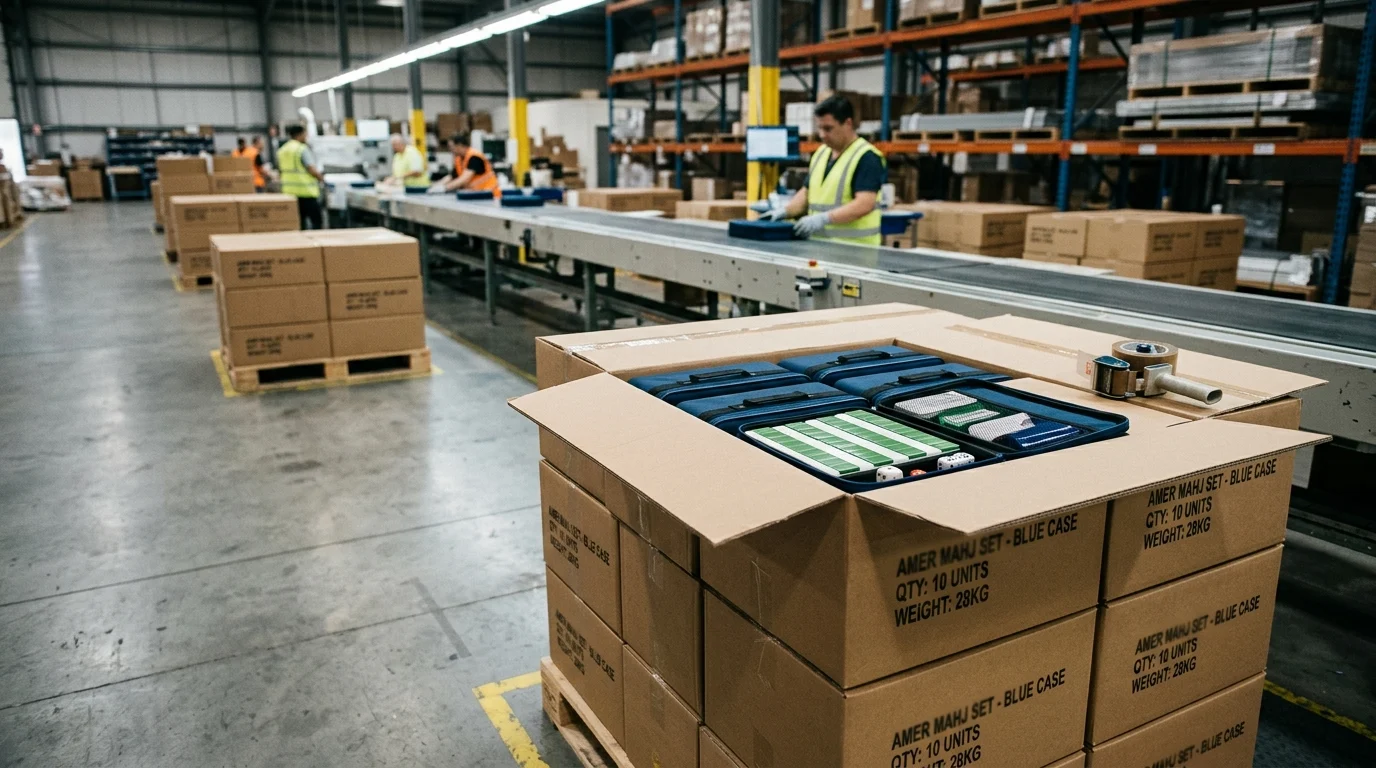
Procuring high-quality tabletop components requires a rigorous understanding of material science and manufacturing tolerances. Unlike traditional Chinese variants, an American Mahjong set demands exactly 152 tiles—including the requisite eight Joker tiles—along with specific accessories like scoring coins, dice, and specialized racks. Establishing precise specifications before issuing a Request for Quotation (RFQ) ensures that manufacturers bid on identical parameters, preventing costly misunderstandings and substandard final products.
Which components have the biggest impact on cost and quality
The financial structure of a complete set is heavily weighted toward two primary components: the tiles themselves and the accompanying Mahjong Rack and Pushers Set. Tiles typically account for 45% to 55% of the total manufacturing cost, driven by raw material volume and the complexity of the engraving and painting processes.
Racks and pushers, particularly those engineered with integrated magnetic closures or premium transparent plastics, represent another 20% to 30% of the unit cost. The remaining budget is allocated to the carrying case, dice, betting coins, and protective packaging. Upgrading from standard extruded plastic to high-grade cast acrylic for the tiles and racks can increase the base FOB price by $10 to $15 per unit, but this investment directly correlates with the perceived heft and durability that premium buyers demand.
How to compare materials, tile readability, racks, and cases
Material selection dictates both the tactile experience and the longevity of the set. Melamine is the traditional industry standard, prized for its high density, scratch resistance, and satisfying acoustic properties when tiles are mixed. However, melamine is largely restricted to opaque colors. Conversely, Acrylic Mahjong sets allow for striking visual effects, including multi-layered colors, glitter infusions, and transparent finishes.
Readability is governed by the depth of the tile engraving; professional sets require an engraving depth of 0.3mm to 0.5mm to ensure that the enamel paint remains intact over thousands of games.
| Feature | Melamine Tiles | Cast Acrylic Tiles |
|---|---|---|
| Density / Weight | High (approx. 14g – 16g per tile) | Medium (approx. 11g – 13g per tile) |
| Visual Customization | Limited (mostly opaque, solid colors) | High (transparent, layered, inclusions) |
| Scratch Resistance | Excellent | Moderate (requires careful polishing) |
| Relative Cost | Baseline | +20% to +40% premium |
Cases also require careful specification. Aluminum flight cases offer superior protection but add significant shipping weight, whereas EVA foam-lined canvas bags reduce freight costs while appealing to players who frequently travel to tournaments.
Which inspection standards and sample approvals buyers should require
Implementing strict quality control protocols is non-negotiable when ordering high-density resin or plastic products at scale. Buyers must establish Acceptable Quality Limit (AQL) parameters in their purchase agreements. A standard benchmark for luxury gaming components is an AQL of 1.5 for major defects (such as chipped tiles or malfunctioning pushers) and 4.0 for minor defects (including slight paint smudges or minor surface scratches).
Furthermore, buyers should specify strict dimensional and weight tolerances. A premium tile should measure exactly 30mm x 23mm x 13mm, with a weight variance of no more than ±0.5 grams across the entire batch of 152 tiles. Prior to mass production, securing a golden sample—a fully finalized prototype that serves as the definitive reference point for third-party inspectors—is critical for holding the factory accountable during the final inspection phase.
How to Compare Suppliers, Pricing, and Compliance
Navigating the global supplier base requires distinguishing between genuine manufacturers and trading companies. Because the 152-tile American variant utilizes distinct molds compared to the 144-tile Asian variant, vetting a supplier’s specific tooling capabilities is essential. A comprehensive evaluation framework safeguards capital and ensures regulatory compliance across international borders.
What a strong supplier evaluation process should include
A robust supplier audit goes beyond verifying business licenses. Buyers must assess a facility’s production capacity, quality management systems (such as ISO 9001 certification), and social compliance records. It is vital to request video walkthroughs or commission third-party audits to confirm that the factory possesses in-house injection molding or CNC routing machinery.
Factories that outsource the creation of Luxury Mahjong Tiles often struggle to maintain color consistency across different production batches. Additionally, analyzing a supplier’s export history to the United States provides assurance that they understand the specific packaging, weight distribution, and logistical expectations of the North American market.
Which wholesale pricing variables and quote terms matter most
Wholesale quotes contain multiple variables that drastically alter the final financial outlay. Incoterms dictate where the buyer’s financial responsibility begins. Free on Board (FOB) pricing is generally preferred, as it requires the manufacturer to cover the costs of transporting the goods to the nearest port and clearing export customs. Ex Works (EXW) pricing may appear 5% to 10% lower on paper, but it shifts the burden of domestic transit and export documentation entirely onto the buyer.
Furthermore, buyers must scrutinize tooling fees. If a brand requests a proprietary tile size or custom typography, the factory will charge a mold fee, typically ranging from $1,500 to $3,500. Negotiating a rebate clause where this tooling fee is refunded after cumulative orders reach 5,000 units is a standard industry practice that protects both parties and incentivizes long-term partnerships.
What safety, labeling, tariff, and documentation requirements apply
While tabletop games are generally exempt from the stringent testing required for children’s toys, compliance remains a critical hurdle. If a set features colorful, playful designs that might appeal to children under 12, it falls under the purview of the Consumer Product Safety Improvement Act (CPSIA), necessitating third-party laboratory testing for lead and phthalates. Even for adult-targeted products, compliance with California’s Proposition 65 is mandatory if selling within the state, requiring either chemical testing or specific warning labels regarding plastics and paints.
On the logistics front, buyers must correctly classify the goods using the Harmonized Tariff Schedule (HTS). Board games and tabletop accessories typically fall under HTS code 9504.90. Depending on the country of origin, imports may be subject to Section 301 tariffs, which can add an additional 7.5% to 25% to the standard duty rate—a substantial variable that must be calculated into the landed cost model prior to issuing a purchase order.
Logistics and Inventory Decisions That Maximize Returns
The physical characteristics of traditional game sets create unique logistical challenges. A standard set is remarkably dense, often weighing between 3.5 and 5.0 kilograms (7.7 to 11 pounds) depending on the case and tile materials. This high weight-to-volume ratio means that freight and warehousing expenses can quickly erode gross margins if not meticulously managed.
How freight mode, carton design, and order timing affect margins
The sheer density of these products renders air freight commercially unviable for mass replenishment. Air shipping can cost between $6.00 and $8.00 per kilogram, potentially adding $30 to $40 in freight costs per unit. Consequently, ocean freight is the only sustainable mode, typically costing $0.30 to $0.60 per kilogram.
To maximize container yield, master carton design is paramount. Cartons should be manufactured from double-wall corrugated cardboard with a minimum burst strength of 200 lbs to prevent crushing under the immense weight of stacked sets. A standard 20-foot shipping container can accommodate approximately 2,200 to 2,500 sets. Consolidating orders to fill a Full Container Load (FCL) rather than utilizing Less than Container Load (LCL) shipping can reduce per-unit freight costs by an additional 15% to 20%.
Which inventory and assortment strategies support replenishment
Effective inventory management requires aligning production lead times with seasonal demand spikes, particularly ahead of the Q4 holiday gifting season and spring tournament circuits. Manufacturing a custom order typically requires 35 to 45 days, followed by 25 to 35 days for trans-Pacific ocean transit and customs clearance.
To prevent stockouts, brands must operate on a 90-to-120-day forecasting cycle. Implementing a staggered delivery strategy—where 30% of the annual volume is shipped in early summer and 70% is scheduled for early autumn—helps balance warehouse space and cash flow. Additionally, holding a 5% buffer stock of spare tiles and pushers allows brands to handle customer service replacements swiftly without cannibalizing complete, sellable sets.
How to evaluate direct import versus distributor purchasing
The decision to manage direct imports versus utilizing a domestic distributor hinges on a brand’s capital reserves and operational maturity.
| Sourcing Strategy | Gross Margin Potential | Lead Time | Minimum Capital Requirement | Best For |
|---|---|---|---|---|
| Domestic Distributor | 35% – 45% | 3 – 7 Days | Low ($1,000 – $3,000) | Startups, market testing, rapid replenishment |
| Direct Factory Import | 65% – 75% | 60 – 90 Days | High ($15,000 – $30,000+) | Established brands, custom designs, scaling volume |
While direct importing maximizes profitability and allows for complete brand customization, it locks up working capital for months while inventory is in transit. Brands must weigh the carrying cost of inventory against the 30% to 40% margin improvement achieved by bypassing the distributor network.
A Buying Framework for Choosing the Right American Mahjong Set
Transitioning to direct wholesale purchasing requires a disciplined, step-by-step methodology to mitigate the risks associated with international manufacturing. An effective buying framework aligns product specifications with target demographics, ensuring that the final landed goods meet both quality expectations and profitability targets. By standardizing the procurement process, buyers can build resilient supply chains capable of scaling alongside market demand.
What sourcing and approval steps reduce purchasing errors
The procurement lifecycle must be gated by strict approval milestones to prevent costly manufacturing errors. The first gate is the approval of digital CAD files and Pantone color matching for tiles and paint fills. The second gate is the physical prototype, which verifies the tactile feel and the functionality of accessories.
The most critical gate is the Pre-Production Sample (PPS). The PPS represents the exact standard to which the mass production run will be held. Buyers should never authorize mass production until the physical PPS has been tested for durability, including drop tests and scratch resistance assessments. Finally, mandating a Pre-Shipment Inspection (PSI) by an independent third-party agency ensures that the factory has adhered to the AQL standards before the balance payment is released and the container is loaded.
How to balance price, quality, customization, and risk
Building a sustainable product portfolio requires balancing premium aspirations with commercial realities. Brands must analyze the risk-reward ratio of deep customization. Launching with highly bespoke molds and proprietary materials increases upfront tooling costs and extends lead times, elevating financial risk.
A prudent strategy involves establishing a baseline product line using standard melamine or standard-dimension acrylic tiles to capture price-sensitive consumers, yielding reliable, high-volume cash flow. Concurrently, the brand can introduce limited-edition or premium sets to capture higher margins and elevate brand prestige. By carefully managing the blend of standard and customized inventory, procurement teams can defend their gross margins, achieve a blended target margin of 60% to 70%, and secure a dominant position in the evolving tabletop gaming market.
Key Takeaways
- The most important conclusions and rationale for American Mahjong Set
- Specs, compliance, and risk checks worth validating before you commit
- Practical next steps and caveats readers can apply immediately
Frequently Asked Questions
What MOQ is typical for direct wholesale American Mahjong sets?
Most factories require 500 to 1,000 sets per production run for factory-direct pricing and customization.
How much can direct factory sourcing reduce landed cost?
A premium set priced at $65 domestically may land around $32 to $38 when sourced direct, depending on freight and duties.
What should be included in a complete American Mahjong set?
Specify 152 tiles, including 8 Jokers, plus racks, pushers, dice, scoring coins, a carrying case, and protective packaging.
Which parts of an American Mahjong set affect cost the most?
Tiles usually make up 45% to 55% of cost, while racks and pushers add about 20% to 30%, especially in premium acrylic builds.
Is acrylic or melamine better for premium American Mahjong sets?
Acrylic is better for transparent, modern luxury designs; melamine is better for dense, scratch-resistant traditional sets with strong tile feel.
Post time: May-28-2026