Introduction
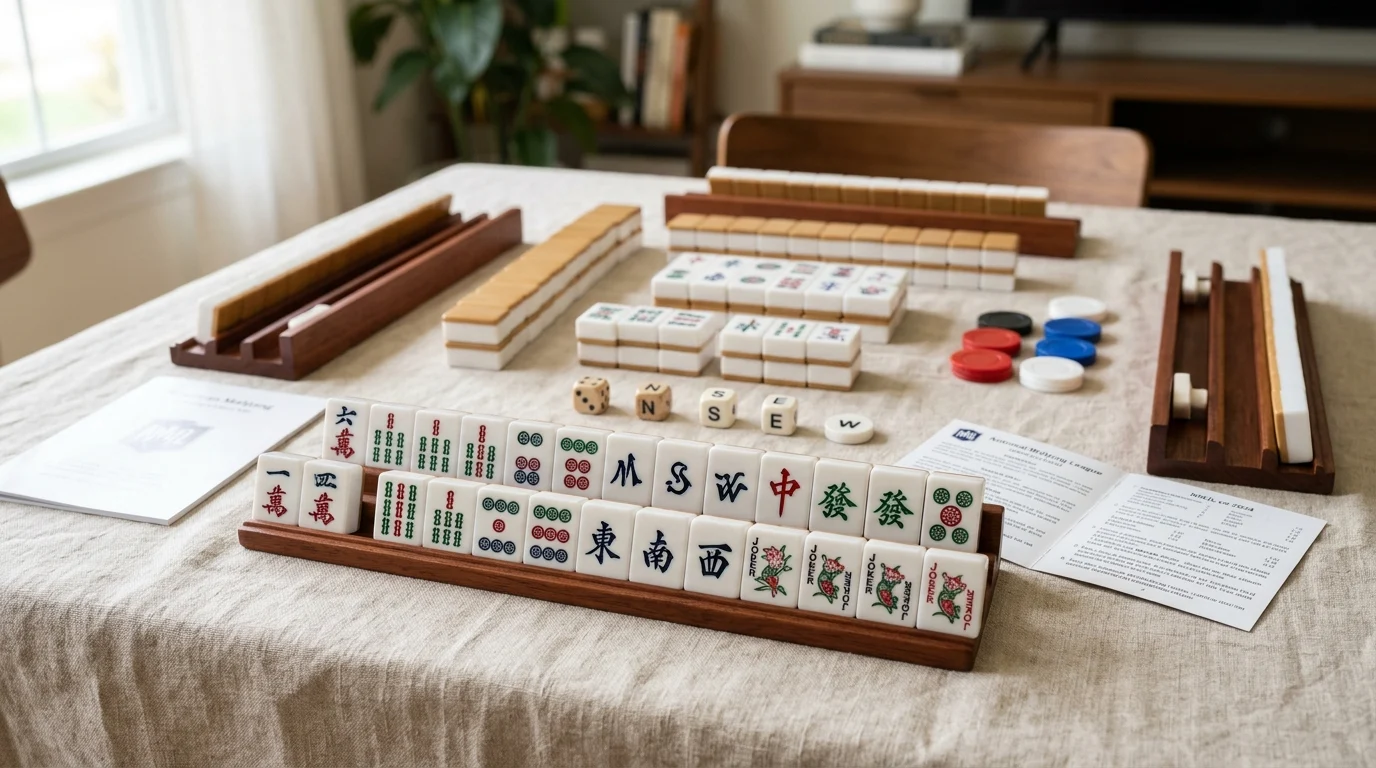
As demand grows for tabletop products that feel both collectible and practical, the American Mahjong set has become a standout wholesale category. Buyers are no longer choosing between function and presentation; they need sets with durable tiles, dependable accessories, and a polished look that supports premium retail pricing. This article explains what makes a wholesale American Mahjong set built for long-term play, which construction and design details matter most, and how those features influence merchandising, customer appeal, and overall product value.
Why Durable and Stylish Wholesale American Mahjong Sets Are in
The resurgence of tabletop gaming has significantly expanded the wholesale market for traditional tile-based games, with American Mahjong emerging as a high-margin category for specialized retailers and lifestyle boutiques. Unlike mass-market board games, an authentic American Mahjong set requires a precise combination of 152 tiles, including the requisite eight Joker tiles, alongside specific accessories such as integrated pushers, racks, and scoring coins. Over the past decade, the market has shifted dramatically from basic, utilitarian designs to premium, aesthetically driven products that serve as both functional games and statement pieces for the home.
Wholesale buyers are now navigating a landscape where the average retail price for a standard mass-market set hovers around $60 to $80, while premium configurations and luxury editions can command $150 to $300 or more. This substantial price elasticity underscores the critical importance of sourcing products that balance robust physical durability with sophisticated styling. Retailers expect these sets to withstand decades of rigorous shuffling while maintaining the visual appeal necessary to justify premium pricing strategies.
How American Mahjong sets shape retailer positioning
Retailers leverage premium game sets to actively elevate their brand positioning and capture a more affluent demographic. By stocking high-end, durable sets, merchants transition from being mere commodity distributors to curators of lifestyle and leisure products. A well-constructed American Mahjong set acts as a flagship item within a gaming, gifting, or home decor catalog, anchoring the visual merchandising of a retail space.
Retailers targeting the boutique gift market or luxury home goods sector rely heavily on these sets to drive higher average order values (AOV). Industry data indicates that retailers who introduce premium tile games experience an AOV increase of 18% to 22% within their leisure and entertainment categories. Furthermore, the highly tactile nature of the product means that physical retail spaces benefit from interactive unboxing displays. Allowing consumers to physically experience the weight, acoustic resonance, and smooth finish of the tiles firsthand drastically improves conversion rates compared to standard flat-pack board games sealed in shrink wrap.
Which market signals are increasing wholesale demand
Several macroeconomic and demographic signals are driving the increased wholesale demand for American Mahjong. Historically popular among specific older demographics, the game has recently seen a profound demographic shift, with a documented 35% increase in adoption among millennial and Gen Z players over the past five years. This younger, design-conscious cohort values aesthetic cohesion, actively seeking sets that feature contemporary color palettes, custom engraving, and modern typography that align seamlessly with modern interior design trends.
Additionally, the rapid rise of localized Mahjong clubs, social leagues, and instructional workshops has created a highly predictable recurring revenue stream for instructional materials and entry-level sets, which subsequently convert into premium set upgrades as players advance. Wholesale distributors consistently note that replenishment orders for high-quality, stylized sets have accelerated significantly. Current market analyses project that wholesale purchase volumes for premium tabletop accessories are growing at an estimated compound annual growth rate (CAGR) of 8.5% in the North American market, signaling a sustained opportunity for early-moving wholesale buyers.
What Defines a High-Quality American Mahjong Set
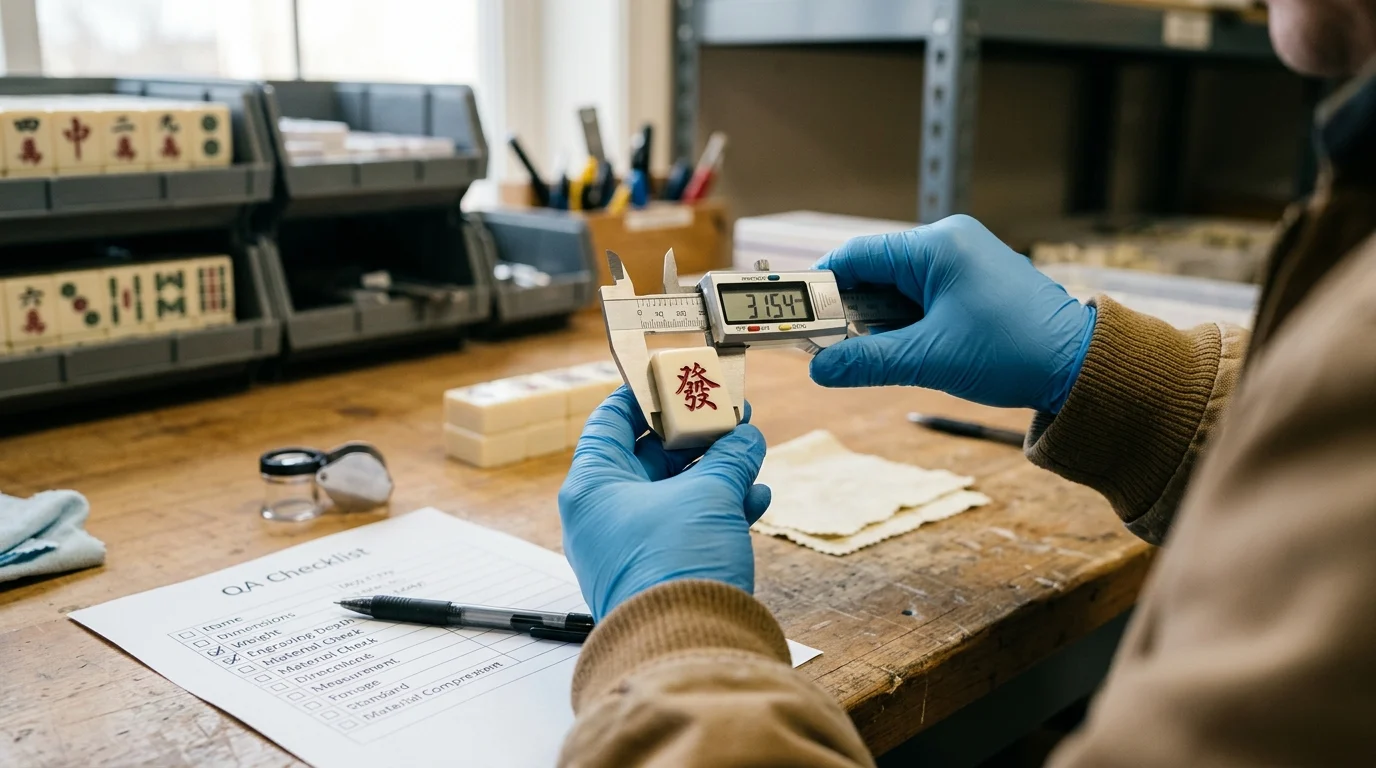
Defining the overall quality of a game set requires a granular examination of its physical properties and manufacturing tolerances. For an Acrylic Mahjong configuration to be deemed high-quality in a competitive retail landscape, it must meet stringent specifications regarding material density, dimensional consistency, and finishing techniques.
The tactile experience is paramount in traditional tile games; players expect a satisfying, sharp resonance when tiles are shuffled (often referred to as “washing” the tiles) and a specific heft that prevents accidental tipping during active gameplay. Standard professional American tiles typically measure 1-1/8 inches long, 7/8 inches wide, and 1/2 inch thick (approximately 28.5mm x 22.2mm x 12.7mm). Any deviation beyond a strict manufacturing tolerance of ±0.5mm can disrupt the wall-building and stacking process, immediately signaling an inferior product to experienced players.
Which materials, tile specs, and accessories matter most
The core material dictates both the long-term longevity and the acoustic properties of the tiles. Melamine resin and cast acrylic remain the undisputed industry standards for premium manufacturing. High-density melamine offers exceptional scratch resistance and a traditional, weighty ivory-like feel, while premium acrylic allows for translucent, two-tone, or glitter-infused designs that appeal heavily to modern sensibilities. A standard high-quality tile should weigh between 14 and 16 grams; significantly lighter tiles often indicate hollow cores, excessive filler materials, or inferior plastic blends that compromise durability.
Beyond the tiles themselves, the functional accessories are equally critical to the set’s perceived value. A comprehensive Mahjong Rack and Pushers Set must feature racks measuring precisely 18 to 19 inches in length to comfortably accommodate the standard 19-tile wall used in the American variant of the game. Pushers must articulate smoothly and securely, utilizing embedded magnets, brass, or high-grade stainless steel hinges rather than fragile plastic pins that are prone to snapping after minimal use.
| Material Type | Average Density (g/cm³) | Engraving Capability | Scratch Resistance | Estimated Unit Cost Premium |
|---|---|---|---|---|
| Standard Melamine | 1.5 – 1.7 | Excellent (Deep cut) | High | Baseline |
| Cast Acrylic | 1.18 – 1.20 | Good (Medium cut) | Moderate | +20% to +35% |
| Injection Plastic | 1.0 – 1.05 | Poor (Surface only) | Low | -15% to -25% |
How to compare set formats and design options
Comparing set formats involves thoroughly analyzing the manufacturing techniques utilized for the tile iconography. High-quality sets utilize deep-recess engraving—typically cutting 0.3mm to 0.5mm deep into the tile face—which is then carefully filled with durable, non-toxic enamel paint. This labor-intensive process prevents the characters, winds, and suits from fading or chipping after thousands of shuffles. Conversely, cheaper mass-market alternatives rely on surface pad printing or heat transfers, which can aggressively wear off within a single year of regular play.
Design options and quality metrics also extend to the carrying case, where soft-sided quilted canvas bags are increasingly competing with rigid aluminum flight cases or reinforced vegan leather attaché cases. The exterior case must not only reflect the aesthetic value of the interior components but also provide robust structural reinforcement. A fully loaded set contains 7 to 9 pounds of dense materials; therefore, the case must feature reinforced stitching, heavy-duty zippers, and load-bearing handles capable of sustaining up to 15 pounds of dynamic tension without tearing.
How to Evaluate Wholesale Manufacturing and Compliance
Navigating the wholesale supply chain successfully requires a rigorous evaluation of a manufacturer’s production capabilities, ethical sourcing standards, and adherence to international compliance frameworks. The manufacturing of Luxury Mahjong Tiles is a complex multi-stage process involving precise injection molding or CNC milling, followed by highly labor-intensive painting, curing, and polishing phases.
Wholesale buyers must ensure that partner factories maintain strict, documented quality control (QC) protocols to prevent costly inconsistencies such as color bleeding, warped pusher accessories, or missing joker tiles. A standard acceptable quality limit (AQL) for premium tabletop sets is typically set at 1.5 for major defects (e.g., chipped tiles, broken hinges) and 4.0 for minor defects (e.g., slight paint smudges). Shipments failing to meet these critical thresholds can lead to significant retail return rates, margin erosion, and severe brand damage.
Which supplier capabilities and testing standards to review
When auditing a prospective supplier, wholesale buyers should prioritize facilities holding current ISO 9001 certifications, which guarantee the implementation of standardized quality management systems. The supplier’s tooling and machinery capabilities are critical; high-precision molds ensure that the injection gates (the point where plastic enters the mold) are hidden on the tile’s edge and that all corners are perfectly chamfered, preventing sharp edges that could scratch playing surfaces. Buyers should routinely request historical data on the factory’s rejection rates and review their process for batch color-matching, specifically verifying strict adherence to Pantone standardized color codes.
Additionally, evaluating the supplier’s overall production capacity is essential to avoid catastrophic stockouts during peak Q4 holiday purchasing seasons. A reliable and mature manufacturer should demonstrate the ability to scale production efficiently, accommodating minimum order quantities (MOQs) that typically range from 500 to 1,000 units, while consistently maintaining strict production lead times of 45 to 60 days from the moment of final sample approval.
What compliance, labeling, and packaging requirements apply
Although primarily marketed as a leisure activity for adults, these sets often fall under general consumer product safety regulations, and occasionally strict toy safety standards if the packaging or marketing imagery is deemed ambiguous. In the United States market, strict compliance with the Consumer Product Safety Improvement Act (CPSIA) is mandatory, particularly regarding permissible lead and phthalate content in industrial paints and plastics. Third-party heavy metal testing must conclusively yield results below 90 parts per million (ppm) for all surface coatings and enamels used on the tiles.
Furthermore, the product’s packaging must meet rigorous structural integrity standards to survive the harsh realities of international ocean freight and domestic final-mile delivery networks. Drop-test compliance—such as standardized ISTA 1A or 3A protocols—ensures that the heavy internal components do not breach their storage trays or puncture the outer corrugated cartons during transit. Proper regulatory labeling, including clear country of origin declarations, batch tracking numbers, and choking hazard warnings for small accessories like dice and betting coins, must be legibly printed on the retail packaging to avoid costly customs holds at the port of entry.
Which Cost, Logistics, and Merchandising Factors Affect Value
The total landed cost of a wholesale order is heavily influenced by a complex matrix of manufacturing inputs, customization levels, and macroeconomic logistical realities. Understanding these interlocking variables allows procurement managers to dynamically optimize their purchasing strategies, negotiate effectively, and maximize retail gross margins.
While the FOB (Free On Board) price of a standard, uncustomized set might range from $18 to $25 at the factory gate, the strategic inclusion of premium materials, custom-tooled accessories, and specialized retail packaging can easily push the wholesale unit cost to $35, $50, or beyond. Buyers must conduct a thorough economic analysis to ensure that the final retail price point aligns perfectly with the target demographic’s willingness to pay, typically aiming for a healthy gross margin of 60% to 75% to absorb marketing and distribution costs.
How tooling, materials, decoration, and order volume affect cost
Tooling represents a significant upfront capital expenditure that must be factored into the initial ROI calculations. Custom steel molds for proprietary tile sizes, unique pusher mechanisms, or branded carrying cases can cost between $3,000 and $6,000 per mold. This fixed cost must be carefully amortized over the projected production volume to understand the true unit cost. Material selection also heavily influences the final invoice; cast Luxury Mahjong sets utilizing virgin, high-clarity acrylic command a 20% to 30% premium over standard melamine sets due to exponentially higher raw material costs and longer thermal curing times.
Decoration complexity—such as multi-color inlay, metallic foil stamping, or the inclusion of custom localized joker tiles—directly increases manual labor costs and extends production time. Consequently, aggregate order volume becomes the primary lever for aggressive cost reduction. Scaling a purchase order from 500 units to 2,500 units can reliably reduce the per-unit decoration and raw material costs by 12% to 18%, significantly improving the overall return on investment and allowing for more competitive retail pricing.
Which metrics help compare total value
Evaluating total commercial value requires moving far beyond the baseline factory invoice and meticulously calculating the total landed cost. This comprehensive metric includes ocean or air freight, customs duties (which vary wildly by origin country and HS code classification, typically falling under 9504.90 for parlor and board games), port fees, and domestic warehousing costs. Because these sets are exceptionally dense and heavy, dimensional weight (DIM weight) and actual gross weight calculations play a massive role in determining final freight costs.
A standard shipping pallet can hold approximately 100 to 120 sets, weighing well over 1,000 pounds in total. Buyers must utilize standardized logistical metrics such as Cost Per Cubic Meter (CBM) and Freight as a Percentage of COGS to accurately compare different suppliers, consolidate shipments, and select the most cost-effective global logistics routes.
| Order Volume (Units) | Est. Tooling Amortization (Per Unit) | Base Unit Cost (FOB) | Est. Freight Burden (Per Unit) | Total Landed Cost |
|---|---|---|---|---|
| 500 | $8.00 | $28.00 | $6.50 | $42.50 |
| 1,000 | $4.00 | $26.50 | $5.75 | $36.25 |
| 5,000 | $0.80 | $24.00 | $4.50 | $29.30 |
How to Select the Right Wholesale American Mahjong Set
Selecting the optimal set for wholesale distribution requires a highly systematic approach that perfectly aligns overseas manufacturing capabilities with downstream domestic retail expectations. The procurement process must delicately balance the demanding aesthetic preferences of the end consumer with the harsh, uncompromising realities of supply chain logistics, margin requirements, and strict regulatory compliance.
A successful, long-term sourcing initiative for an American Mahjong Set minimizes financial risk through rigorous supplier vetting and iterative product development. This calculated approach ensures that the final delivered product performs flawlessly in both domestic casual settings and highly competitive tournament environments, ultimately building brand equity and driving repeat business.
Which sourcing steps help align product and market needs
The sourcing journey must invariably begin with a comprehensive Request for Quotation (RFQ) document that explicitly details material grades, acceptable dimensional tolerances, Pantone color codes, and accessory specifications. Following the initial RFQ and supplier shortlisting, buyers must initiate a multi-stage sampling phase. This typically involves receiving a “looks-like” prototype to evaluate aesthetic finishes and color accuracy, followed by a functional “works-like” pre-production sample to test the mechanical integration of the racks, pushers, and case hardware.
This critical sampling phase, which generally requires 14 to 21 days per iterative cycle, is absolutely essential for identifying potential manufacturing flaws before mass production commences and capital is deployed. Furthermore, buyers should legally mandate third-party laboratory testing on these pre-production units to verify compliance with heavy metal limits and structural packaging standards, thereby perfectly aligning the physical product with legal market entry requirements and mitigating liability.
What criteria best balance style, durability, compliance, and ma
rgin
The final selection criteria must objectively weigh competing variables to achieve true commercial viability. Style and durability often pull in opposite directions from unit cost; for example, highly stylized, translucent acrylics may be inherently more brittle than industrial-grade melamine, necessitating the use of expensive, custom-cut EVA foam packaging to effectively mitigate a potential 3% to 5% transit breakage rate.
Astute buyers must calculate the total lifecycle cost of the product, heavily factoring in potential return rates, customer service overhead, and warranty claims against the initial Cost of Goods Sold (COGS). A premium set that costs $2 more to manufacture but features superior paint adhesion and reinforced brass hinge hardware will ultimately yield a significantly higher net margin by drastically reducing return processing costs and protecting long-term brand equity.
Ultimately, the best selection criteria rely on a holistic, data-driven ROI analysis: ensuring the set’s premium features and tactile quality easily justify a retail price point that supports a minimum 65% gross margin, while the supplier’s proven compliance and QC frameworks guarantee an ongoing defect rate well below the strict 1.5% threshold.
Key Takeaways
- The most important conclusions and rationale for American Mahjong Set
- Specs, compliance, and risk checks worth validating before you commit
- Practical next steps and caveats readers can apply immediately
Frequently Asked Questions
What should a complete American Mahjong set include?
A full American Mahjong set should include 152 tiles with 8 Jokers, plus racks, pushers, betting or scoring coins, and a storage case for organized play.
Why are acrylic American Mahjong tiles preferred for lasting play?
Acrylic tiles resist chipping, keep their color and finish longer, and provide the solid weight and sharp shuffle sound many players expect during regular games.
What tile size is standard for American Mahjong sets?
A common professional size is about 1-1/8 inches by 7/8 inch by 1/2 inch. Consistent sizing helps with stable walls, smooth handling, and a better player experience.
Who typically buys wholesale American Mahjong sets?
Boutique retailers, gift shops, home decor stores, game sellers, and Mahjong clubs often buy wholesale sets to offer premium products with higher perceived value.
How can stylish Mahjong sets help retailers sell more?
Stylish sets work as giftable, display-worthy products that raise average order value, attract design-conscious shoppers, and support premium pricing in-store or online.
Post time: May-28-2026