Introduction
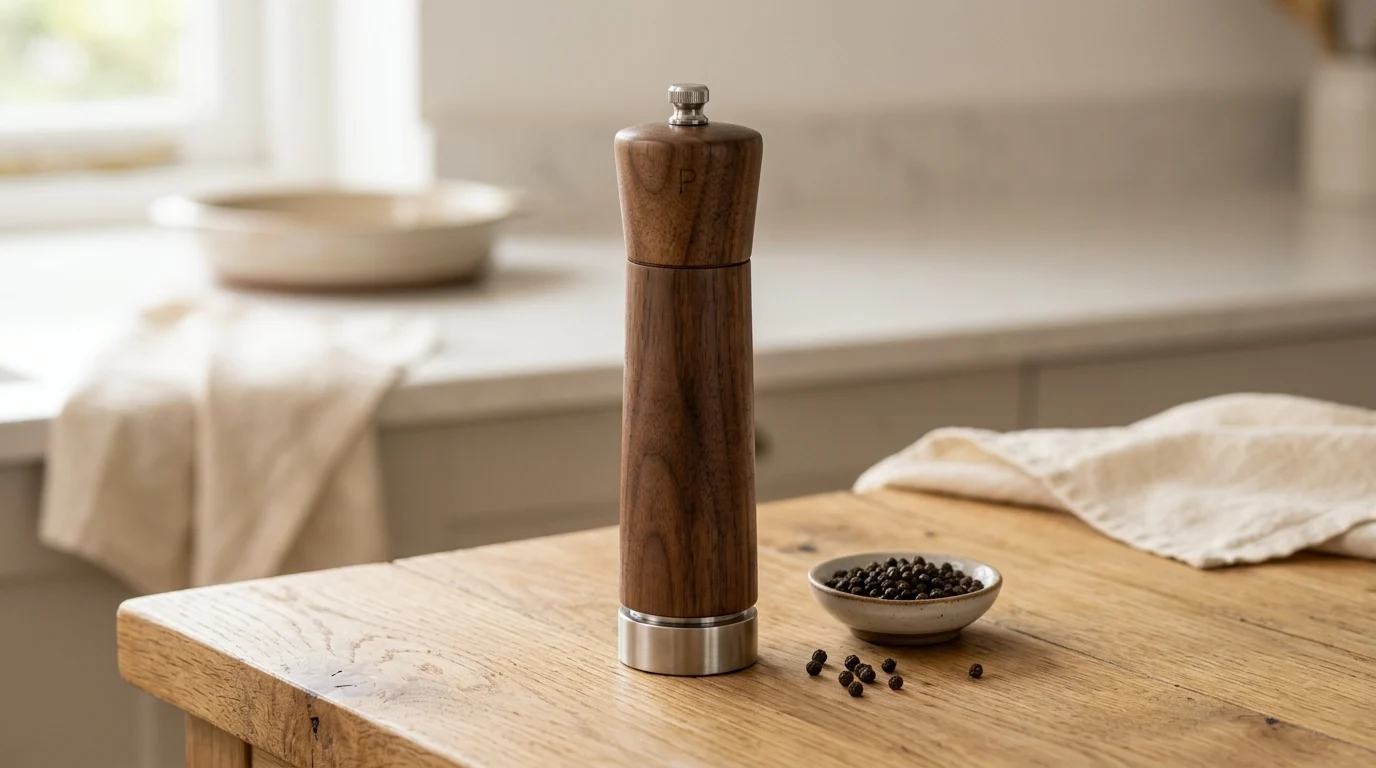
As premium kitchen tools gain ground in retail and corporate gifting, the pepper mill has become more than a simple grinder. It now serves as a practical product, a brand touchpoint, and a gift item with lasting everyday value. This article explains why customized pepper mills appeal to brands and gift markets, what design and performance factors shape buyer decisions, and how material, mechanism, and presentation choices affect both perceived quality and commercial success. From private-label positioning to memorable gift programs, the discussion that follows shows how tailored grinder solutions can meet specific market demands without sacrificing function.
Why Customized Pepper Mills Matter for Brands and Gifts
The global culinary tools sector has transitioned from prioritizing purely utilitarian function to demanding products that serve as aesthetic centerpieces and extensions of brand identity. Within this landscape, the classic Pepper Mill has emerged as a high-value canvas for corporate branding, culinary merchandising, and premium retail. This shift is driven by a consumer base that increasingly values tactile, durable kitchenware over disposable or purely decorative items.
For procurement specialists and product managers, developing a customized grinding mechanismm](https://www.nbyisure.com/products/pepper-and-salt-mill/) requires navigating a complex matrix of material science, mechanical engineering, and supply chain logistics. A well-executed customization program not only elevates the perceived value of the product but also ensures it meets the rigorous functional demands of both professional kitchens and discerning home chefs.
Market drivers behind rising demand
The trajectory of the housewares market indicates a sustained compound annual growth rate (CAGR) of approximately 5.8% in premium kitchen accessories, heavily influenced by the rise of experiential dining and gourmet home cooking. Consumers and corporate clients alike are moving away from generic promotional items, favoring functional tools that offer longevity. In the corporate sector, gifting budgets exceeding $150 per recipient are increasingly allocated toward high-end culinary tools rather than traditional consumables or office accessories.
Furthermore, specialty spice brands and gourmet food distributors are leveraging bespoke grinding hardware to differentiate their core commodity offerings. By pairing proprietary spice blends with a custom-engineered Customization program, these brands create a closed-loop ecosystem that encourages repeat purchases and solidifies brand loyalty through daily tactile engagement.
How customization supports branding and gifting
Customization transforms a standard kitchen implement into a persistent brand touchpoint. The physical architecture of a grinder provides ample surface area for sophisticated branding applications, such as subtle laser-engraved logos on wooden bodies, embossed metal finials, or custom Pantone-matched acrylic finishes. When deployed in the Gift Market, these personalized touches significantly elevate the unboxing experience and the item’s perceived retail value.
Beyond surface-level aesthetics, deep customization supports specific functional branding. For example, a steakhouse chain might commission oversized, heavily weighted wooden mills that communicate rustic durability, while a modern minimalist spice brand might opt for sleek, brushed stainless steel cylinders with internal hidden mechanisms. Statistical analysis of consumer behavior indicates that premium, custom-branded packaging and unique material finishes can increase a product’s perceived market value by up to 40%, directly impacting retail margins and corporate gifting ROI.
What a Customized Pepper Mill Program Includes
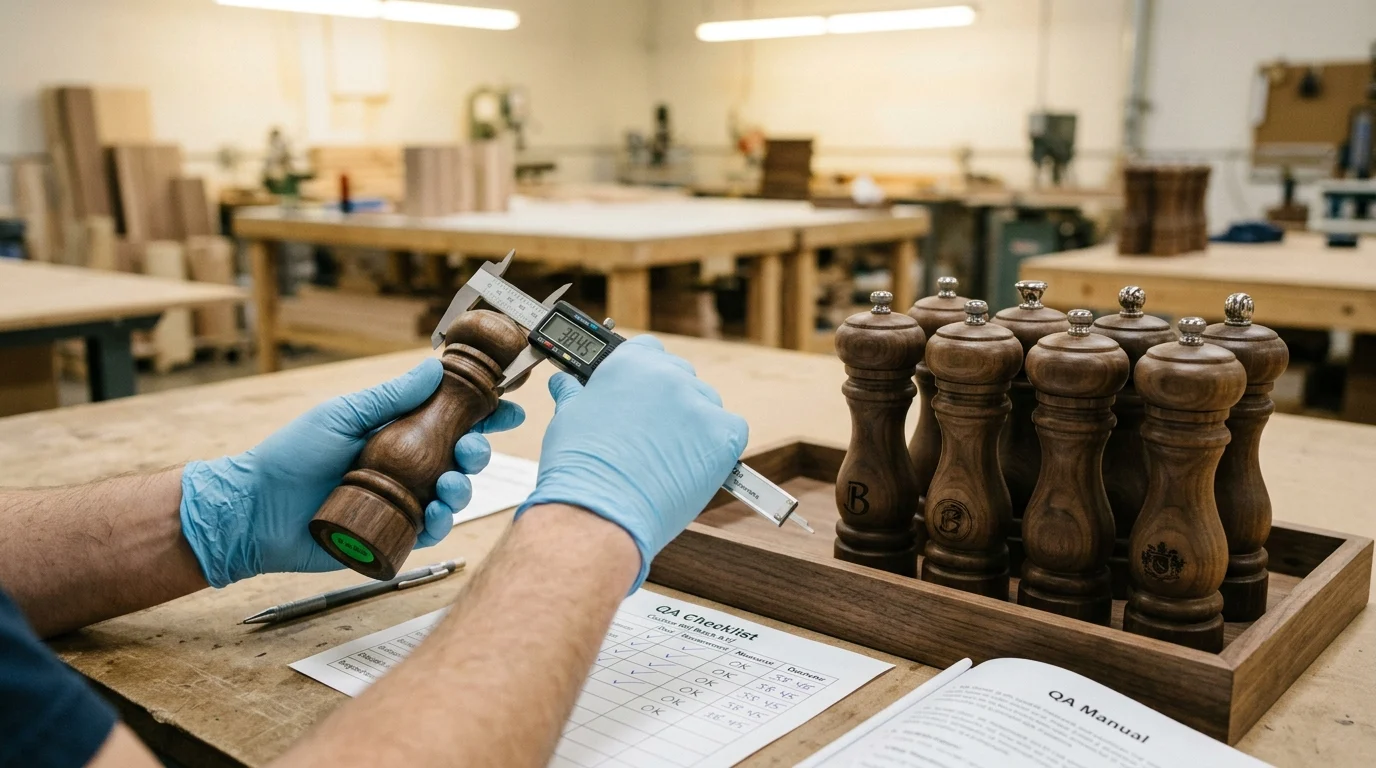
A successful custom program requires a granular understanding of the product’s anatomy and the manufacturing pathways available. Every grinder is a precision mechanical device masquerading as a simple hand tool. The interaction between the external housing, the drive shaft, the tension spring, and the burr mechanism dictates the product’s lifespan, tactile feedback, and ultimate market positioning.
Core components, materials, and grinding mechanisms
The heart of any milling device is its grinding mechanism. The primary choices for the burr are high-alumina ceramic, carbon steel, and stainless steel. Ceramic mechanisms, which typically register an 8.5 on the Mohs hardness scale, are highly resistant to wear and completely immune to oxidation, making them the universal standard for any Salt Grinder. High-carbon steel, conversely, offers sharper cutting edges that shear rather than crush peppercorns, releasing more volatile oils, but it will rapidly corrode if exposed to salt or high moisture.
The internal drive shaft must be constructed from corrosion-resistant materials, typically 304 or 316-grade stainless steel or extruded aluminum, to withstand the rotational torque applied over thousands of uses. A commercial-grade mechanism is generally engineered to survive a minimum of 10,000 grinding cycles without a degradation in particle size consistency of more than 15%.
Standard models vs OEM and ODM options
Procurement teams must choose between Standard (White-label), Original Equipment Manufacturer (OEM), and Original Design Manufacturer (ODM) pathways based on their capital allocation and time-to-market constraints. Standard models utilize existing factory molds and mechanisms, allowing for rapid deployment with surface-level branding like pad printing or laser engraving. OEM programs take existing internal architectures but modify external colors, finishes, or minor housing details.
ODM programs involve ground-up engineering, requiring new injection molds for plastics or custom CNC programming for wood and metal. This pathway offers total market exclusivity but requires significant upfront capital for tooling and extensive prototyping phases to ensure mechanical viability.
| Customization Tier | Tooling Cost Range | Typical MOQ | Time-to-Market | Market Exclusivity |
|---|---|---|---|---|
| Standard (White-Label) | $0 | 500 – 1,000 units | 15 – 30 days | None |
| OEM (Modified Finish) | $500 – $1,500 | 2,000 – 3,000 units | 45 – 60 days | Moderate |
| ODM (Custom Tooling) | $3,000 – $10,000+ | 5,000+ units | 90 – 120 days | Complete |
Material trade-offs and product positioning
Material selection dictates both unit economics and the product’s sensory appeal. Natural woods, such as European Beech, North American Walnut, or Acacia, offer premium tactile warmth but require strict moisture content control during manufacturing. Wood must be kiln-dried to a moisture level strictly below 12% to prevent radial cracking or warping when shipped across varying global humidity zones.
Acrylic provides high clarity for visually showcasing exotic spice blends but is susceptible to micro-scratching if surface hardness is not optimized. Metal housings, particularly those utilizing 304 stainless steel, offer superior durability and a contemporary aesthetic, though they command a premium raw material cost that can increase unit prices by $1.50 to $3.00 compared to standard acrylic or basic wood alternatives. The choice of material fundamentally anchors the product in either the value, mid-market, or luxury tier.
How to Evaluate Specifications, Quality, and Compliance
Because these devices process consumables, they exist at the intersection of mechanical hardware and food-contact products. Evaluating a manufacturer’s capabilities requires looking past aesthetic samples and demanding rigorous, documented proof of mechanical endurance, material safety, and systematic defect control.
Key performance and durability criteria
Performance is measured by grind consistency, throughput, and required torque. A premium mechanism should yield a predictable particle size distribution; for instance, on a medium setting, a high-quality burr should output 80% of its particulate volume within a 0.5mm to 1.5mm diameter range. Excessive fine dust or large uncrushed fragments indicate poor burr alignment or inadequate spring tension.
Durability testing protocols should include torque resistance limits and lifecycle simulations. A standard specification requires the mill to operate smoothly with less than 0.8 Nm (Newton-meters) of rotational force under normal load. Furthermore, drop testing is critical for heavy wooden or acrylic models; a standard ISTA 1A protocol requires the packaged unit to survive multiple drops from a height of 1 meter onto a concrete surface without functional impairment or catastrophic housing failure.
Food-contact compliance, labeling, and testing
Global regulatory compliance is non-negotiable for any item intended for culinary use. Components that contact the spice—specifically the burr, the internal shaft, and the storage chamber—must pass stringent chemical migration tests. In the United States, materials must comply with FDA 21 CFR standards for food contact surfaces. In the European Union, the German LFGB standard is widely regarded as the most rigorous benchmark.
LFGB testing evaluates the migration of heavy metals and volatile organic compounds. For example, stainless steel components must demonstrate that lead migration remains strictly below 0.01 mg/kg, and cadmium below 0.005 mg/kg, when exposed to 4% acetic acid solutions at elevated temperatures. Failure to secure these laboratory certifications from accredited third parties (such as SGS, TUV, or Intertek) can result in complete customs seizures at the port of entry.
Quality assurance, sampling, and defect control
Effective quality assurance relies on statistical sampling rather than assumption. Industry best practice dictates the implementation of Acceptable Quality Limit (AQL) standards during pre-shipment inspections, typically set at AQL 1.5 for major defects (e.g., mechanism jamming, deep scratches) and AQL 4.0 for minor defects (e.g., slight finish variations).
Environmental testing is also critical, particularly for metal components. Salt spray testing (ASTM B117) should be conducted for a minimum of 48 to 72 hours to ensure that metal finials, bands, and shafts do not exhibit premature oxidation. For wooden models, thermal shock testing verifies that the clear-coat lacquer will not peel or cloud when subjected to rapid temperature fluctuations typical of international shipping routes.
What Drives Sourcing, Cost, and Logistics Decisions
The commercial viability of a customized milling product is heavily dependent on optimizing the supply chain. Procurement professionals must balance the desired level of bespoke design against Minimum Order Quantities (MOQs), tooling investments, and the volumetric realities of global freight.
MOQ, tooling, decoration, and packaging cost factors
Manufacturing costs scale inversely with volume, but the initial capital expenditure is dictated by the customization depth. White-labeling an existing design might carry an MOQ of just 500 units, with decoration costs remaining marginal—laser engraving typically adds merely $0.10 to $0.20 per unit, while multi-color water transfer printing might add $0.40 to $0.60. However, transitioning to an ODM model triggers tooling costs. A multi-cavity injection mold for a custom acrylic body can range from $4,000 to $8,000, necessitating MOQs of 5,000 units or more to amortize the setup costs effectively.
Packaging is another major cost driver that serves dual purposes: protection and presentation. A basic corrugated white box costs pennies, but a rigid, EVA-foam-lined magnetic closure box designed for the premium gifting sector can add $1.50 to $2.50 to the final Bill of Materials (BOM). Buyers must calculate these elements meticulously to ensure the landed cost aligns with target retail margins, which typically require a 4x to 5x markup from factory gate to retail shelf.
RFQ to production workflow
The workflow from Request for Quotation (RFQ) to mass production requires structured milestone management. Following the initial RFQ and specification sheet alignment, the sampling phase typically consumes 15 to 25 days. For ODM projects, 3D printed rapid prototypes (SLA or SLS) are generated within 7 days to verify ergonomics before committing to steel tooling.
Once the golden sample is approved and the deposit is wired, mass production lead times generally span 35 to 50 days, depending on raw material availability and factory capacity. Buyers must factor in an additional 7 to 10 days for third-party inspections and export customs clearance before the goods are handed over to the freight forwarder.
Channel and distribution requirements
Logistics optimization begins at the design phase. Because grinders contain significant empty space (the spice chamber), they are inherently inefficient to ship. Volumetric weight often exceeds actual physical weight, making ocean freight the only economically viable option for bulk orders. A standard 20-foot shipping container (TEU) can typically accommodate between 20,000 and 28,000 units of a standard 8-inch mill, depending strictly on the master carton configuration.
By reducing retail packaging dimensions by just 10%, brands can increase container utilization density, effectively lowering the per-unit freight cost by $0.30 to $0.50 in current ocean freight markets. Furthermore, distribution channels dictate packaging resilience; products destined for e-commerce fulfillment must meet ISTA 3A standards to survive the harsh parcel delivery network without requiring secondary over-boxing.
| Cost Factor | Low Complexity (White-Label) | High Complexity (ODM / Premium) | Impact on Landed Cost |
|---|---|---|---|
| Unit Price (FOB) | $2.50 – $4.00 | $6.00 – $12.00+ | Primary driver |
| Packaging | $0.15 (Standard Box) | $2.00 (Rigid Gift Box) | High impact on volumetric freight |
| Tooling Amortization | $0.00 | $0.50 – $1.00 per unit (first run) | Decreases on repeat orders |
| Quality Testing | Standard Factory QA | $500 – $1,000 (Third-Party Lab) | Fixed cost per production batch |
How to Choose the Right Customization Strategy
Selecting the appropriate procurement strategy requires aligning the brand’s commercial objectives with supply chain realities. A miscalibration between the desired product tier and the allocated budget will inevitably lead to compromised quality or eroded profit margins.
Decision framework for selecting customization depth
The decision framework for selecting customization depth rests on three pillars: capital availability, timeline urgency, and brand equity goals. If a corporate buyer requires 1,000 units for an upcoming holiday gifting event with a 45-day deadline, standard white-labeling is the only statistically reliable option. Conversely, a flagship culinary brand looking to anchor its retail presence for the next five years should absorb the 120-day development cycle and $15,000+ upfront investment required for a fully proprietary ODM design.
Brands must also evaluate the lifecycle of the product. High-end retail models demand replaceable mechanisms and easily serviceable components, whereas promotional items are generally treated as monolithic, non-repairable units. Establishing the target retail price point early allows procurement teams to work backward, setting strict limits on BOM costs, freight allowances, and tooling amortization schedules.
Common sourcing mistakes to avoid
One of the most prevalent sourcing errors is investing heavily in exterior aesthetics while commoditizing the internal mechanism. A beautifully crafted walnut housing is commercially useless if the internal plastic housing cracks under 1.0 Nm of torque. Another critical failure point is the mechanism mismatch: specifying a high-carbon steel burr for a set intended to process both pepper and rock salt. The salt will inevitably cause the steel to oxidize within weeks, leading to catastrophic product failure and brand damage.
Finally, failing to account for environmental variables during shipping remains a costly oversight. Importing wooden mills with a moisture content of 14% into a dry, high-altitude market like Denver, Colorado, will result in the wood rapidly shrinking and the internal metal mechanisms becoming loose or misaligned. Strict adherence to material specifications, verified by independent pre-shipment inspections, is the only safeguard against these structural failures.
Key Takeaways
- The most important conclusions and rationale for Pepper Mill
- Specs, compliance, and risk checks worth validating before you commit
- Practical next steps and caveats readers can apply immediately
Frequently Asked Questions
What can be customized on a pepper mill for branding or gifting?
You can customize the body material, color, finish, logo method, packaging, and grind mechanism to match your brand or gift positioning.
Which grinding mechanism is best for pepper mills and salt grinders?
Use carbon steel for pepper to get sharp, consistent grinding, and ceramic for salt because it resists corrosion and moisture.
Should brands choose standard, OEM, or ODM pepper mill programs?
Choose standard for fast launches, OEM for tailored finishes and branding, and ODM for fully custom shapes and engineered features.
Why are customized pepper mills effective for corporate gifts?
They are practical, durable, and used often, so your brand stays visible longer than with disposable or purely decorative gifts.
What features make a custom pepper mill feel premium?
Premium mills usually combine durable materials, smooth grind adjustment, balanced weight, precise burrs, and high-quality branded packaging.
Post time: May-28-2026