Air frying offers a fantastic way to enjoy healthier meals without sacrificing flavor. By using approximately 50%–70% less oil than traditional frying methods, air frying significantly lowers the fat content in your food. This method also reduces harmful substances, like acrylamides, by up to 90%.
Plus, air fryers, produced by various air fryer manufacturers, are incredibly easy to use and versatile. Whether you’re whipping up crispy vegetables or baking a delicious dessert, these appliances can handle it all. With air fryers becoming essential kitchen tools in many households, now’s the perfect time to explore new cooking techniques for better health.
Key Takeaways
- Preheat your air fryer for even cooking and crispiness. This simple step can significantly improve your meal results.
- Use healthy oils with high smoke points to enhance flavor without harmful compounds. Avocado oil is a top choice.
- Cut food into uniform sizes to ensure even cooking. This practice leads to better texture and faster cooking times.
- Avoid overcrowding the air fryer basket. Give food space to allow hot air to circulate for crispy results.
- Shake or flip food halfway through cooking. This technique promotes even browning and improves texture.
- Experiment with cooking times and temperatures. Air fryers often cook faster than traditional ovens, so adjust accordingly.
- Use cooking spray for a crispy finish while keeping meals healthier. A light coating can enhance flavor without extra calories.
- Clean your air fryer regularly to maintain performance and flavor. A clean appliance ensures better-tasting meals and safety.
Tip 1: Preheat Your Air Fryer
Why Preheating Matters
Preheating your air fryer is a simple step that can make a big difference in your cooking results. When you preheat, you allow the appliance to reach the optimal cooking temperature before adding your food. This practice helps achieve a more even cook and enhances the crispiness of your meals. Here are some key reasons why preheating is essential:
- Even Cooking: Preheating ensures that your food cooks uniformly. If you skip this step, you might end up with some parts overcooked while others remain undercooked.
- Crispier Finish: Foods like fries and chicken wings benefit greatly from preheating. It helps create that desirable crispy texture on the outside while keeping the inside tender.
- Reduced Cooking Time: Starting at the right temperature means your food cooks faster. This efficiency is especially helpful when you’re in a hurry.
How to Preheat Correctly
Preheating your air fryer is straightforward. Follow these simple steps to get it right:
- Set the Temperature: Turn on your air fryer and set it to the desired cooking temperature, usually around 400°F for most recipes.
- Time It Right: Allow the air fryer to preheat for about three minutes. This short wait can significantly improve your cooking results.
- Check the Indicator: Many air fryers have a preheat indicator light. Wait until it signals that the appliance is ready before adding your food.
By following these steps, you can avoid common mistakes like overcrowding the basket or using too high a temperature, which can lead to uneven cooking and soggy food. Remember, preheating is not just a suggestion; it’s a crucial part of using any air fryer effectively.
Tip 2: Use the Right Amount of Oil
Choosing Healthy Oils
Using the right oil can make a significant difference in your air frying experience. Not all oils are created equal, and some are healthier than others. Here’s a quick guide to help you choose the best oils for your air fryer:
Tip: Look for oils with high smoke points. This ensures they won’t break down and produce harmful compounds during cooking.
Here’s a table of some popular oils and their smoke points:
| Oil | Smoking Point (ºF) |
|---|---|
| Avocado oil | 520 |
| Extra light olive oil | 468 |
| Peanut oil | 441–445 |
| Sunflower oil | 486–489 |
| Palm oil | 455 |
| Soybean oil | 453 |
| Canola oil (refined) | 400 |
| Canola oil (pressed) | 428–446 |
| Corn oil | 446–460 |
| Vegetable oil | 428 |
Among these, avocado oil stands out due to its high smoke point and healthy fat profile. Olive oil, especially extra virgin, is rich in antioxidants and offers numerous health benefits. It’s perfect for drizzling over vegetables before air frying.
How Much Oil to Use
When it comes to air frying, less is often more. Air frying can lead to a reduction of up to 90% in the amount of oil absorbed by food compared to deep frying. This means you can enjoy crispy meals without the extra calories.
Here’s a quick look at how much oil to use for different types of food:
| Food Type | Oil Measurement |
|---|---|
| General Use | 1 tsp. to 2 TBSP |
| Spraying | About 1 tsp. on all sides |
| Vegetables | 1 TBSP – 2 TBSP |
Using the right amount of oil not only enhances flavor but also keeps your meals healthier. For general cooking, a teaspoon or two is usually sufficient. If you’re spraying oil, aim for about a teaspoon on all sides of your food. This method helps achieve that golden, crispy finish without overdoing it on calories.
Tip 3: Cut Food into Uniform Sizes

Importance of Uniformity
Cutting food into uniform sizes is crucial when using an air fryer. This practice ensures that all pieces cook evenly, preventing some from being overcooked while others remain undercooked. When food cooks at the same rate, it results in a better texture and flavor. Here are a few reasons why uniformity matters:
- Even Cooking: Uniform pieces allow hot air to circulate around each item, promoting consistent cooking. This is especially important for foods like chicken, potatoes, and vegetables.
- Improved Texture: When all pieces are the same size, they achieve that perfect crispiness together. No one wants a soggy fry next to a perfectly crispy one!
- Faster Cooking: Smaller, uniform pieces cook faster than larger, unevenly cut items. This can save time, especially on busy weeknights.
Best Practices for Cutting
To get the best results, follow these best practices for cutting your food:
- Use a Sharp Knife: A sharp knife makes cutting easier and safer. Dull knives can slip and cause accidents.
- Aim for Similar Thickness: Try to cut food into pieces that are about the same thickness. For example, if you’re cutting potatoes for fries, aim for sticks that are roughly 1/4 inch thick.
- Consider Cooking Times: Different foods have different cooking times. For instance, seafood cooks quickly, while tougher vegetables like carrots take longer. Keep this in mind when cutting.
Tip: For seafood, avoid overcrowding the fryer basket. This ensures proper air circulation. Shake the basket every couple of minutes for even cooking. For vegetables, lightly oil them before air frying for better texture and flavor. Remember, soft vegetables cook quickly, while tougher roots take longer.
By following these cutting tips, you can enhance your air frying experience. Uniformly cut food not only looks appealing but also cooks more efficiently, leading to delicious meals every time.
Tip 4: Don’t Overcrowd the Air Fryer Basket
Effects of Overcrowding
Overcrowding the air fryer basket can ruin your cooking experience. When you pack too much food in, it prevents proper air circulation. This lack of airflow leads to uneven cooking and can create soggy textures. Instead of achieving that crispy finish, you might end up with food that feels more steamed than air-fried. Here are some key effects of overcrowding:
- Uneven Cooking: Hot air needs space to circulate around each piece of food. If it can’t move freely, some items may cook faster than others.
- Soggy Textures: Excess moisture from crowded food can create a steaming effect. This results in less desirable textures, especially for items like fries or chicken wings.
- Longer Cooking Times: When food is overcrowded, it takes longer to cook. You might find yourself waiting for that perfect crispiness, only to be disappointed.
To avoid these issues, always ensure enough space in the basket for hot air to circulate. Cooking in smaller batches not only maintains cooking efficiency but also enhances the overall quality of your meals.
How to Arrange Food
Arranging food properly in the air fryer basket is crucial for achieving the best results. Here are some best practices to follow:
- Use a Perforated Tray: A perforated tray allows for better airflow, helping food become crispy on all surfaces.
- Don’t Overload the Basket: Leave enough space between pieces. This ensures that hot air can circulate effectively, promoting even cooking.
- Consider Rack Placement: If your air fryer has multiple racks, place the basket on the middle rack. This position often promotes optimal air circulation.
Here’s a quick table summarizing these best practices:
| Best Practice | Description |
|---|---|
| Use a perforated tray or basket | Ensures proper airflow, helping food to become crispy on all surfaces. |
| Don’t overload the basket | Prevents air circulation issues, ensuring even cooking and crisping of food. |
| Consider rack placement | Placing the basket on the middle rack promotes optimal air circulation in the oven. |
By following these tips, you can maximize the efficiency of your air fryer and enjoy perfectly cooked meals every time. Remember, a little space goes a long way in achieving that crispy, delicious finish!
Tip 5: Shake or Flip Food Midway
Benefits of Shaking
Shaking or flipping food during air frying is a simple yet effective technique. This practice helps ensure that every piece cooks evenly. Air fryers work like convection ovens, circulating hot air around the food. However, the confined space can limit air movement. The heating elements usually sit above the food, cooking the top faster than the bottom. This can lead to uneven results if you don’t intervene. Here are some key benefits of shaking or flipping:
- Even Cooking: By turning larger pieces of food halfway through, you allow hot air to reach all sides. This results in a more consistent texture and flavor.
- Crispier Finish: Shaking smaller items, like fries or vegetables, helps them brown evenly. This technique prevents some pieces from becoming soggy while others get crispy.
- Faster Cooking: When you shake or flip, you can reduce cooking time. This is because the hot air can circulate better around the food, speeding up the cooking process.
When to Shake or Flip
Knowing when to shake or flip your food can make a big difference in your air frying results. Here’s a quick guide to help you out:
- Broccoli florets: Shake at 7 minutes during a 12-14 minute cook time at 375°F.
- Sweet potato wedges: Flip at 10 minutes during an 18-20 minute cook time at 390°F.
- Asparagus: No flipping needed during an 8-10 minute cook time at 380°F.
- General shaking protocol: Aim to shake or flip food at the halfway point of cooking for even browning.
By following these guidelines, you can achieve that perfect golden-brown finish on your meals. Remember, the goal is to allow hot air to circulate freely around your food. This simple step can elevate your air frying game and lead to delicious results every time.
Tip 6: Experiment with Cooking Times
Understanding Cooking Times
Cooking times can vary significantly between air fryers and conventional ovens. Air fryers often cook food faster, making them a great choice for busy cooks. In fact, air fryers can reduce cooking times by 20-30% compared to traditional ovens. This speed comes from their ability to circulate hot air around the food, which helps achieve that crispy texture everyone loves.
For example, chicken tenders cooked in an air fryer turn out juicier and crispier than those cooked in a convection oven. The oven requires longer cooking times to reach similar results. Here’s a quick comparison of cooking times for chips:
| Cooking Method | Cooking Time (Chips) | Temperature Adjustment |
|---|---|---|
| Conventional Oven | 25 minutes | N/A |
| Air Fryer | 15-18 minutes | 10°C lower than oven |
This table shows how much quicker air fryers can be. By adjusting the temperature down by about 10°C, you can achieve perfectly cooked chips in less time.
Adjusting for Different Foods
Different foods require different cooking times and temperatures in an air fryer. It’s essential to know these adjustments to get the best results. Here’s a handy table that outlines recommended temperatures and cooking times for various foods:
| FOOD | TEMPERATURE | AIR-FRYER TIME |
|---|---|---|
| Bacon | 400°F | 5-10 minutes |
| Bone-In Pork Chops | 400°F | 4-5 minutes per side |
| Brats | 400°F | 8-10 minutes |
| Burgers | 350°F | 8-10 minutes |
| Chicken Breast | 375°F | 22-23 minutes |
| Chicken Tenders | 400°F | 14-16 minutes |
| Chicken Thighs | 400°F | 25 minutes |
| Chicken Wings | 375°F | 10-12 minutes |
| Cod | 370°F | 8-10 minutes |
| Meatballs | 400°F | 7-10 minutes |
| Meat Loaf | 325°F | 35-45 minutes |
| Pork Chops | 375°F | 12-15 minutes |
| Salmon | 400°F | 5-7 minutes |
| Sausage Patties | 400°F | 8-10 minutes |
| Shrimp | 375°F | 8 minutes |
By keeping these times in mind, cooks can experiment confidently. Adjusting cooking times based on food type and quantity leads to delicious results. So, don’t hesitate to try different foods and tweak the times. With a little practice, anyone can master the art of air frying!
Tip 7: Use Cooking Spray for Crispiness
Using cooking spray can elevate your air frying game. It helps achieve that crispy texture everyone loves while keeping meals healthier. A light coating of oil can enhance flavor without adding too many calories. Here’s what you need to know about cooking sprays.
Types of Cooking Sprays
When choosing a cooking spray, look for options that are both healthy and effective. Here’s a quick guide to some of the best oils for air frying:
| Oil Type | Smoke Point (°F) |
|---|---|
| Avocado oil | 520 |
| Sunflower oil | 450 |
| Peanut oil | 450 |
| Grapeseed oil | 420 |
| Safflower oil | 470 |
Using oils with high smoke points is essential. They won’t break down during cooking, which helps maintain the quality of your food. For instance, avocado oil stands out as a top choice. It has a high smoke point and offers a clean flavor.
Tip: Always check the ingredient list. Look for cooking sprays with simple, high-quality ingredients. Pure avocado oil without additives is a great option. Avoid sprays with unnecessary chemicals or preservatives.
How to Apply Cooking Spray
Applying cooking spray correctly can make a big difference in your air frying results. Here’s how to do it right:
- Shake the Can: Before using, give the can a good shake. This ensures the oil mixes well and sprays evenly.
- Hold the Can at a Distance: Keep the can about 6-8 inches away from the food. This distance helps create a fine mist, covering the food without soaking it.
- Spray Evenly: Move the can in a sweeping motion to coat all sides of the food. Make sure to cover the entire surface for the best results.
Using cooking spray not only helps achieve that golden-brown finish but also reduces the amount of oil you use. This is particularly beneficial in air frying, which already uses less oil than traditional frying methods.
By incorporating cooking spray into your air frying routine, you can enjoy crispy, delicious meals while keeping them healthier. So, grab that spray can and get ready to elevate your air frying experience!
Tip 8: Clean Your Air Fryer Regularly
Importance of Cleaning
Cleaning your air fryer regularly is essential for both health and performance. Neglecting this task can lead to several issues that affect your cooking experience. Here are some reasons why keeping your air fryer clean matters:
- Fire Risk: Accumulated grease can ignite at high temperatures, posing a fire hazard.
- Flavor Impact: Burnt food residue can create a bitter taste in future meals. No one wants their delicious fries to taste smoky!
- Optimal Performance: Regular cleaning prevents grease buildup, ensuring your air fryer works efficiently and lasts longer.
By maintaining a clean air fryer, you not only enhance the flavor of your meals but also keep your kitchen safe.
Best Cleaning Practices
Cleaning your air fryer doesn’t have to be a chore. Follow these simple practices to keep it in top shape:
- Wipe After Use: After each use, wipe the bottom chamber with a damp paper towel. This quick step helps prevent grease buildup.
- Cool Down First: Always wipe down the heating element only after the machine has cooled completely. This prevents burns and ensures safety.
- Dry Thoroughly: Allow all parts to dry completely before reassembling. This helps avoid moisture-related issues.
- Hand-Wash Components: Clean the basket and pan by hand after every use. Use warm water and a non-abrasive sponge to protect the nonstick coating.
- Use Baking Soda: For stubborn stains, mix baking soda with water to create a paste. Apply it to the stains and let it sit before wiping clean.
- Vinegar Soak: Soak parts in a vinegar solution for effective cleaning. This method helps break down grease and food particles.
Tip: Check the manufacturer’s instructions for any dishwasher-safe components. This can save time and effort!
By following these best practices, you can keep your air fryer clean and ready for your next cooking adventure. A clean air fryer not only ensures better-tasting food but also prolongs the appliance’s lifespan. So, make cleaning a regular part of your cooking routine!
Tip 9: Try Different Cooking Techniques
Baking in the Air Fryer
Did you know that your air fryer can do more than just fry? It can also bake! Baking in an air fryer allows for even heat distribution, making it easier to whip up cakes, breads, and pastries. This method can save time and energy compared to using a conventional oven. Here are some benefits of baking in an air fryer:
- Faster Cooking: Air fryers preheat quickly, so you can start baking right away.
- Lower Fat Content: Baking in an air fryer can reduce fat content by 70-80% compared to traditional frying methods. This means you can enjoy your favorite treats without the guilt!
- Crispy Texture: Air fryers create a delightful crispiness without needing added oils.
When baking, keep an eye on your food. Air fryers cook faster than conventional ovens, so you might need to adjust your baking times. For example, if a recipe calls for 20 minutes in the oven, check your baked goods after 12-15 minutes in the air fryer.
Roasting Vegetables
Roasting vegetables in an air fryer is another fantastic technique to try. This method preserves nutrients and enhances flavors, making your veggies taste even better. Here’s why roasting in an air fryer is a great choice:
- Quick and Easy: You can roast a variety of vegetables in a fraction of the time it takes in a conventional oven.
- Better Retention of Nutrients: Air fryers help retain nutrients better than traditional cooking methods. This means your meals are not only delicious but also healthier.
- Crispy and Flavorful: The hot air circulation creates a crispy exterior while keeping the inside tender.
To roast vegetables, simply chop them into uniform pieces, toss them with a little oil and seasoning, and place them in the air fryer basket. Aim for a temperature of around 375°F and cook for about 10-15 minutes, shaking the basket halfway through for even cooking.
Tip: Experiment with different vegetables! Try carrots, bell peppers, or Brussels sprouts. Each type brings its own unique flavor and texture to your meals.
By trying these different cooking techniques, you can unlock the full potential of your air fryer. Whether you’re baking a cake or roasting veggies, the possibilities are endless. So, get creative and enjoy healthier meals with ease!
Tip 10: Follow Recipes for Best Results
Finding Reliable Recipes
Following reliable recipes can make a significant difference in your air frying experience. Culinary experts suggest several characteristics to look for in a good recipe:
- Treat It With Kindness: Proper care of the non-stick lining is essential to prevent rust and food sticking.
- Create an Easy-Clean Liner: Using parchment paper can simplify cleanup.
- Preheat, Preheat, Preheat!: Preheating can enhance cooking results, especially for meats.
- Don’t Overcrowd the Basket: This ensures even cooking and better browning by allowing space for air circulation.
- Be Careful With Oil: Avoid using cooking sprays directly on the basket to protect the nonstick coating.
When searching for recipes, consider checking trusted food blogs, cookbooks, or even social media platforms where home cooks share their experiences. This way, you can find recipes that have been tested and rated by others.
Modifying Recipes for Health
Modifying recipes can help reduce calories, fat, or sodium content while still keeping meals delicious. Here are some effective strategies:
- Use significantly less oil in air fryer recipes to cut down on both calorie and fat content.
- Adapt traditional recipes for air frying, leading to healthier meals without sacrificing flavor.
- Incorporate whole wheat flour and reduce sugar in recipes to enhance fiber content while lowering calories.
For example, consider making apple fritters with whole wheat pastry flour and minimal sugar. This modification can result in only 128 calories per batch! The air fryer allows for cooking without oil, maintaining taste and texture while cutting down on calories and fat.
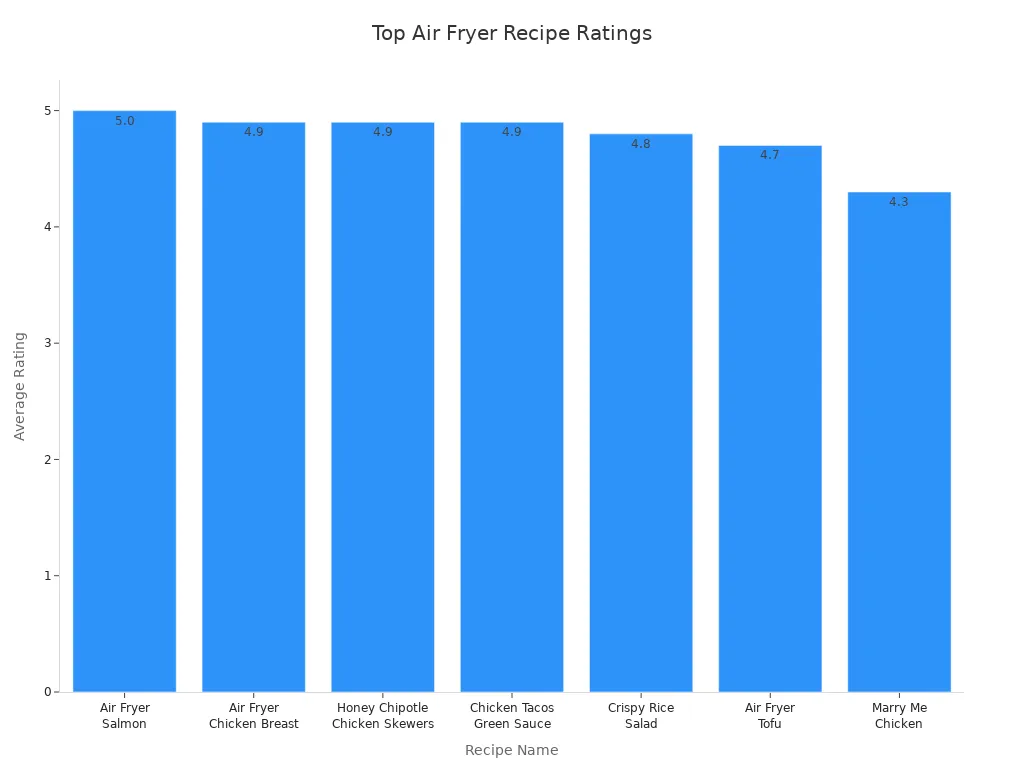
Here’s a quick table of some popular air fryer recipes that have received high ratings for health and taste:
| Recipe Name | Reviews | Average Rating |
|---|---|---|
| Ridiculously Good Air Fryer Salmon | 81 | 5.0 |
| Ridiculously Good Air Fryer Chicken Breast | 158 | 4.9 |
| Honey Chipotle Chicken Skewers | 27 | 4.9 |
| Ridiculously Good Chicken Tacos with Green Sauce | 59 | 4.9 |
| Crispy Rice Salad with Cucumbers and Herbs | 46 | 4.8 |
| Crispy Air Fryer Tofu | 104 | 4.7 |
| Marry Me Chicken | 29 | 4.3 |
By following these tips and experimenting with recipes, anyone can enjoy healthier meals made in the air fryer. So, get ready to explore new flavors and enjoy the benefits of air frying!
Using an air fryer can transform how people cook and eat. This appliance allows for healthier meals by using less oil, which can lead to a significant reduction in calorie intake. Studies show that air fryers can cut acrylamide levels by up to 90%, making meals safer and more nutritious.
Readers should definitely try out the tips shared in this blog for better meal preparation. Experimenting with different techniques can lead to delicious results.
Have you tried air frying yet? Share your experiences and favorite recipes with us! Your journey could inspire others to make healthier choices too.
FAQ
What types of food can I cook in an air fryer?
You can cook a wide variety of foods in an air fryer, including vegetables, meats, seafood, and even baked goods. Popular choices include fries, chicken wings, and roasted veggies.
How much oil do I need for air frying?
Typically, you only need 1 to 2 tablespoons of oil for most recipes. Some foods may require less, especially if you use cooking spray for a light coating.
Can I use aluminum foil in my air fryer?
Yes, you can use aluminum foil in your air fryer. Just ensure it doesn’t block airflow. Use it to line the basket or wrap food, but avoid covering the entire basket.
Is air frying healthier than deep frying?
Absolutely! Air frying uses significantly less oil than deep frying, reducing fat and calorie content. It also lowers harmful substances like acrylamides, making meals healthier overall.
How do I prevent food from sticking to the basket?
To prevent sticking, lightly coat your food with oil or use cooking spray. Additionally, preheating the air fryer can help create a non-stick surface.
Can I cook frozen food in an air fryer?
Yes, you can cook frozen food directly in an air fryer. Just adjust the cooking time and temperature as needed. Frozen fries and chicken nuggets turn out great!
How do I clean my air fryer?
Cleaning your air fryer is simple. Wipe the basket and pan with warm, soapy water after each use. For stubborn stains, soak them in a vinegar solution or use baking soda.
Do I need to preheat my air fryer?
Preheating your air fryer is recommended for best results. It helps achieve even cooking and crispiness. Preheat for about 3 minutes before adding your food.
Post time: Feb-09-2026