Air fryers have taken the culinary world by storm, with approximately 66.67% of households in the United States owning at least one. These versatile appliances, especially those with a large capacity, allow users to prepare quick and tasty meals with ease.
Consider the benefits air fryers, including dual-basket models, bring to the kitchen:
- Reduced oil consumption leads to healthier meals.
- Lower fat content enhances heart health.
- Versatile cooking options save time and space.
With these essential tips, home cooks can elevate their skills and master techniques for perfect results using their air fryer.
Key Takeaways
- Preheat your air fryer for even cooking and better texture. This step is crucial for frozen and breaded foods.
- Choose oils with high smoke points for air frying. Options like avocado and refined coconut oil work best for crispy results.
- Cut vegetables uniformly for even cooking. Toss them lightly in oil and season generously for enhanced flavor.
- Avoid overcrowding the air fryer basket. This ensures proper airflow and prevents uneven cooking.
- Experiment with adapting traditional recipes for air frying. Adjust cooking temperatures and times for the best results.
- Regularly clean your air fryer to maintain performance. Use mild soap and a soft sponge to prevent buildup.
- Use accessories like silicone liners and racks to improve airflow and cooking efficiency.
- Explore creative meal ideas like zucchini fries and apple chips to make the most of your air fryer.
Preheating Your Air Fryer
Importance of Preheating
Preheating an air fryer significantly enhances cooking results. It ensures that food cooks evenly and achieves the desired texture. When users preheat their air fryer, they create an optimal cooking environment. This practice is especially crucial for frozen foods and breaded items. A hot air fryer leads to a crispy exterior while preventing sogginess. Conversely, fresh proteins and delicate foods may benefit from skipping preheating. Gradual warming helps retain moisture and prevents overcooking.
Effective Preheating Techniques
To preheat an air fryer effectively, follow these simple steps:
- Set the Temperature: Choose the temperature specified in the recipe.
- Run the Air Fryer: Allow the air fryer to run empty for about 3 to 5 minutes. This duration is typically sufficient to reach the desired temperature.
- Use a Timer: Set a timer to avoid forgetting about the preheating process.
By adhering to these techniques, cooks can ensure their meals achieve the best possible results.
Common Preheating Mistakes
Many users make mistakes when preheating their air fryers. Here are some common pitfalls to avoid:
- Skipping Preheating: Some may think preheating is unnecessary. However, this can lead to uneven cooking and less desirable textures.
- Incorrect Temperature Settings: Setting the wrong temperature can affect cooking times and results. Always refer to the recipe for guidance.
- Overcrowding the Basket: Placing too much food in the basket during preheating can hinder airflow. This results in uneven cooking and longer cooking times.
By understanding the importance of preheating and avoiding these common mistakes, users can maximize their air fryer’s potential. Proper preheating not only improves cooking times but also enhances the overall quality of the meals prepared.
Choosing the Right Oil for Air Frying
Selecting the right oil for air frying can significantly impact the flavor and healthiness of meals. Different oils possess unique properties, including smoke points and flavor profiles. Understanding these characteristics helps cooks make informed choices.
Best Oils for Air Frying
Certain oils work better for air frying due to their high smoke points. A higher smoke point allows the oil to withstand the cooking temperature without breaking down. Here is a table of some of the best oils for air frying:
| Oil | Smoke Point (°F) |
|---|---|
| Avocado Oil | 520 |
| Refined Coconut Oil | 450 |
| Grapeseed Oil | 420 |
| Corn Oil | High |
| Blended Oil | Variable |
| Canola Oil | Fairly High |
| Sunflower Oil | Fairly High |
| Peanut Oil | High |
Using oils with high smoke points ensures that the air fryer operates efficiently while delivering crispy results.
Oil Quantity Guidelines
The amount of oil used in air frying can affect both the crispiness and calorie content of the food. Here are some key points to consider:
- Air-fried foods require just a tablespoon (15 mL) of oil to achieve a similar taste and texture to deep-fried foods. This minimal amount results in lower fat and calorie content.
- Up to 75% of the calories in fried foods come from fat. Therefore, using less oil leads to healthier meals.
- Air frying utilizes forced circulation of hot air instead of immersion in oil. This method allows for a desirable crunch without excessive oil absorption.
By adhering to these guidelines, cooks can enjoy delicious meals without compromising health.
Flavoring Tips with Oil
Infused oils can enhance the taste and aroma of air-fried dishes. Here are some tips for flavoring:
- Even Coating: A light brush of cold-pressed oil helps food cook evenly.
- Flavor Boost: Different oils contribute unique flavors. For example, groundnut oil adds nutty notes, while coconut oil provides richness.
- Crisp Finish: Cold-pressed sunflower oil ensures a golden finish for fried items.
- Aromatic Touch: Each oil enhances the aroma of the dish without overpowering it.
Experimenting with various oils can elevate the overall dining experience, making meals more enjoyable.
Cooking Different Foods in an Air Fryer
Air fryers excel at cooking a variety of foods, making them a versatile tool in any kitchen. This section explores how to effectively air fry vegetables, proteins, and frozen foods, ensuring delicious results every time.
Air Frying Vegetables
Air frying vegetables can yield crispy, flavorful results while preserving nutrients.
Best Practices for Veggies
To achieve the best outcomes when air frying vegetables, consider the following practices:
- Cut Uniformly: Ensure all pieces are similar in size for even cooking.
- Toss with Oil: Lightly coat vegetables with oil to enhance crispiness.
- Season Generously: Use herbs and spices to elevate flavor profiles.
Air frying retains more nutrients compared to other cooking methods. Studies show that air frying minimizes nutrient loss by preventing leaching during cooking. This method also enhances the phenolic composition and antioxidant profiles of vegetables, particularly Brassica varieties.
Cooking Times for Veggies
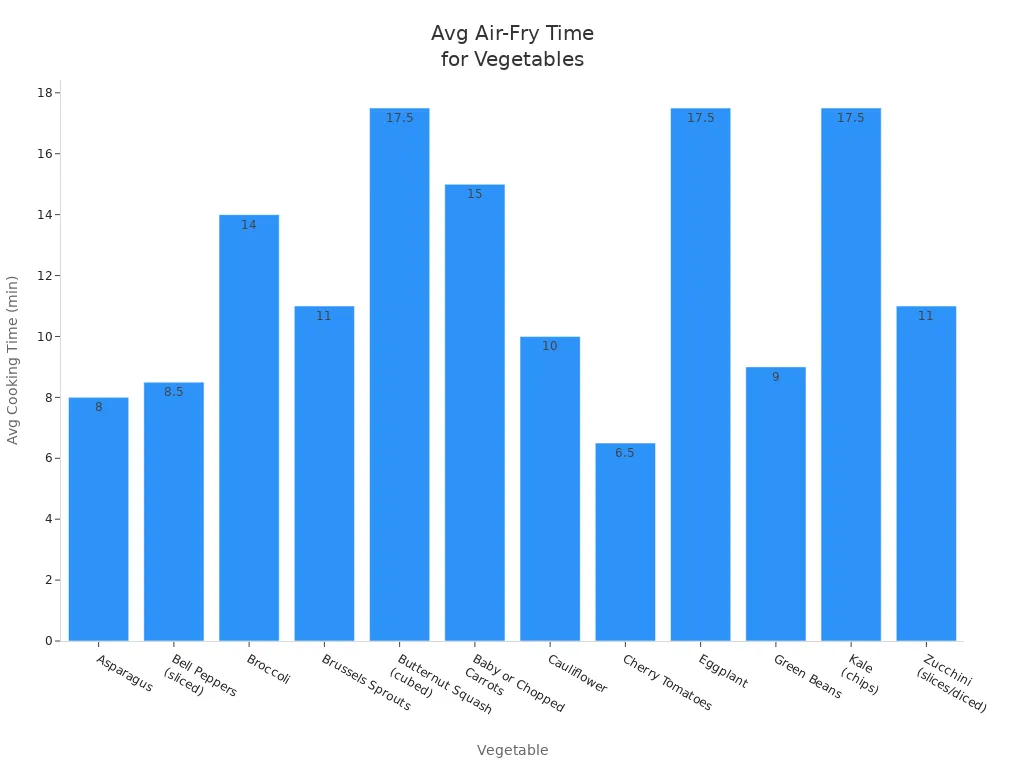
Different vegetables require varying cooking times and temperatures. The table below outlines some commonly air-fried vegetables along with their recommended cooking times:
| Vegetable | Temperature | Cooking Time |
|---|---|---|
| Asparagus | 400°F | 6 – 10 minutes |
| Bell Peppers (sliced) | 350°F | 7 – 10 minutes |
| Broccoli | 400°F | 10 – 18 minutes |
| Brussels Sprouts | 380°F | 10 – 12 minutes |
| Butternut Squash (cubed) | 400°F | 15 – 20 minutes |
| Baby or Chopped Carrots | 400°F | 10 – 20 minutes |
| Cauliflower | 400°F | 10 minutes |
| Cherry Tomatoes | 350°F | 5 – 8 minutes |
| Eggplant | 400°F | 15 – 20 minutes |
| Green Beans | 400°F | 8 – 10 minutes |
| Kale (sliced for chips) | 375°F | 15 – 20 minutes |
| Zucchini (slices or diced) | 400°F | 10 – 12 minutes |
Air Frying Proteins
Air fryers also shine when it comes to cooking proteins, providing a healthier alternative to traditional frying methods.
Chicken Cooking Tips
When air frying chicken, follow these tips for optimal results:
- Pre-marinate: Marinating chicken enhances flavor and tenderness.
- Use a Meat Thermometer: Ensure the internal temperature reaches 165°F for safety.
- Avoid Overcrowding: Cook in batches to allow hot air to circulate effectively.
The table below provides recommended temperature and time settings for various chicken cuts:
| Food Item | Temperature | Time |
|---|---|---|
| Tenders | 390°F | 10 minutes |
| Boneless thighs | 375°F | 10-20 minutes |
| Wings | 380-400°F | 16-18 minutes |
Fish and Seafood Tips
Air frying fish and seafood can yield a crispy exterior while maintaining moisture. Here are some tips:
- Choose Fresh Cuts: Fresh fish fillets cook better than frozen ones.
- Lightly Bread: A light coating of breadcrumbs can enhance texture.
- Monitor Cooking Time: Fish cooks quickly; avoid overcooking.
The following table outlines cooking times for various seafood:
| Food Item | Temperature | Time |
|---|---|---|
| Salmon fillets | 400°F | 7-9 minutes |
| Shrimp | 350°F | 5-10 minutes |
| Tilapia and thin fish | 400°F | 6-10 minutes |
| Breaded fish | 400°F | 10-15 minutes |
Air Frying Frozen Foods
Frozen foods are a popular choice for air frying due to their convenience and quick cooking times.
Cooking Frozen French Fries
Air frying frozen French fries is straightforward and yields crispy results. Typically, cooking takes about 15 minutes, significantly less than the 30+ minutes required in a conventional oven.
Tips for Frozen Snacks
When preparing frozen snacks, consider these tips:
- Shake the Basket: Halfway through cooking, shake the basket to ensure even crisping.
- Adjust Cooking Times: Check for doneness a few minutes before the suggested time, as air fryers can vary in performance.
- Explore New Products: Many brands now offer frozen foods specifically designed for air fryers, including chicken nuggets and cauliflower bites.
The growing range of air fryer-compatible products makes it easy to enjoy quick and delicious meals.
Maximizing Airflow in Your Air Fryer
Airflow plays a crucial role in achieving perfectly cooked meals in an air fryer. Proper airflow ensures even cooking and enhances the texture of food. Here are some strategies to maximize airflow for optimal results.
Food Arrangement for Optimal Cooking
Arranging food correctly in the air fryer basket significantly impacts cooking consistency. The following factors influence how well food cooks:
| Factor | Impact on Cooking Consistency |
|---|---|
| Airflow intensity and direction | Ensures even cooking by allowing hot air to circulate effectively. |
| Food placement and crowding | Overloading can block airflow, leading to uneven cooking. |
| Heat distribution | Consistent temperature across the cooking chamber is crucial for uniform results. |
To achieve the best results, users should follow these best practices for arranging food:
- Always use a perforated air fryer basket to ensure proper airflow and achieve a crispy texture.
- Avoid overcrowding the basket to prevent blocking airflow, which can lead to uneven cooking.
- Leave about 1/2 inch of space between food items for optimal air circulation.
Accessories to Enhance Airflow
Certain accessories can improve airflow and cooking results in an air fryer. Consider incorporating the following tools:
- Silicone liners: These help with cleanup and improve airflow with their grooved texture.
- Stainless steel rack: This increases cooking space and enhances airflow for even cooking.
- Loaf pans: These allow for baking traditional goods while ensuring faster cooking times.
Using these accessories can elevate the cooking experience and yield better results.
Avoiding Overcrowding Issues
Overcrowding the air fryer basket can lead to disappointing outcomes. It hampers airflow and results in uneven cooking. To avoid these issues, users should:
- Grant ample space to food items to ensure proper air circulation.
- Flip food midway through cooking to achieve an even golden hue and ensure uniform browning.
- Shake the basket intermittently to promote uniform heat distribution and browning.
Cooking in batches may be necessary for larger quantities. This approach guarantees that each item receives adequate airflow, resulting in crispy and delicious meals.
By maximizing airflow in the air fryer, users can significantly enhance their cooking results. Proper food arrangement, the right accessories, and avoiding overcrowding are essential steps toward achieving culinary perfection.
Experimenting with Air Fryer Recipes
Adapting Recipes for Air Frying
Adapting traditional recipes for air frying can enhance flavor and texture. Home cooks should consider several key adjustments:
- Temperature Adjustments: Increase the cooking temperature to around 390°F for deep-fried recipes. Air fryers require higher temperatures than traditional frying methods.
- Oil Usage: Use a light spray of high-temperature cooking oil to achieve crispiness. Air fryers require less oil than traditional frying.
- Cooking Time: Start checking for doneness about two-thirds of the way through the original recipe’s cooking time. This ensures proper cooking without overdoing it.
These adaptations can lead to successful air-fried dishes that maintain the essence of the original recipes.
Creative Meal Ideas
Air fryers open up a world of culinary creativity. Here are some innovative meal ideas that have gained popularity in air fryer communities:
- Zucchini fries – A healthier version of fries that are crispy and can be seasoned to taste.
- Apple chips – Thinly sliced apples air-fried to crispy perfection, optionally sprinkled with cinnamon.
- Cauliflower – Air-fried cauliflower bites serve as a low-carb alternative to buffalo wings.
- Shrimp – Perfectly cooked and crispy air-fried shrimp, a seafood option without excess oil.
- Kale chips – Crunchy snacks made by air-frying kale leaves with olive oil and seasoning.
- Carrots – Sliced carrots air-fried for a crispy snack or side dish.
- Mushrooms – Crispy on the outside and tender on the inside, great as an appetizer.
- Tater tots – Crispy and delicious, made without the added oil of traditional frying.
- Chicken tenders – A healthier alternative to fried chicken, crispy and flavorful.
- Broccoli – Quick and easy air-fried broccoli, a flavorful veggie side.
- Turkey burgers – Juicy and flavorful air-fried turkey burgers with less fat.
- Avocado fries – Unique fries made from breaded and air-fried avocado slices.
These ideas showcase the versatility of the air fryer, allowing cooks to experiment with various ingredients and flavors.
Baking in an Air Fryer
Baking in an air fryer can yield impressive results. The air fryer acts as a mini convection oven, allowing for faster baking times compared to conventional ovens. For instance, Tanya Harris notes that baked goods like smaller loaves of bread can achieve a golden brown top in less time than in an oven.
Air frying circulates intense heat rapidly, creating a crispy exterior. This method works well for foods needing a crispy texture. However, baking is better suited for delicate recipes like cakes that require gentle heat to rise properly.
Home cooks can successfully make various baked goods, including cakes and brownies, in air fryers. This versatility makes the air fryer an excellent addition to any kitchen.
Cleaning and Maintenance of Your Air Fryer
Cleaning Best Practices
Regular cleaning of the air fryer is essential for maintaining its performance and longevity. Users should follow these best practices:
- Clean the basket after every few uses. This prevents buildup and ensures optimal cooking results.
- Address visible gunk or buildup immediately. Ignoring these signs can lead to unpleasant odors and affect food quality.
- Use a soft sponge and mild dish soap for general cleaning. For stubborn grease, a mixture of diluted vinegar and warm soapy water works effectively.
- Utilize a toothbrush or skewer to clean tight corners, while a damp microfiber towel is ideal for wiping surfaces.
- Soak removable parts in warm water and dish soap for deeper cleaning. Pay special attention to vents to prevent buildup.
Maintaining Longevity
To extend the lifespan of an air fryer, users should adopt several maintenance strategies. The following table outlines key maintenance tips:
| Maintenance Tip | Description |
|---|---|
| Monthly Deep Clean | Disassemble and wash removable components according to the manufacturer’s guidelines. |
| Cleaning the Heating Element | Inspect and clean the heating element with a soft brush or cloth to remove debris. |
| Avoid Overloading | Do not exceed the recommended capacity to ensure even cooking and maintain air circulation. |
| Preheating | Preheat the air fryer to enhance cooking efficiency and food texture. |
| Cooking in Batches | Cook in a single layer to maximize air circulation and ensure even cooking. |
| Storing in a Cool, Dry Place | Keep the air fryer in a well-ventilated area away from moisture and heat. |
| Using a Dust Cover | Cover the air fryer when not in use to protect it from dust and maintain cleanliness. |
| Regularly Checking for Wear | Inspect the power cord and basket for signs of wear to ensure safety and functionality. |
| Using Compatible Accessories | Choose accessories that are compatible with your air fryer model to avoid damage. |
| Avoiding Aerosol Sprays | Do not use aerosol sprays as they can damage the non-stick surface of the basket. |
| Not Using Metal Utensils | Avoid metal utensils to prevent scratching the non-stick coating. |
| Following Manufacturer’s Instructions | Always read the manual for safety guidelines and maintenance schedules to prolong the appliance’s life. |
Troubleshooting Common Issues
Users may encounter various issues with their air fryers. The following table lists common problems and their solutions:
| Issue | Solution |
|---|---|
| Air Fryer Not Heating Up Properly | Ensure the air fryer is on a flat surface, the basket is secure, and the temperature is correct. |
| Food Sticking to the Basket | Lightly coat food with oil, preheat the fryer, and use parchment paper to prevent sticking. |
| Smoke and Unpleasant Odors | Clean the basket after use and cook with water and lemon to neutralize odors. |
| Uneven Cooking | Arrange food in a single layer and shake or flip during cooking for even results. |
| Error Messages | Refer to the manual for error messages and follow troubleshooting steps or contact support. |
By following these cleaning and maintenance tips, users can ensure their air fryer remains in excellent condition, providing delicious meals for years to come.
In summary, mastering the air fryer involves understanding essential hacks for effective use. Key strategies include preheating, selecting the right oil, and maximizing airflow. Readers should feel inspired to experiment with new recipes and techniques. The air fryer offers endless possibilities for delicious meals. Remember, practice leads to perfection. With time, anyone can become proficient in air frying and enjoy healthier, flavorful dishes.
FAQ
What is the best way to clean an air fryer?
To clean an air fryer, remove the basket and pan. Wash them with warm, soapy water. Use a soft sponge to avoid scratching. For stubborn residue, soak parts in warm water before scrubbing.
Can I use aluminum foil in my air fryer?
Yes, you can use aluminum foil in an air fryer. Ensure it does not block airflow. Place it under food items to catch drips or enhance crispiness. Avoid using it in a way that restricts air circulation.
How do I prevent food from sticking in the air fryer?
To prevent sticking, lightly coat food with oil before cooking. Preheating the air fryer also helps. Using parchment paper can further reduce sticking and make cleanup easier.
Can I air fry without oil?
Yes, air frying without oil is possible. The air fryer circulates hot air to cook food, achieving a crispy texture. However, a light spray of oil can enhance flavor and crispiness.
What types of food can I cook in an air fryer?
Air fryers can cook a wide variety of foods, including vegetables, meats, seafood, and frozen snacks. They are also suitable for baking items like muffins and cakes.
How do I know when my food is done?
Use a meat thermometer to check internal temperatures. For most proteins, 165°F is safe. Additionally, visually inspect food for a golden-brown color and crispy texture.
Is it safe to leave the air fryer unattended?
It is not advisable to leave an air fryer unattended while cooking. Always monitor the cooking process to prevent overheating or burning. Follow the manufacturer’s guidelines for safe operation.
Can I reheat leftovers in an air fryer?
Yes, reheating leftovers in an air fryer is effective. Set the temperature to around 350°F and check for doneness after a few minutes. This method helps retain moisture and crispiness.
Post time: Feb-04-2026