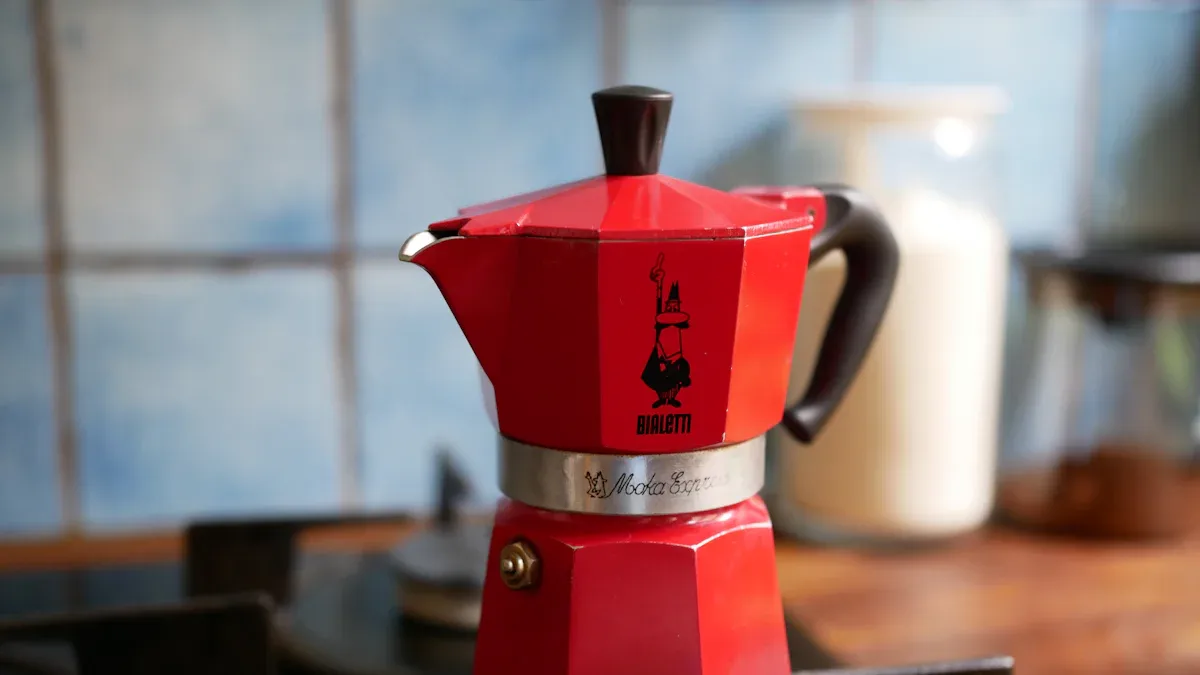
The Bialetti Moka Express stands out as the best overall Moka Pot for 2025. This iconic brewer consistently delivers exceptional coffee. The global moka pots market shows robust growth, with a projected Compound Annual Growth Rate (CAGR) of 8.5% from 2025 to 2033. This indicates increasing consumer interest in traditional brewing methods. The Bialetti Moka Express offers reliability and a rich, authentic coffee experience. It remains a top choice for enthusiasts seeking a high-quality Moka Coffee Maker.
Key Takeaways
- The Bialetti Moka Express is the best Moka pot overall. It gives you a reliable and real coffee taste.
- Choose a Moka pot based on its material. Aluminum is light, but stainless steel is stronger and works on induction stoves.
- Pick the right size Moka pot for your needs. Small ones are for one person. Big ones are for groups.
- Make sure your Moka pot works with your stove. Induction stoves need special magnetic Moka pots.
- Always use a medium-fine coffee grind. This helps make the best coffee and stops the pot from clogging.
- Clean your Moka pot after every use. Rinse it with warm water and dry it well to keep it working great.
- Moka pot coffee is strong but not true espresso. Espresso machines use more pressure and make a creamy top layer.
Top Moka Coffee Maker Recommendations for 2025
Best Overall Moka Pot: Bialetti Moka Express
Why It’s the Top Pick
The Bialetti Moka Express consistently earns its place as the top pick for 2025. This classic brewer offers a reliable and authentic coffee experience. Its design has remained largely unchanged for decades, a testament to its effectiveness and enduring popularity. Many coffee enthusiasts consider it the benchmark for stovetop espresso.
Key Advantages
The Bialetti Moka Express provides several key advantages. It brews rich, strong coffee with a distinctive flavor profile. Its simple, three-part construction makes it easy to assemble and use. The aluminum body heats quickly and efficiently, ensuring a relatively fast brewing process. Furthermore, its iconic octagonal shape helps distribute heat evenly, contributing to a consistent brew. This Moka Coffee Maker is a staple in kitchens worldwide.
Potential Considerations
While the Bialetti Moka Express excels, users should consider a few points. It requires careful cleaning to prevent mineral buildup and maintain optimal performance. The aluminum material is not suitable for induction stovetops, which limits its compatibility for some users. Also, some individuals might find the coffee it produces too strong or intense, requiring dilution with hot water or milk.
Best Budget-Friendly Moka Pot: Primula Moka Pot
Affordable Quality
The Primula Moka Pot offers an excellent entry point into stovetop coffee brewing without a significant financial investment. It provides a similar brewing experience to more expensive models at a fraction of the cost. This makes it an attractive option for students, budget-conscious consumers, or those new to Moka pots.
User Benefits
Users benefit from the Primula Moka Pot’s straightforward operation and ability to produce a decent cup of coffee. It is generally lightweight and easy to handle. For many, it serves as a reliable daily brewer, delivering a satisfying coffee experience. It allows individuals to enjoy the ritual of stovetop brewing without a large initial outlay.
What to Expect
When choosing the Primula Moka Pot, users should manage their expectations regarding certain aspects. Some users have reported issues such as the knob becoming loose, making it difficult to tighten. Leaking gaskets can also occur, though improper use might contribute to this problem. The handle, despite being advertised as heat-resistant, has been known to melt, especially if used on a gas stove with high heat. Product pictures often show the pot positioned on the edge of a hot plate or stove to prevent this issue. Other concerns include staining on the inside of the pot and a grayish sheen developing after a few uses, which can be hard to remove. Some initial brews might also have an aluminum flavor. Compared to the Bialetti Moka Express, the Primula Moka Pot may feel and look cheaper, with some users perceiving lower quality materials. It is not compatible with induction stovetops and is not dishwasher safe. The brewing process also requires manual involvement and some time to learn.
Best Premium Moka Pot: 9 Barista
Espresso-Like Performance
The 9 Barista stands out as the best premium Moka Pot, delivering an experience remarkably close to traditional espresso. It achieves this by utilizing a sophisticated two-chamber system. A jet engine engineer conceived this design, specifically engineering it to generate precisely 9 bars of pressure. This precise control over brewing variables results in a rich, crema-topped coffee that rivals many espresso machines.
Advanced Features
This Moka Coffee Maker incorporates advanced engineering to ensure optimal brewing conditions. Its unique pressure regulation system is the core of its performance, allowing it to consistently produce high-quality coffee. The robust construction, often from high-grade stainless steel, ensures durability and excellent heat retention. It represents a significant leap in Moka pot technology.
Investment Justification
The higher price point of the 9 Barista is justified by its exceptional performance and advanced features. For coffee connoisseurs seeking true espresso-like quality from a stovetop device, the investment pays off. It offers a convenient and compact alternative to a full-sized espresso machine, providing superior results compared to standard Moka pots. Its precision engineering and premium build quality make it a worthwhile purchase for serious home baristas.
Best Stainless Steel Moka Coffee Maker for Induction: Bialetti Venus
Induction Compatibility
The Bialetti Venus offers a perfect solution for kitchens with induction cooktops. Many traditional aluminum Moka pots do not work on induction surfaces. The Venus model specifically addresses this limitation. Its stainless steel construction ensures full compatibility with all stovetop types, including induction. This feature makes it a versatile choice for modern homes.
Durable Construction
Durability stands as a key characteristic of the Bialetti Venus. Manufacturers construct this Moka Coffee Maker from 18/10 stainless steel. This specific grade ensures compatibility with induction hobs. It also helps the pot maintain its brightness and original characteristics even after prolonged use. This robust material resists corrosion and withstands daily use, promising a long lifespan. Users appreciate its sturdy feel and lasting quality.
Design Appeal
The Bialetti Venus combines functionality with a sleek, contemporary design. Modern kitchen design trends highlight multi-functionality and style. Consumers prefer Moka pots that are not only functional but also stylish. The Venus seamlessly integrates with various kitchen decors. Its polished stainless steel finish and elegant lines offer a sophisticated aesthetic. This design aligns with a strong trend towards aesthetic innovation. It treats appliances as personal style extensions. The Venus represents a shift from traditional aluminum to high-grade stainless steel. This offers enhanced durability and corrosion resistance.
Best Moka Pot for Large Servings: 12-Cup and 18-Cup Options
High Capacity Choices
For those needing to brew coffee for several people, high-capacity Moka pots are essential. Manufacturers offer models in 12-cup and even 18-cup sizes. These larger pots significantly increase the volume of coffee produced in a single brewing cycle. They eliminate the need for multiple smaller batches.
Ideal for Groups
These large Moka pots are ideal for groups. They serve families, dinner parties, or office settings efficiently. A single brew provides enough coffee for everyone. This saves time and effort, making entertaining much simpler. Guests can enjoy fresh, strong coffee without waiting for repeated brewing cycles.
Brand Examples (Grosche Milano, LuxHaus)
Several reputable brands offer excellent large-capacity Moka pots. Grosche Milano provides various sizes, including larger options, known for their quality and design. LuxHaus also features high-capacity stainless steel Moka pots. These brands focus on durable materials and efficient brewing for bigger batches. They ensure a satisfying coffee experience for all.
Best Single-Serve Moka Pot: Bialetti Moka Express (1-Cup)
Perfect for Solo Brewing
The 1-cup Bialetti Moka Express caters perfectly to solo coffee drinkers. It brews just enough coffee for one person. This size prevents waste and ensures a fresh cup every time. Individuals can enjoy their coffee ritual without brewing an excessive amount.
Compact Design
This single-serve Moka pot boasts a remarkably compact design. The 1-cup Bialetti Moka Express has approximate dimensions of 13cm in height and a 7.1cm base. Its total height is approximately 13.5 cm. The width at the bottom of the base (point to point) is approximately 7.0 cm. This small footprint makes it ideal for small kitchens, dorm rooms, or travel. It easily fits into tight spaces and packs away conveniently.
Quick Coffee Solution
The 1-cup Moka Express offers a quick coffee solution. Its small volume of water and coffee grounds heats rapidly. Users can enjoy a fresh, strong cup of coffee in just a few minutes. This makes it perfect for busy mornings or a quick afternoon pick-me-up.
Our Moka Coffee Maker Testing Methodology
How We Evaluated Moka Pots
Our comprehensive evaluation process ensured a thorough assessment of each Moka pot. We focused on key aspects that directly impact user experience and coffee quality. This systematic approach allowed us to provide reliable recommendations.
Coffee Quality Assessment
We meticulously assessed the coffee produced by each Moka pot. Our team evaluated several factors. These included the aroma, body, and flavor profile of the brew. We also observed the presence and quality of crema, a key indicator of proper extraction. Consistent results across multiple brews were crucial for a high rating.
Ease of Operation
The simplicity of using a Moka pot significantly influences user satisfaction. We examined how easily users could assemble each unit. We also checked the clarity of fill lines and the overall intuitiveness of the brewing process. Some models, like the Cook N Home and Yosemite, offered intuitive designs with clear fill lines and sturdy handles. The Elite Gourmet Classic Stovetop also featured a simple, recognizable design. In contrast, some units presented vague instructions, leading to a trial-and-error process for optimal use.
Cleaning and Upkeep
Ease of cleaning is vital for long-term Moka pot enjoyment. We evaluated how quickly and thoroughly users could disassemble and clean each component. Models like the Cook N Home and Elite Gourmet Classic Stovetop featured dishwasher-safe components, simplifying maintenance. Other units, such as the Yosemite, were easy to clean but recommended hand-washing to extend their lifespan. We noted if coffee grounds stuck to interior parts or if special cleaning processes were necessary.
Key Performance Metrics
Beyond initial impressions, we delved into specific performance metrics. These metrics provided objective data on each Moka pot’s capabilities and durability.
Extraction Efficiency
We measured extraction efficiency by analyzing the consistency of the brew. This included the uniformity of coffee strength and flavor across multiple brewing cycles. An efficient Moka pot extracts maximum flavor from the coffee grounds without over-extraction or under-extraction.
Build Quality and Longevity
The construction materials and overall durability of each Moka Coffee Maker were critical evaluation points. We scrutinized potential failure points. These included water leaks from the middle section, often due to worn gaskets. We also checked for safety valve issues, which can arise from clogged valves or residue buildup. The presence of coffee grounds in the cup indicated a damaged filter. We also assessed for slow brewing or difficulty screwing chambers, often linked to clogged components or misaligned threads.
Heat Distribution Uniformity
Even heat distribution is essential for consistent coffee extraction. We observed how each Moka pot heated on various stovetop types. Uniform heating prevents scorching and ensures all coffee grounds receive consistent heat during the brewing process.
Handle Comfort and Safety
A Moka pot’s handle must remain cool and provide a secure grip. We tested handles for heat resistance and ergonomic design. A comfortable, heat-resistant handle ensures safe handling throughout the brewing and pouring process.
The Ultimate Moka Coffee Maker Buying Guide
Selecting the ideal Moka pot involves considering several factors. These factors ensure the chosen brewer aligns with individual preferences and kitchen setups. Understanding material, capacity, and stovetop compatibility is crucial for a satisfying purchase.
Choosing the Right Material
The material of a Moka pot significantly impacts its performance, durability, and even health considerations. Manufacturers primarily use aluminum or stainless steel. Ceramic options also exist for specific aesthetic preferences.
Aluminum Moka Pots
Aluminum Moka pots represent the traditional choice. They are lightweight and conduct heat efficiently. This material allows for quick brewing. Concerns exist regarding aluminum leaching into coffee. Some studies have explored potential links to conditions like Alzheimer’s disease. However, research remains inconclusive. The increase in aluminum is considered tiny, suggesting no significant health risk. Anodized aluminum is non-reactive, offering a safer alternative within this category. Very cheap off-brand models might impart a metallic taste to the coffee. Aluminum is also more susceptible to oxidation and corrosion compared to stainless steel.
Stainless Steel Moka Pots
Stainless steel Moka pots offer a modern alternative. They are presented as a safer option for those concerned about aluminum exposure. Stainless steel is resistant to corrosion and generally easier to clean. This material has no associated health risks. Stainless steel Moka pots are typically more expensive than their aluminum counterparts. They also tend to be heavier. Their robust construction ensures long-term durability.
Ceramic Moka Pots
Ceramic Moka pots are less common but offer unique aesthetic appeal. They often feature vibrant colors and designs. Ceramic retains heat well, which can contribute to a stable brewing temperature. However, ceramic is more fragile than metal. Users must handle these pots with greater care to prevent chipping or breaking.
Selecting the Ideal Capacity
Moka pots come in various sizes, measured by the number of espresso-sized cups they produce. Choosing the correct capacity prevents waste and ensures enough coffee for everyone.
1-Cup and 3-Cup Options
Smaller Moka pots are perfect for individual use or light coffee drinkers. A 1-cup Moka pot brews enough for one person. A 3-cup Moka pot is best for 1-2 people. It yields approximately 6 ounces (180ml) of coffee. This size is perfect when you and a partner share coffee.
6-Cup and 9-Cup Options
Medium-sized Moka pots cater to small families or couples with higher coffee consumption. A 6-cup Moka pot is best for 2-3 people. It produces around 12 ounces (360ml) of coffee. This size is ideal when you want to make coffee for multiple people. For couples where both are heavy drinkers, a 9-cup Moka pot provides ample servings.
12-Cup and 18-Cup Options
Larger Moka pots are suitable for entertaining guests or serving a larger household. These high-capacity choices minimize the need for multiple brewing cycles. They efficiently provide coffee for groups, parties, or office settings.
Stovetop Compatibility for Your Moka Coffee Maker
Ensuring your Moka pot works with your stovetop is essential. Different materials and designs cater to various heat sources.
Gas Stovetops
Gas stovetops are highly versatile. Most Moka pots, regardless of material, work well on gas burners. Users should ensure the flame does not extend beyond the base of the pot. This prevents damage to handles and ensures efficient heating.
Electric Coil Stovetops
Electric coil stovetops also accommodate most Moka pots. A flat-bottomed Moka pot ensures maximum contact with the heating element. This promotes even heat distribution and efficient brewing.
Induction Cooktops
Induction cooktops require specific Moka pot characteristics. Induction hobs require cookware made of magnetic metals. If a magnet sticks to the coffee pot, it will work. Traditional aluminum Moka pots are not magnetic and therefore incompatible. Moka pots must be made of magnetic materials like steel to work on induction cooktops. Induction stoves use magnetism to create heat. To check compatibility, look for an induction symbol (four coiled wires) on the underside of the pot. Another check involves seeing if a magnet sticks to the base of the Moka Coffee Maker; if it does, it will work on an induction hob. Some induction hobs may not detect small diameter pots. Ensure the base is large enough. For example, a Bialetti Venus 2-cup is not recommended, but 4 or 6-cup versions are.
Portable Camp Stoves
Many Moka pots are suitable for portable camp stoves. Their compact design and robust construction make them ideal for outdoor adventures. Users should ensure the stove provides a stable surface and adequate heat for brewing.
Handle Design and Safety
The handle of a Moka pot plays a crucial role in both safety and user comfort. A well-designed handle ensures safe handling of the hot brewer. It also provides a secure grip during pouring.
Heat-Resistant Handles
Heat-resistant handles are essential for safe operation. Manufacturers typically construct these handles from materials like bakelite, silicone, or other heat-insulating plastics. These materials prevent the handle from becoming too hot to touch during the brewing process. This protects users from burns. A handle that remains cool to the touch allows for confident handling of the hot Moka pot.
Ergonomic Grip
An ergonomic grip enhances user experience and safety. A comfortable handle fits well in the hand. It provides a secure hold, especially when the pot is full of hot coffee. Features like a textured surface or a contoured shape contribute to a better grip. This design minimizes the risk of accidental slips or spills while pouring.
Essential Safety Features
Moka pots operate under pressure, making specific safety features non-negotiable. These components protect users and ensure the device functions correctly.
Pressure Release Valves
A pressure release valve is the most critical safety feature on any Moka pot. This valve prevents dangerous over-pressurization within the lower chamber. If the pressure inside the pot exceeds a safe limit, the valve automatically releases steam. This action prevents potential explosions or damage to the Moka pot. Users should always ensure the valve remains clear of coffee grounds or debris for proper function.
Secure Lid Mechanisms
A secure lid mechanism is vital for safe brewing. The lid must fit tightly onto the upper chamber. This prevents hot coffee from splattering or escaping during the brewing process. A well-designed lid also allows for easy opening and closing without excessive force. Some Moka pots feature a hinged lid that stays open, making pouring easier and safer.
Brand Reputation and Warranty
Choosing a Moka pot from a reputable brand offers assurance of quality and reliability. A strong brand reputation often correlates with better product performance and customer support.
Reputable Moka Pot Brands
Several brands have established themselves as leaders in the Moka pot market. Bialetti is synonymous with Moka pots. The company pioneered their design and popularized them worldwide. As the original creator, Bialetti maintains its reputation for crafting high-quality, affordable Moka pots. These products are both functional and aesthetically pleasing. Their enduring popularity is evident in their widespread presence in Italian kitchens. This presence testifies to their timeless appeal and reliability. Bialetti consistently receives high ratings for durability and ease of use in consumer reviews.
Grosche also stands out. Its Milano model is highlighted as the most durable and functional aluminum option. It features thick, food-grade aluminum and a silicone gasket. This gasket offers superior sealing and longevity compared to rubber alternatives. Its silicone-coated handle prevents burns and melting, further enhancing durability and user safety. Many consider the Grosche Milano the best Moka pot widely available. It is often preferred over the Bialetti Moka Express due to its material differences, indicating its high reliability. Grosche focuses on eco-friendly materials and affordable, durable options for everyday use.
Other notable brands include DeLonghi, which validates its high-capacity, high-performance models through pilot programs with cafes and professional baristas. Primula is known for budget-friendly models that offer reliable performance for casual users. KitchenAid, a brand recognized for durable kitchen appliances, also offers robust Moka Coffee Maker models.
Warranty Coverage Importance
Warranty coverage provides peace of mind. A good warranty indicates the manufacturer’s confidence in their product’s quality and durability. It protects consumers against manufacturing defects or premature failures. Before purchasing, buyers should review the warranty terms. Understanding the coverage period and what the warranty includes is important. This ensures support if any issues arise with the Moka pot.
How to Use Your Moka Coffee Maker for Perfect Brews
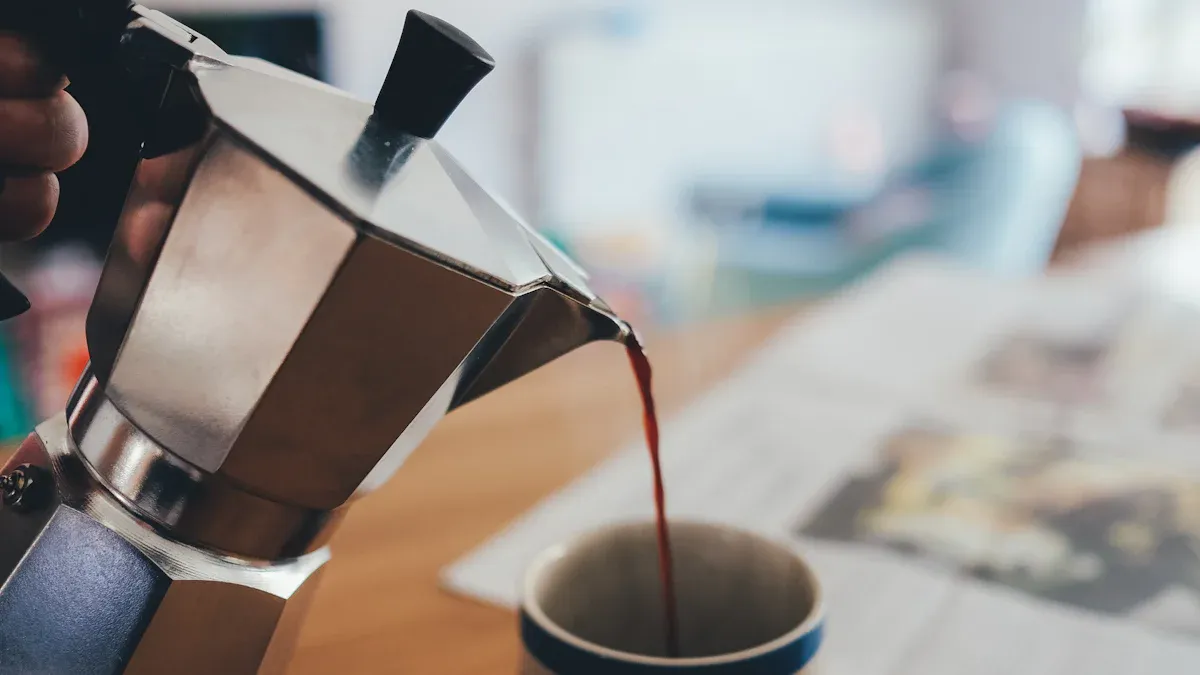
Achieving an excellent brew from a Moka pot requires understanding its simple yet precise operation. Following a few key steps ensures a rich and flavorful coffee experience every time.
Step-by-Step Brewing Process
Filling the Water Chamber
Begin by unscrewing the Moka pot‘s top and removing the filter basket. Fill the lower chamber with cold water. Ensure the water level remains just below the safety valve. Overfilling can lead to excessive pressure and a less effective brew.
Adding Ground Coffee
Insert the filter basket into the lower chamber. Fill the basket with coffee grounds. Do not tamp the coffee down. Gently level the grounds with a finger or knife. Overfilling or tamping too hard can restrict water flow and create bitterness.
Assembling the Moka Pot
Carefully screw the top chamber onto the base. Ensure a tight seal to prevent steam from escaping during brewing. A secure connection is crucial for proper pressure buildup.
Heating on the Stovetop
Place the assembled Moka pot on a stovetop burner. Use medium-low heat. High heat can scorch the coffee and produce a burnt taste. A slower extraction allows for better flavor development.
Recognizing Brew Completion
Coffee will begin to bubble up into the upper chamber. Listen for a gurgling sound. This indicates the water has mostly passed through the grounds. Remove the Moka pot from the heat immediately to prevent over-extraction. Serve the coffee promptly for the best taste.
Tips for Optimal Flavor Extraction
Water Quality Impact
The quality of water significantly influences coffee flavor and machine longevity. Hard water contains minerals that interact with coffee compounds.
Some of the compounds in hard water are “sticky,” glomming onto certain compounds in coffee when they meet (in your coffeemaker). The more eugenol the water hangs on to, for example, the woodsier the taste of your coffee will be. Magnesium is particularly sticky, meaning water that’s high in magnesium will make coffee with a stronger flavor (and higher levels of caffeine). Hard water can also have high levels of bicarbonate, though, which Hendon found could lead to more bitter flavors coming through.
Consider the following when choosing water:
| Water Type | Pros | Cons | Common Flavor Outcomes |
|---|---|---|---|
| Hard Water | May enhance body and mouthfeel | Over-extracts bitter compounds, dulls acidity and brightness, can create chalky or metallic aftertastes, leads to limescale buildup in equipment | Bitter, chalky, muted complexity |
| Soft Water | Avoids bitter overtones, preserves delicate notes (if managed correctly) | Under-extracts flavors, resulting in weak, flat brews; acidity may overpower without balance; can make coffee taste “sour” or “thin” | Flat, sour, underwhelming |
Hard water also impacts the Moka Coffee Maker itself:
- Calcium deposits form inside boilers and pipes.
- It reduces heating efficiency.
- It can clog valves, increasing maintenance needs.
- It affects flavor by leaching heat and inconsistent pressure.
Coffee Grind Size
Grind size is critical for Moka pot brewing. For optimal Moka pot brewing, a medium-fine grind, resembling the texture of table salt, is recommended. This grind size ensures a full-bodied, balanced brew. If the grind is too coarse, the coffee will be weak and watery due to under-extraction and channeling. Conversely, a grind that is too fine can lead to over-extraction, resulting in bitterness and potential clogging of the filter, which can also create excessive pressure.
- The optimal grind size for a Moka pot ranges from 360 to 660 microns.
- Bialetti, the inventor of the Moka pot, suggests a medium-fine grind that feels gritty but not powdery.
- An espresso grind is too fine and can block the Moka pot.
Heat Management Techniques
Controlling heat is essential. Use medium-low heat to allow for a slower, more even extraction. Removing the pot from heat as soon as coffee fills the upper chamber prevents over-extraction and bitterness. Some users pre-heat the water in the lower chamber to reduce the time coffee grounds are exposed to heat, minimizing burnt flavors.
Coffee-to-Water Ratio
The standard ratio for Moka pots involves filling the filter basket completely with coffee and the lower chamber to just below the safety valve with water. Experimenting with this ratio can adjust strength. Adjusting the amount of coffee slightly can fine-tune the brew to personal preference.
Moka Coffee Maker Maintenance and Care
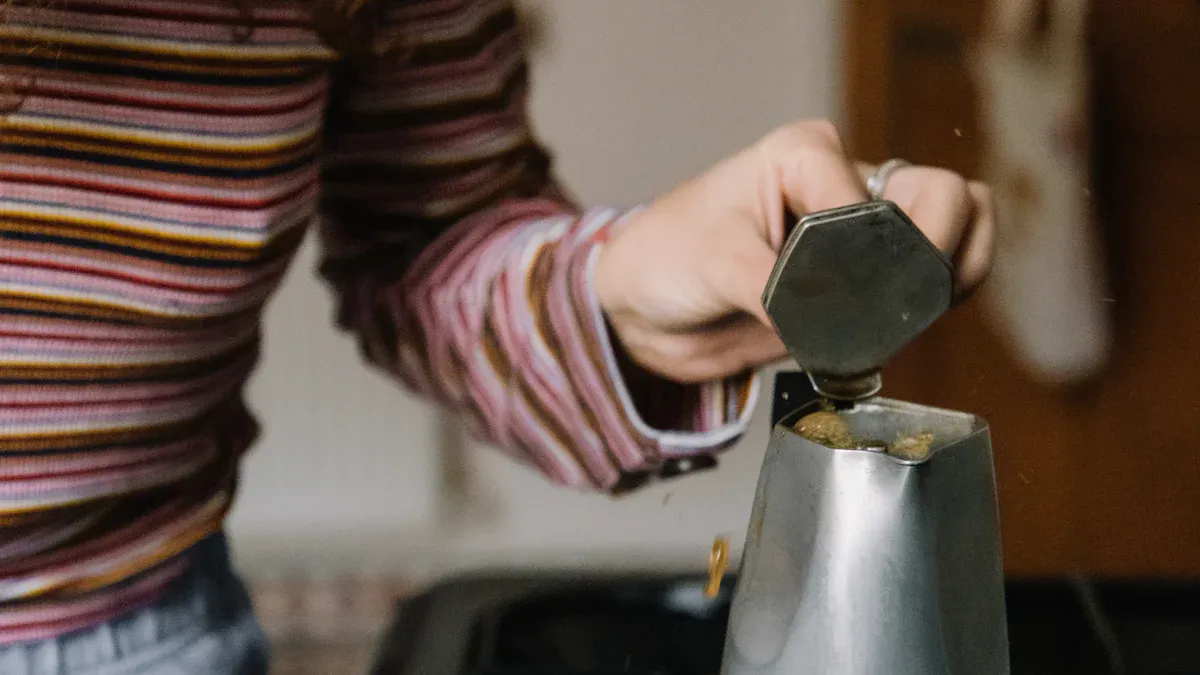
Proper maintenance and care significantly extend a Moka pot‘s lifespan and ensure consistently delicious coffee. A regular cleaning routine prevents residue buildup and preserves the brewer’s integrity.
Daily Cleaning Routine
Disassembly and Rinsing
After each use, users should allow the Moka pot to cool completely. Then, they can disassemble all its components: the top chamber, filter basket, gasket, and lower water chamber. Rinsing each part thoroughly with warm water removes coffee oils and grounds. Avoid using soap, as it can leave a residue that affects future coffee flavors.
Thorough Drying
After rinsing, users must dry all parts completely. Air drying is ideal, but a clean cloth can also assist. Storing a Moka pot while still damp can lead to oxidation, especially with aluminum models, and can encourage mold growth.
Deep Cleaning Practices
Mineral Buildup Removal
Mineral buildup, or limescale, can accumulate over time, affecting performance and taste. For aluminum Moka pots, a cleaning solution of lemon juice and cream of tartar, or vinegar with water, effectively removes these deposits. Bar Keepers Friend works well for both aluminum and stainless steel Moka pots. For general descaling, a 1:1 solution of white vinegar and water is highly effective.
To perform a deep clean:
- Fill the cooled Moka pot with water, ensuring the lower chamber and safety valve are covered, up to the coffee filter basket.
- Add one tablespoon of white vinegar and one tablespoon of fresh lemon juice to the water.
- Allow the acids to work for approximately three to four hours.
- Pour out some water until the safety valve is no longer covered.
- Run a brew cycle with the remaining water to lift stubborn stains.
- Rinse the Moka pot thoroughly and allow it to dry.
Gasket and Filter Replacement
Moka pot gaskets require replacement when they show signs of wear or damage, or when they become too thin from natural use. Frequent users who do not clean their pots properly might need to replace gaskets every few months. The type of coffee brewed also affects gasket lifespan; finely ground, well-squeezed coffee increases resistance, consuming the rubber more quickly. Silicone gaskets offer superior durability, heat resistance, and longevity compared to traditional rubber gaskets. Their ability to withstand high temperatures ensures a longer lifespan and reduces replacement frequency. Metal filters are replaced much less frequently, typically only if visible corrosion, damage, or loss occurs. A worn gasket compromises the airtight seal, leading to leaks or even explosions, while a damaged filter fails to effectively separate grounds, affecting coffee quality. Users should replace gaskets and filters as needed to maintain optimal brewing performance.
Proper Storage Techniques
Ensuring Air Circulation
Store Moka pots disassembled or with the lid slightly ajar. This allows air to circulate, preventing moisture buildup and stale odors.
Preventing Odors
Proper drying and air circulation prevent unpleasant odors. Storing the Moka Coffee Maker in a dry, well-ventilated area away from strong smells also helps maintain its freshness.
Moka Pot vs. Espresso Machine: Understanding the Differences
Coffee enthusiasts often debate the merits of Moka pots and espresso machines. Both devices produce strong, concentrated coffee. However, they employ distinct brewing principles and yield different results. Understanding these differences helps consumers choose the best option for their preferences.
Brewing Principles Compared
Pressure Generation Methods
Moka pots and espresso machines generate pressure through fundamentally different mechanisms. Moka pots rely on steam from boiling water. This steam builds pressure in the lower chamber. It then forces hot water through the coffee grounds. Traditional espresso machines, conversely, use electric pumps. These pumps blast water through finely ground, firmly packed coffee. This creates consistent high pressure.
| Feature | Moka Pot | Traditional Espresso Machine |
|---|---|---|
| Pressure Generation | Steam from boiling water | Electric pumps |
| Pressure Range (bars) | 0.3-2 bars | 9-15 bars |
| Extraction Efficiency | Less efficient, strong but lacks viscosity and emulsified oils | Efficient, extracts oils for creamy crema |
| Brewing Mechanism | Stovetop, three-chamber pot | High-tech, blasts water through packed grounds in portafilter |
Extraction Process
The pressure generation method directly influences the extraction process. Moka pots operate at lower pressures, typically between 0.3 and 2 bars. This lower pressure results in a strong, concentrated brew. However, it does not extract the emulsified oils that create crema. Espresso machines operate at much higher pressures, usually 9-15 bars. This high pressure efficiently extracts oils from the coffee. It produces a rich, viscous shot with a distinctive layer of crema on top.
Coffee Output and Flavor Profiles
Moka Pot Coffee Characteristics
Moka pot coffee offers a robust and intense flavor. Many describe it as a concentrated brew, stronger than drip coffee but not as intense as true espresso. It lacks the thick crema characteristic of espresso. Moka coffee typically contains more caffeine per serving. A 100ml serving provides approximately 120-150mg of caffeine. This makes it less concentrated than espresso on a per-milliliter basis.
Espresso Characteristics
Espresso features an intense, complex flavor profile. Its hallmark is the rich, reddish-brown crema. This crema indicates a proper extraction of coffee oils. Espresso is highly concentrated. A single 30ml shot contains about 63mg of caffeine. A double shot (60ml) delivers approximately 126mg. This concentration provides a powerful caffeine hit in a small volume.

Cost and Convenience Factors
Initial Investment Comparison
The initial investment cost significantly differs between these two brewing methods. Moka pots are considerably more affordable. They range from $20 to $100. Espresso machines, conversely, represent a substantial investment. They can cost several hundred to several thousand dollars. A quality grinder also adds another $100-$500+ to the espresso machine setup.
| Appliance | Initial Cost Range |
|---|---|
| Espresso Machine | Several hundred to several thousand dollars (plus $100-$500+ for a grinder) |
| Moka Pot | $20 to $100 |
Ease of Use and Maintenance
Moka pots are generally simpler to operate and maintain. Their three-part design allows for easy assembly and cleaning. Espresso machines often involve a steeper learning curve. They require precise grinding, tamping, and temperature control. Their complex internal components also demand more rigorous cleaning and maintenance routines.
This guide highlighted top Moka pot recommendations for 2025, including the classic Bialetti Moka Express, the premium 9 Barista, and the versatile Bialetti Venus. Choosing the ideal Moka Coffee Maker depends on individual preferences. Consider material, capacity, and stovetop compatibility. Evaluate your budget and desired coffee strength. This ensures a satisfying brewing experience tailored to your needs.
FAQ
What is a Moka pot?
A Moka pot is a stovetop coffee maker. It brews coffee by passing boiling water pressurized by steam through ground coffee. Alfonso Bialetti invented it in 1933. Many people appreciate its strong, rich coffee.
How does a Moka pot brew coffee?
A Moka pot has three chambers. Water heats in the bottom chamber, creating steam pressure. This pressure forces hot water up through a filter basket containing coffee grounds. The brewed coffee then collects in the top chamber.
What kind of coffee grounds should one use?
Users should use a medium-fine grind for Moka pots. This texture resembles table salt. A grind that is too fine can cause over-extraction and block the filter. A coarse grind results in weak, watery coffee.
Is Moka pot coffee considered espresso?
Moka pot coffee is not true espresso. It brews at lower pressures than an espresso machine. Moka pots produce a strong, concentrated coffee. Espresso features a distinct crema layer, which Moka pots typically do not create.
How often should one clean a Moka pot?
Users should rinse a Moka pot with warm water after every use. Disassemble all parts and dry them thoroughly. Deep clean the pot periodically to remove mineral buildup. This maintains optimal performance and flavor.
Which Moka pot size is best for me?
The best Moka pot size depends on serving needs. A 1-cup or 3-cup model suits solo drinkers. A 6-cup or 9-cup pot works well for small families. Larger 12-cup or 18-cup options serve groups or parties.
Can Moka pots work on induction cooktops?
Traditional aluminum Moka pots do not work on induction cooktops. Induction stoves require magnetic materials. Stainless steel Moka pots, like the Bialetti Venus, are induction compatible. Always check for an induction symbol or use a magnet to confirm.
Post time: Nov-24-2025