An Air Fryer functions as a compact convection oven. It circulates hot air to cook food, creating a crispy texture with little oil. This appliance has become a kitchen staple for many. Approximately 60% of households in the U.S. own an air fryer, according to Adam Graves of Nestle. Its energy efficiency is also notable. Air fryers use significantly less power than conventional ovens. For instance, the hourly cooking cost can be half that of an electric oven. A Smart Air Fryer, often integrated into IoT Home Appliances, elevates modern cooking convenience.
Key Takeaways
- An air fryer is a small oven that cooks food with hot air.
- It makes food crispy using much less oil than deep frying.
- Air fryers cook food faster and use less energy than regular ovens.
- You can cook many things in an air fryer, like fries, chicken, and vegetables.
- Air frying helps you eat healthier by reducing fat and calories in your meals.
- Cleaning an air fryer is easy, and many parts can go in the dishwasher.
- Air fryers are good for reheating leftovers, making them crispy again.
What is an Air Fryer?
Defining the Air Fryer
A Compact Convection Oven
An Air Fryer functions as a specialized, compact convection oven. It uses a powerful heating element and fan to cook food quickly and efficiently. This design allows it to achieve results similar to deep frying with significantly less oil. The appliance’s smaller size compared to a traditional oven contributes to its faster preheating times and energy efficiency.
Consider the technical specifications that define these compact convection ovens:
| Model # | Volts | Watts | Amps | Size (W x D x H) | Plug Configuration |
|---|---|---|---|---|---|
| 6220-17 | 120 | 1700 | 14.2 | 23 5/8″ x 28″ x 21″ | NEMA 5-20P |
| 6220-28 | 208/240 | 2800 | 13.5/11.7 | 23 5/8″ x 28″ x 21″ | NEMA 6-20P |
| 6225-17 | 120 | 1700 | 14.2 | 23 5/8″ x 28″ x 21″ | NEMA 5-20P |
| 6225-28 | 208/240 | 2800 | 13.5/11.7 | 23 5/8″ x 28″ x 21″ | NEMA 6-20P |
| 6240 | 120 | 1700 | 14.2 | 18″ x 20 1/4″ x 19″ | NEMA 5-20P |
These ovens typically feature a temperature range from 200°F to 500°F and adjustable cooking times up to two hours. They consistently offer convection cooking, and many include a stainless steel cooking chamber. Another example of a compact convection oven’s capabilities includes:
| Specification | Value |
|---|---|
| Total Capacity | 1.3 cu ft |
| Height | 18 1/2 inches |
| Width | 29 13/16 inches |
| Depth | 20 13/16 inches |
| Microwave Energy Consumption | 1.65 kWh |
| Broil Power | 1500W |
| Microwave Power | 900W |
| Microwave Power Levels | 6 |
| Amperage | 15A |
| Supply Frequency | 60Hz |
| Supply Voltage | 208 – 240V |
| Shelf Positions | 3 |
| Functions | Broil, Broil + microwave, Convection broil, Defrost by time, Defrost by weight, Microwave + ring, Microwave cooking, Ring + broil, True convection |
The Role of Circulating Hot Air
The core principle behind an Air Fryer’s operation involves the rapid circulation of superheated air. This hot air surrounds the food from all directions, cooking it evenly and creating a crispy exterior. This process mimics the effect of deep frying, but without submerging food in oil. The continuous movement of hot air ensures consistent heat distribution, which is crucial for achieving desired textures.
Key Components of an Air Fryer
Heating Element
The heating element generates the high temperatures necessary for cooking. It quickly heats the air inside the cooking chamber. The materials used for these elements are critical for performance and durability.
Common materials for air fryer heating elements include:
- Stainless Steel: This material maintains stable heating performance at high temperatures. It ensures even cooking and provides superior thermal conductivity for even heat distribution, which reduces cooking time.
- Nichrome (Nickel-Chromium alloy): Manufacturers widely use Nichrome due to its stable resistance, high-temperature tolerance, and durability. It offers fast heat response, a long lifespan, and stable performance.
- Stainless Steel or Aluminum: These materials often serve as base components. They possess good thermal conductivity, efficiently transferring heat to the circulating air.
Powerful Fan
A powerful fan works in conjunction with the heating element. It rapidly circulates the hot air throughout the cooking chamber. This high-speed air movement creates the convection effect, which cooks food quickly and evenly. The fan’s efficiency directly impacts the appliance’s ability to crisp food.
Cooking Basket Design
The design of the cooking basket plays a vital role in the Air Fryer’s effectiveness. It allows for optimal airflow around the food.
The design of an air fryer cooking basket optimizes heat distribution and crispiness through several key features. A well-ventilated basket construction is crucial for allowing better air circulation, ensuring that heat reaches all parts of the food evenly. The material and thickness of the basket also play a role, with thicker, more heat-conductive materials potentially leading to more even cooking. Beyond the basket itself, a powerful fan system circulates hot air rapidly and uniformly around the food, creating a convection effect that ensures even cooking and a crispy texture without excessive oil. This fan system is meticulously engineered with strategically placed vents and channels to guide the air, maximizing exposure to hot air and minimizing cold spots. The heating elements are also designed for optimal heat distribution; their layout and strategic positioning ensure consistent heat from all angles, contributing to a uniform frying effect. An intelligent temperature control system, working with precision-engineered heating elements and temperature sensors, maintains accurate and consistent cooking temperatures, which is essential for achieving the desired crispiness and even cooking.
How an Air Fryer Works
The Science of Rapid Air Circulation
Convection Cooking Principles
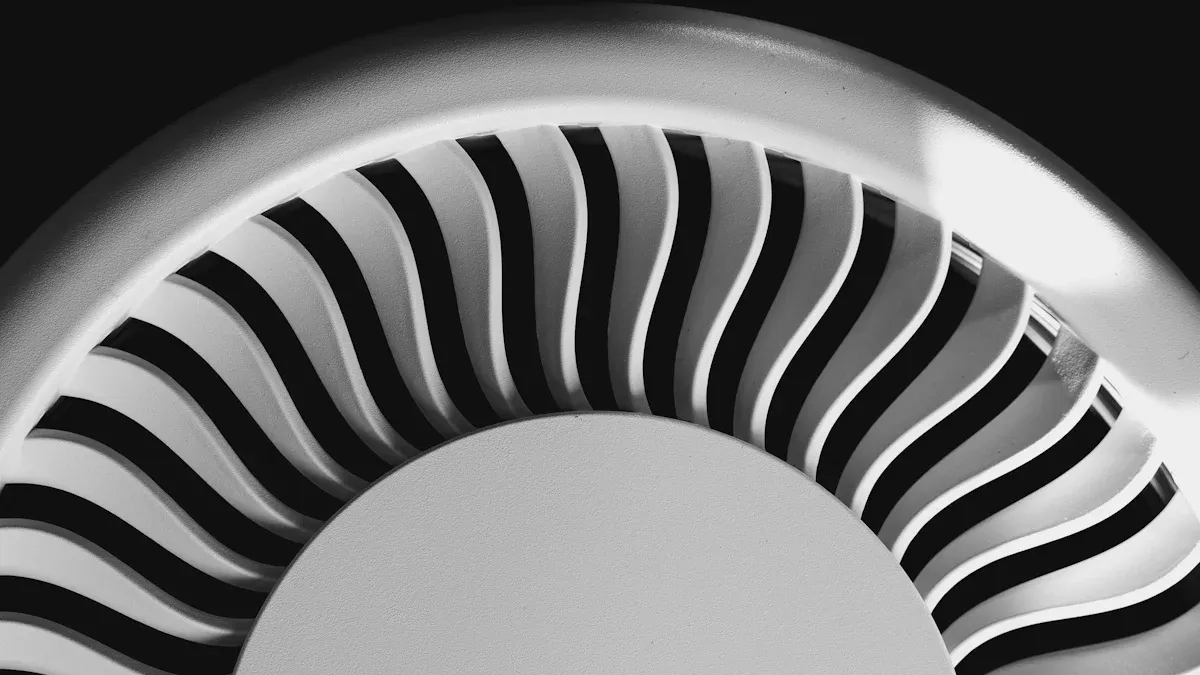
An Air Fryer operates on the fundamental principles of convection cooking. A powerful fan accelerates hot air within the cooking chamber. This process ensures the hot air evenly surrounds the food from all sides. This even distribution of heat, facilitated by the fan and the chamber’s design, allows for uniform cooking. It also helps develop a crispy crust.
Air fryers utilize ‘rapid air technology‘ or ‘high-speed air circulation technology’. A fan rapidly circulates hot air within a compact chamber. This process facilitates convective heat transfer. Air, rather than liquid oil, serves as the cooking medium. The rapid circulation of hot air is crucial for removing moisture from food surfaces. It also achieves cooking temperatures (140-165°C) necessary for reactions like the Maillard reaction. The compact, airtight design ensures efficient and intense airflow around the food.
The cooking process involves several steps. First, the top roasting unit rapidly heats the air. Next, a high-powered fan rapidly circulates this heat flow inside the food basket. Finally, the special texture on the inner side of the food basket helps form a vortex heat flow. This ensures 360° three-dimensional hot air circulation. It quickly removes water vapor from the food.
Achieving Crispy Textures
Air frying achieves a crispy texture without significant oil through a specific scientific mechanism. Air fryers function as compact convection ovens. They circulate hot air at high speed around food. This process triggers the Maillard reaction. The Maillard reaction is responsible for browning and crispiness. The rapid air technology and compact design ensure even cooking. They create a crunchy exterior while retaining internal moisture. This result is similar to deep frying but uses minimal oil.
Minimal Oil Usage in an Air Fryer
Reducing Fat Content
Air frying significantly reduces the fat content of cooked foods. Foods prepared in an Air Fryer contain up to 80% less fat compared to deep-fried foods. This reduction in fat also leads to a 70-80% reduction in calories. Research indicates that french fries absorb significantly less oil when air-fried compared to traditional deep frying methods.
Air frying can cut the fat content of foods by up to 75% compared to deep frying. Air fryers require significantly less oil, typically about 1 tablespoon. Deep fryers, in contrast, use up to 3 cups of oil. This means deep fryers use up to 50 times more oil. Studies on french fries show that air-frying results in substantially less fat. Studies also indicate up to a 90% reduction in the amount of oil remaining in food after air frying, compared to deep-frying. This results in fewer calories in the air-fried food.
Flavor Development Without Excess Oil
Minimal oil usage in an air fryer impacts flavor development positively. It retains appealing taste while reducing greasiness.
| Attribute | Air Frying Characteristics | Traditional Frying Characteristics |
|---|---|---|
| Oil Absorption | Much lower oil uptake | Much higher oil absorption |
| Crust Uniformity | Thinner, more homogeneous crust | Thicker, drier crust |
| Sensory Attributes | Preferred for crispness, firmness, and color; less oily | Favored for some textures but often considered greasy |
| Taste | Appealing, with reduced greasiness and positive sensory qualities | Rich flavor, but often leaves food greasy and heavy |
| Consumer Preference | 64% prefer for breaded chicken fillets; value versatility, lighter texture, less oily taste | Favored for certain meat textures, but often considered greasy |
Air frying results in a lighter, less oily food. It produces a thinner, smoother, and more uniform crust. This offers a crisp and crunchy texture. The taste remains appealing. Consumers appreciate the reduced greasiness and positive sensory qualities. Deep frying, in contrast, creates a thick, crispy crust and a tender interior. It provides a unique crunch and rich flavor, but often leaves food greasy and heavy.
Benefits of Air Frying
Healthier Cooking with an Air Fryer
Lower Calorie Meals
Air frying significantly contributes to healthier eating by reducing meal calories. The primary reason for this reduction is the minimal oil required. Air frying typically uses only a tablespoon or less of oil. Traditional frying methods, however, can use several cups. This difference directly impacts overall calorie intake. Air frying can lead to a 70-80% reduction in calories compared to frying in oil. This is largely due to the significantly lower amount of oil used. Often, it is just 1 teaspoon for air frying versus 1 tablespoon for deep frying.
Reduced Saturated Fats
The reduced oil usage in an Air Fryer directly translates to lower saturated fat content in meals. Consumers can enjoy crispy textures without the heavy, greasy feel associated with deep-fried foods. This method allows individuals to prepare their favorite dishes with less guilt. It supports a more balanced diet.
Speed and Convenience of an Air Fryer
Faster Cooking Times
Air fryers offer remarkable speed and convenience in the kitchen. They cook food faster than conventional ovens. Users should reduce cooking time by 20% and temperature by about 30°F compared to a regular oven. This is because air fryers cook food more quickly due to their powerful air circulation.
Consider these examples of quick cooking times:
| Dish | Air Fryer Temperature | Air Fryer Cooking Time |
|---|---|---|
| Single-serving Frittata | 325°F | ~12 minutes |
| Air Fryer Shrimp | 375°F | 5-10 minutes |
| Air Fried Broccoli | 425°F | ~10 minutes |
| Air Fryer Apple “Fries” | 425°F | ~3 minutes |
Easy Cleanup
Cleaning an air fryer is straightforward. Users can wash the basket and tray with warm, soapy water and a non-abrasive sponge. For stubborn residue, soaking for 10-15 minutes helps. Many models also have dishwasher-safe components. Users can wipe the heating element with a damp cloth. A soft brush helps remove stuck-on debris. For the exterior, a soft cloth dampened with water and mild detergent works well. Baking soda or a mixture of water and lemon juice can remove odors.
Versatility of an Air Fryer in the Kitchen
Beyond Frying
An air fryer’s capabilities extend far beyond just frying. It can prepare a wide array of dishes. These include various meats like frozen chicken, jerky, scallops, and bacon. Users can also make stuffed French toast, which comes out with a crispy exterior and soft interior. Even cheesecake can be cooked in a springform pan within the appliance. Macaroni and cheese also works well, resulting in a crispy edge and gooey center.
Reheating Capabilities
The air fryer excels at reheating leftovers. It restores food to its original crispiness and flavor. For most foods, users can start with 360°F (180°C). For foods needing crispiness, 390°F (200°C) or higher works best. Smaller foods like French fries or thin steak slices can use higher temperatures. Thicker foods, such as whole steaks, benefit from lower temperatures. Always ensure food reaches an internal temperature of at least 165°F (74°C) for safety.
| Food | Temp | Time |
|---|---|---|
| Fries | 400°F | 3-5 min |
| Pizza | 350°F | 3-5 min |
| Wings | 380°F | 5-7 min |
What You Can Cook in an Air Fryer
Popular Air Fryer Recipes
Crispy French Fries
Many people turn to this appliance for perfectly crispy French fries. Users can achieve a golden-brown exterior and a fluffy interior with minimal oil. Simply toss cut potatoes with a small amount of oil and seasoning. Then, cook them in the basket until they reach desired crispiness. This method offers a healthier alternative to deep-fried versions.
Chicken Wings and Nuggets
This appliance excels at cooking chicken wings and nuggets. It renders the fat, creating a delightfully crispy skin on wings. Nuggets cook quickly, developing a crunchy coating. People often season these items before cooking. The circulating hot air ensures even cooking and a satisfying texture.
Roasted Vegetables
Roasted vegetables become a simple and delicious side dish. Broccoli, Brussels sprouts, and bell peppers transform into tender, slightly charred bites. A light coating of oil and spices enhances their natural flavors. The appliance cooks them faster than a conventional oven.
Unexpected Air Fryer Dishes
Baked Goods and Desserts
This versatile kitchen tool can also handle baked goods and desserts. Small cakes, muffins, and even cookies bake well in its compact chamber. The consistent heat distribution helps achieve an even bake. People can enjoy warm, freshly baked treats without heating a large oven.
Reheating Leftovers
Reheating leftovers is another excellent use for this appliance. It revitalizes food, bringing back its original texture. Pizza slices regain a crispy crust. Fried chicken becomes crunchy again. This method avoids the sogginess often associated with microwave reheating.
Air Frying vs. Traditional Cooking Methods
Air Fryer Compared to Deep Frying
Oil Consumption Differences
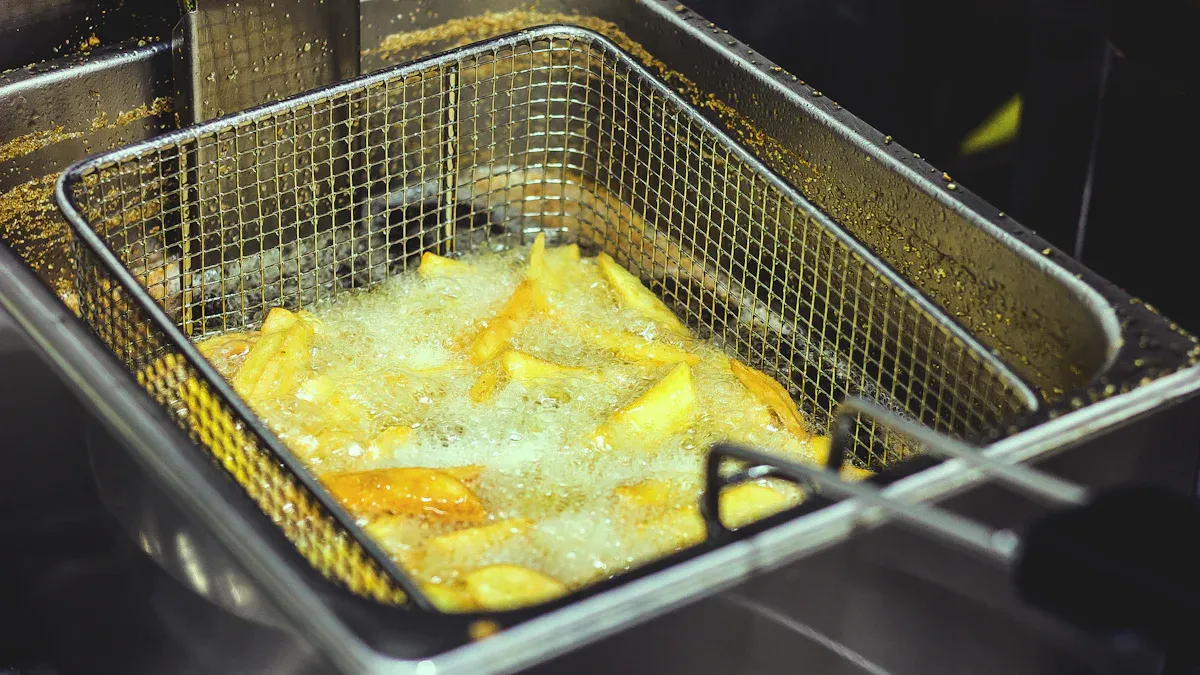
Air frying significantly reduces the amount of oil needed for cooking. For instance, preparing french fries often requires only a light spray or drizzle of oil. Deep frying, conversely, involves submerging food in a substantial amount of hot oil. Food then absorbs this oil, leading to higher calorie and fat content. The difference in oil consumption is stark:
| Frying Method | Oil Consumption (Standard Batch of French Fries) |
|---|---|
| Deep Frying | Up to two quarts |
| Air Frying | A light spritz or about one tablespoon (over 100 times less) |
Health Implications
The choice between air frying and deep frying carries significant health implications. Deep-fried foods link to increased risks of heart disease, type 2 diabetes, and certain cancers due to the oils used. Air-fried foods offer a healthier alternative, though they also present some considerations.
| Cooking Method | Health Implications (Positive) | Health Implications (Negative) |
|---|---|---|
| Deep-fried foods | N/A | Linked to heart disease, type 2 diabetes, and cancer due to oils used. |
| Air-fried foods | Can cut calories by up to 80% (less fat absorption); May reduce acrylamide in starchy foods by 90%. | High heat increases risk of advanced glycation end (AGE) products; Can lead to cholesterol oxidation products (COPs) in fish (linked to heart disease, hardening of arteries, cancer); Potential plastic toxin consumption from some models; Minimizes fiber content; Curbs omega-3 fatty acids in fish. |
Air Fryer Compared to Conventional Ovens
Energy Efficiency
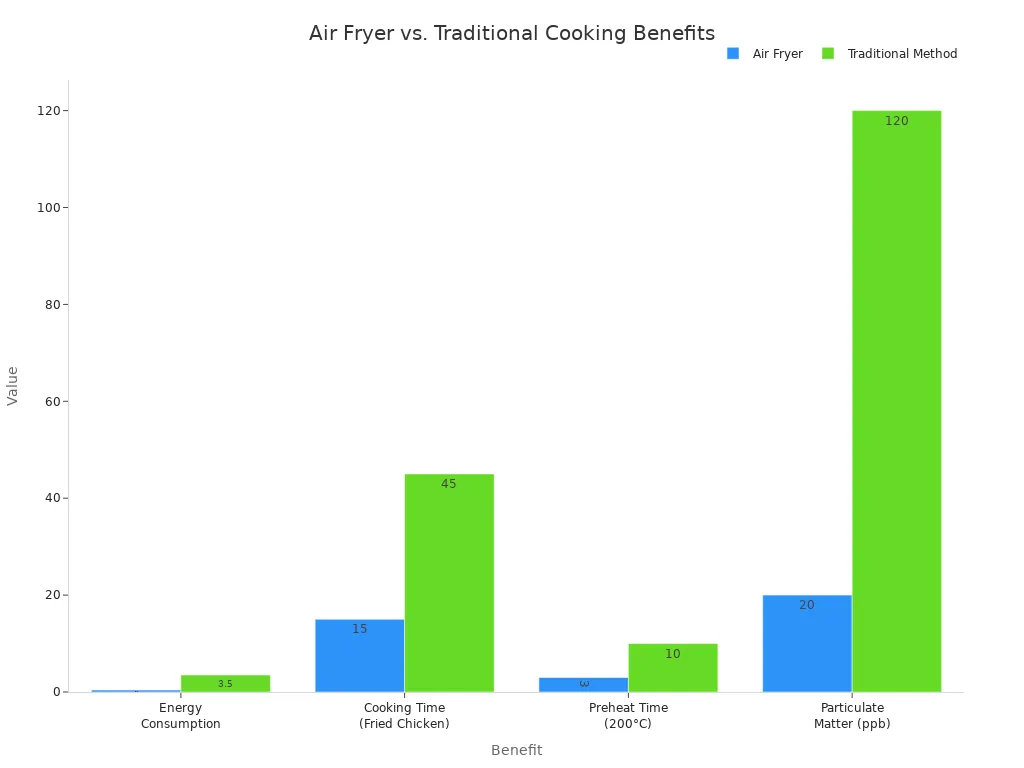
An air fryer oven generally offers more energy efficiency for baking small items compared to a conventional oven. This efficiency stems from its ability to heat a smaller space more quickly. Using an air fryer or toaster oven instead of a normal oven or range results in less electricity consumption. Actual energy savings depend on factors like cook time, batch size, and the oven’s insulation. For small items, the air fryer’s rapid heating of a compact cavity makes it a more energy-efficient choice.
Cooking Time Discrepancies
Air fryers generally cook food faster than conventional ovens. This speed comes from rapid hot air circulation within a compact cooking chamber. When converting oven recipes to an air fryer, users typically reduce the cooking time by about 20-25% of the original oven cooking time. For example, an item taking 30 minutes in an oven might cook in 20-24 minutes in an air fryer. Additionally, lowering the temperature by about 25-30°C (around 50°F) is often advised, as air fryers operate at higher effective temperatures.
Texture Variations
The cooking methods also produce different food textures.
| Feature | Air Fryer | Conventional Oven |
|---|---|---|
| Heat Application | Intense, circulating heat; rapid air circulation | Lower, dry heat; slow cooking |
| Texture Result | Crispy (similar to deep-frying), crispy skin, crisp outer crust | Maintains moisture, even cooking, rising |
| Best For | Recipes resembling fried fare, baked potatoes, banana bread (for crisp exterior) | Delicate pastries, fruit-filled cakes, creamy casseroles, dishes requiring even cooking or rising |
| Oil Usage | Less oil for crispy results | N/A |
Health Aspects of an Air Fryer
Is Air Frying Truly Healthy?
Benefits of Reduced Oil
Air frying offers significant health benefits, primarily through its ability to reduce oil consumption. This method drastically cuts the amount of cooking oil used compared to deep-frying. Studies show up to a 90% reduction in oil left in food. This leads to fewer calories in the food. Air frying also produces fewer harmful compounds typically generated during high-temperature cooking. For example, a study on fish cakes found air frying resulted in fewer Advanced Glycation End Products (AGEs). AGEs link to inflammation and chronic diseases. Another comparative study indicated air frying created less acrylamide than deep-frying.
Potential Nutritional Impact
Air frying can preserve nutrients and beneficial compounds in food. Higher temperatures (above 140 °C) for shorter durations with consistent hot air circulation effectively preserve nutrients and phenolic compounds. This method can also lead to the formation of thermo-generative phenolic compounds, such as canolol, in vegetables like canola and mustard. These compounds exhibit enhanced antioxidant properties. Air frying, utilizing convection heat, preserves certain nutrients like vitamin C and various protective plant compounds known as polyphenols. However, it may negatively impact the healthy fat content (poly-unsaturated fats) in fatty fish, such as sardines. It can also slightly increase cholesterol oxidation products (COPs). While air frying generally produces fewer polycyclic aromatic hydrocarbons (PAHs) compared to conventional frying due to less oil usage, a risk of PAH formation at high temperatures still exists. Air frying generally reduces acrylamide formation compared to deep-fat frying. However, some studies indicate air-fried potatoes might contain slightly more acrylamide than deep-fried or oven-fried potatoes. Pre-soaking potatoes significantly reduces acrylamide levels across all cooking methods. Conversely, air frying produces less acrylamide and polycyclic aromatic hydrocarbons (PAHs) in chicken compared to deep frying.
Tips for Healthier Air Frying
Choosing Lean Proteins
Air fryers are excellent tools for cooking lean proteins in appetizing ways. Dietitians recommend them for preparing fish, tofu, and chicken. These proteins consistently achieve a crispy exterior and juicy interior when air-fried. Examples include air fryer chicken cutlets and boneless chicken thighs. These recipes are easy to prepare with minimal oil, contributing to healthy meals and weight management. People can make delicious chicken tenders, a healthier alternative to high-fat fast food. Air-frying frozen tilapia provides a quick, heart-healthy entree. Crispy coconut shrimp offers a fast dinner. Juicy pork tenderloin, a lean cut similar to skinless chicken breast, cooks quickly with a crisp exterior. Zesty lemon garlic chicken breast stays moist and delicious with a marinade. Dill and pepper salmon, rich in omega-3s, cooks perfectly from frozen.
Incorporating Vegetables
Air fryers excel at preparing a variety of vegetables, offering crispy results without deep-frying.
- Season vegetables with only oil and salt before air frying. This ensures even cooking and prevents burning.
- Air fry vegetables until cooked.
- After air frying, toss the cooked vegetables with dressing or sauces.
- To incorporate dry herbs and powdered seasonings, bloom them separately in oil or butter on the stove for about two minutes until fragrant. Then, toss the air-fried vegetables with this spiced oil or butter.
Air fryers suit a wide range of vegetables, including asparagus, Brussels sprouts, kale (for chips), and sweet potato (for chips). They are suitable for both sides and snacks, such as Buffalo cauliflower bites, zucchini fries, and potato wedges.
Avoiding Overcooking
Overcooking food in an air fryer carries certain risks. Air frying can lead to the formation of harmful compounds. Studies indicate using an air fryer can increase cholesterol oxidation products (COPs) in fish. COPs link to heart disease, cancer, and other medical conditions. While polycyclic aromatic hydrocarbons (PAHs), known carcinogens, can also form at high temperatures, their production is significantly less in air frying compared to deep frying. Acrylamide, a chemical formed during high-heat cooking of plant-based foods, may also be present. Animal studies suggest a link to cancer at high doses. However, air frying can reduce its levels by up to 90%. Overcooking potato chips in an air fryer can increase their acrylamide content, which associates with a potential risk of cancer.
The air fryer has become an indispensable tool in modern kitchens. It offers healthier cooking by significantly reducing oil usage, leading to lower fat and calorie meals. This appliance also provides remarkable convenience, cooking food quickly and efficiently. Its versatility extends beyond frying, allowing for baking, roasting, and reheating. Consumers increasingly embrace this technology for its economic and environmental benefits.
As Adam Graves of Nestlé noted, “The future is all about the air fryer.” This reflects a generational shift towards healthier, more convenient, and energy-efficient cooking methods.
FAQ
What is an Air Fryer?
An air fryer is a compact convection oven. It circulates hot air rapidly to cook food. This process creates a crispy texture. It requires little to no oil. This appliance offers a healthier alternative to deep frying.
How Does an Air Fryer Work?
A powerful heating element generates heat. A fan then circulates this hot air around the food. This rapid air movement cooks food evenly. It also creates a crispy exterior. This method mimics deep-frying effects.
Is Air Frying Healthier Than Deep Frying?
Yes, air frying is generally healthier. It uses significantly less oil than deep frying. This reduces fat and calorie content in meals. Air frying can cut fat by up to 80%.
What Foods Can You Cook in an Air Fryer?
Air fryers cook many foods. They excel at making crispy French fries and chicken wings. Users can also roast vegetables. The appliance bakes desserts and reheats leftovers effectively. Its versatility is a key benefit.
Do You Need to Preheat an Air Fryer?
Preheating is often recommended. It helps the air fryer reach the desired temperature. This ensures even cooking and crispier results. Most recipes specify preheating times. Typically, a 3-5 minute preheat is sufficient.
How Do You Clean an Air Fryer?
Cleaning an air fryer is simple. Wash the basket and tray with warm, soapy water. Use a non-abrasive sponge. Many components are dishwasher-safe. Wipe the heating element and exterior with a damp cloth.
Can You Use Aluminum Foil in an Air Fryer?
Yes, you can use aluminum foil. Place it in the basket or on the tray. Ensure it does not block airflow. Avoid covering the entire basket. This allows proper circulation for even cooking.
Post time: Jan-13-2026