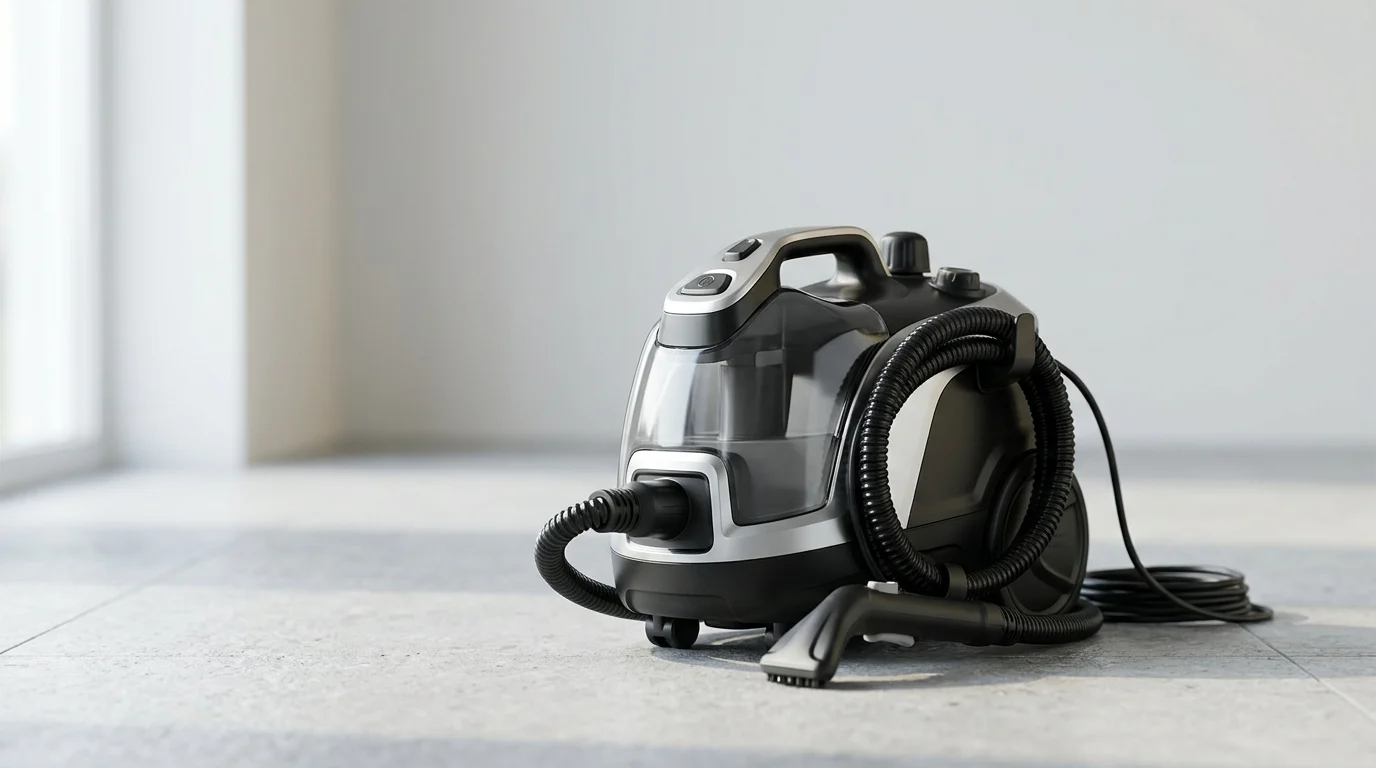
What Is a Steam Cleaner
A steam cleaner is a specialized appliance that uses the heat of water for deep cleaning. By converting water into high-pressure vapor, these machines break down stubborn dirt and help eliminate microscopic pathogens without relying on heavy chemical use. This method has become increasingly popular in both homes and commercial facilities seeking sustainable cleaning options.
How Steam Cleaners Differ From Extractors and Spray Cleaners
Unlike carpet extractors, standard spray-and-vacuum systems, and steam mops, canister steam cleaners operate differently. Steam mops are typically upright tools designed solely for flat hard floors, whereas hot water extractors flood porous surfaces with a mixture of water and detergent, relying on powerful suction to pull the liquid back out. In contrast, a versatile canister steam cleaner uses dry vapor to agitate and loosen dirt. This vapor contains a very low percentage of water by volume, using significantly less moisture than traditional extraction methods. This prevents over-saturation, allowing surfaces to dry in minutes rather than hours, which helps prevent mold in textiles and upholstery. However, steam cleaners are not standalone replacements for vacuums or extractors on thick carpets and upholstery. Because they lack suction, users must actively wipe or vacuum away the loosened debris and residual moisture to prevent re-soiling or mildew.
Key Factors: Temperature, Pressure, Boiler Design, and Steam Dryness
The effectiveness of steam cleaning relies on temperature, pressure, boiler design, and steam dryness. Inside the boiler, temperatures typically reach between 280°F and 320°F (137°C to 160°C). This superheated environment generates operating pressures generally ranging from 3 to 6 bar (43 to 87 PSI) in consumer and professional equipment. Boiler design also matters: single-boiler systems must be fully depressurized and cooled before refilling to prevent severe pressurized steam burns. Users should never attempt to open or refill a single-boiler unit while it is still pressurized. In contrast, continuous-fill models use a secondary, unpressurized reservoir to feed the main boiler safely without interrupting your work. Ultimately, high temperature and pressure create “dry vapor,” which delivers maximum heat with minimal moisture, ensuring rapid evaporation upon contact with the air.
How Steam Cleaners Work
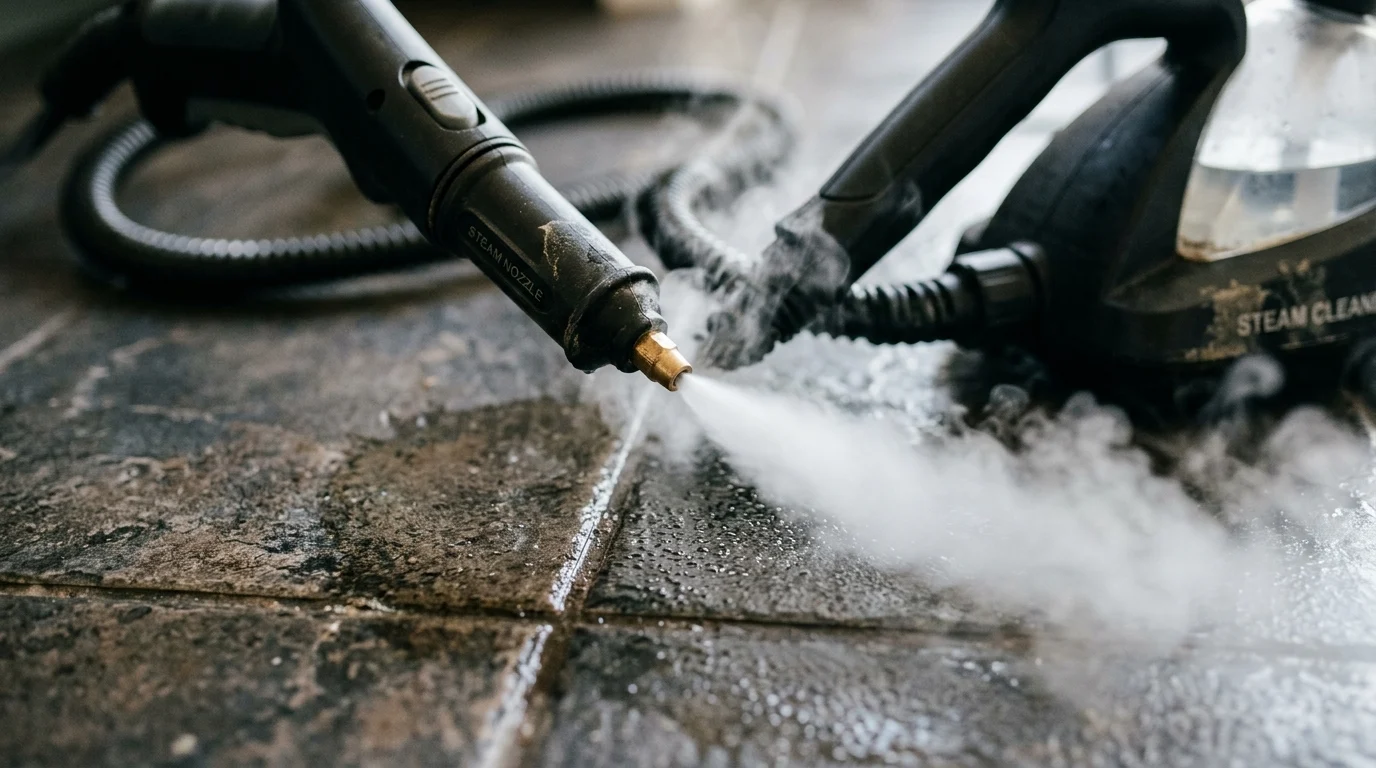
How Water Becomes Targeted Cleaning Vapor
The conversion from liquid water to cleaning vapor begins in the unit’s reservoir. A standard portable steam cleaner uses an electrical heating element to rapidly raise the internal temperature of the sealed boiler, causing the liquid to expand into a pressurized gas. When the operator pulls the trigger, a valve opens, allowing the high-pressure vapor to rush through the insulated hose and out of the nozzle. The sudden exposure to room pressure causes the vapor to accelerate, creating a concentrated force that penetrates microscopic pores in hard surfaces and fibers in textiles to loosen bonded dirt. It is important to note that the vapor’s temperature drops rapidly as it moves away from the nozzle. Effective sanitization depends on proper technique—specifically, making close, slow passes rather than simply waving the nozzle near a surface.
Best Uses Across Surfaces and Soil Types
Steam cleaning is highly versatile but requires careful application based on the surface and the type of dirt. High-temperature steam excels at dislodging embedded dirt in grout lines, melting adhesive residues, and breaking down heavy grease, significantly reducing the need for manual scrubbing. However, users must be aware of safety limitations and severe burn hazards from the pressurized steam. The extreme heat can permanently damage unsealed hardwood, melt delicate plastics, ruin electronics or wallpaper, and cause thermal shock that shatters cold glass. Always match the accessory and pressure level to the task, and test a small, inconspicuous area first.
| Surface Category | Recommended Accessory | General Pressure Guideline* | Operational Precaution |
|---|---|---|---|
| Sealed Tile & Grout | Nylon or brass detail brush | 4.0 – 5.0 bar | Keep nozzle moving to prevent localized sealant degradation |
| Automotive Interiors | Triangular brush with microfiber pad | 3.0 – 4.0 bar | Avoid sustained heat on leather or delicate headliners |
| Glass & Mirrors | Squeegee attachment | 2.0 – 3.0 bar | Pre-warm the surface from a distance in cold environments |
| Kitchen Appliances | Jet nozzle with metal scraper | 4.0 – 6.0 bar | Disconnect appliances from electrical power before cleaning |
*Note: Safe pressure depends on specific equipment and surface condition. Always follow manufacturer instructions.
How to Choose and Use a Steam Cleaner
Choosing a steam cleaner requires matching technical specifications with the volume and type of cleaning tasks you plan to tackle. Proper maintenance is also essential to ensure consistent pressure and heating performance over the machine’s lifespan.
Key Specifications, Accessories, and Maintenance Needs
When evaluating hardware, buyers should look closely at tank capacity, pressure ratings, and available attachments. Depending on the model, a multi-purpose steam cleaner with a larger tank can deliver extended periods of continuous vapor, making it suitable for cleaning an entire room without frequent refills. Hose length is another critical specification; a hose extending 2 to 3 meters allows users to reach elevated vents or navigate around large furniture easily. Maintenance is equally crucial, primarily focusing on preventing mineral scale. To proactively reduce scale buildup, it is highly recommended to use distilled or demineralized water. If using tap water, operators must flush and descale the boiler regularly according to manufacturer guidelines and local water hardness. Using a specialized descaling solution or white vinegar helps prevent heating element damage and valve blockages.
When a Steam Cleaner Is the Right Choice
A steam cleaner is an excellent choice when reducing chemical usage and improving efficiency are primary goals. While the internal boiler reaches nearly 300°F, the steam cools as it travels through the hose and exits the nozzle.
Key Takeaways
- Choose a steam cleaner with stable heat and pressure, typically around 280°F to 320°F and 3 to 6 bar, for effective dry-vapor cleaning.
- Use steam cleaners on heat-safe surfaces, but always vacuum or wipe afterward because most models loosen dirt rather than extract it.
- Avoid over-wetting upholstery and textiles by using dry vapor and short passes, which helps surfaces dry in minutes instead of hours.
- Never open or refill a single-boiler steam cleaner while it is pressurized, as trapped steam can cause severe burns.
- Select a canister or portable steam cleaner when you need flexible cleaning for grout, kitchens, cars, sofas, carpets, and hard-to-reach areas.
Frequently Asked Questions
What does a steam cleaner do?
A steam cleaner heats water into pressurized vapor that loosens dirt, grease, grime, and some microscopic contaminants from surfaces. It reduces the need for strong chemical cleaners and is commonly used on sealed hard floors, tiles, grout, appliances, upholstery, cars, and other compatible areas.
How is a steam cleaner different from a carpet extractor?
A steam cleaner uses low-moisture vapor to loosen debris, while a carpet extractor sprays water and detergent into fabric and then sucks it back out. Steam cleaners usually do not have suction, so loosened dirt should be wiped or vacuumed away after steaming.
What temperature and pressure should a good steam cleaner have?
Many consumer and professional steam cleaners heat water to about 280°F to 320°F and operate around 3 to 6 bar of pressure. Higher temperature, stable pressure, and dry vapor generally improve cleaning performance while keeping moisture levels low.
Can I refill a steam cleaner while it is hot?
Only continuous-fill models are designed for safer refilling during use. Single-boiler steam cleaners must be turned off, cooled, and fully depressurized before opening, because pressurized steam can cause serious burns.
Does a steam cleaner replace vacuuming?
No. Steam loosens dirt but does not remove dry debris unless the machine has suction. For carpets, upholstery, and dusty surfaces, vacuum first, steam clean, then wipe or vacuum again if needed to prevent residue and re-soiling.
Post time: Sep-04-2026