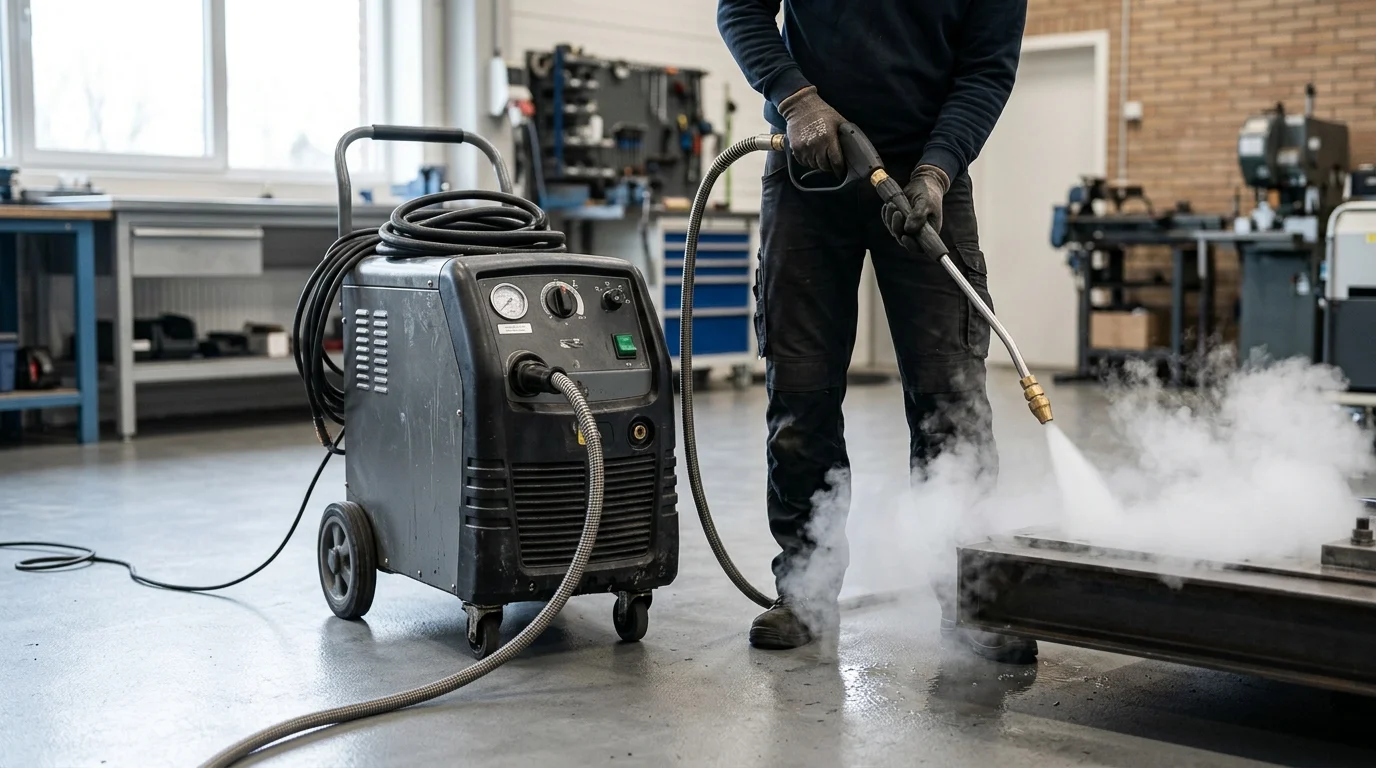
Why High-Temperature Steam Cleaners Matter
The shift toward sustainable facility management has accelerated the adoption of thermal sanitization methods. A High-Temperature Steam Cleaner offers an efficient alternative to traditional solvent-based scrubbing by utilizing superheated water to dissolve stubborn contaminants. This approach addresses both strict environmental compliance mandates and the need for operational efficiency in commercial settings, significantly reducing the volume of toxic wastewater entering municipal systems.
What Defines a High-Temperature Steam Cleaner
To qualify as high-temperature, equipment must heat water significantly above the standard boiling point within a pressurized stainless steel or aluminum boiler. Industrial and commercial units typically generate steam between 120°C and 170°C (248°F to 338°F) at the boiler, delivering vapor to the nozzle at around 100°C to 130°C. This “dry steam” contains only 5% to 6% liquid water by volume, ensuring porous surfaces dry rapidly and preventing mold proliferation.
Boiler capacities often range from 1.5 to 5 liters, requiring heavy-duty heating elements rated between 1500W and 3000W. This high wattage is critical to maintain continuous vapor generation without unacceptable pressure drops during sustained, multi-hour use.
Why Chemical-Free Cleaning Benefits Commercial Operations
Eliminating detergents yields measurable financial and occupational health benefits. Commercial operations can significantly reduce chemical procurement costs annually while completely removing volatile organic compounds (VOCs) from the indoor air quality equation.
This chemical-free approach prevents the buildup of sticky detergent residues that inevitably attract secondary dirt, leading to faster re-soiling. Furthermore, relying on thermal energy rather than harsh caustic solvents minimizes the chemical degradation of sensitive surfaces, extending the lifecycle of expensive commercial flooring, porous tile grout, and woven upholstery.
How Steam Removes Dirt and Grease
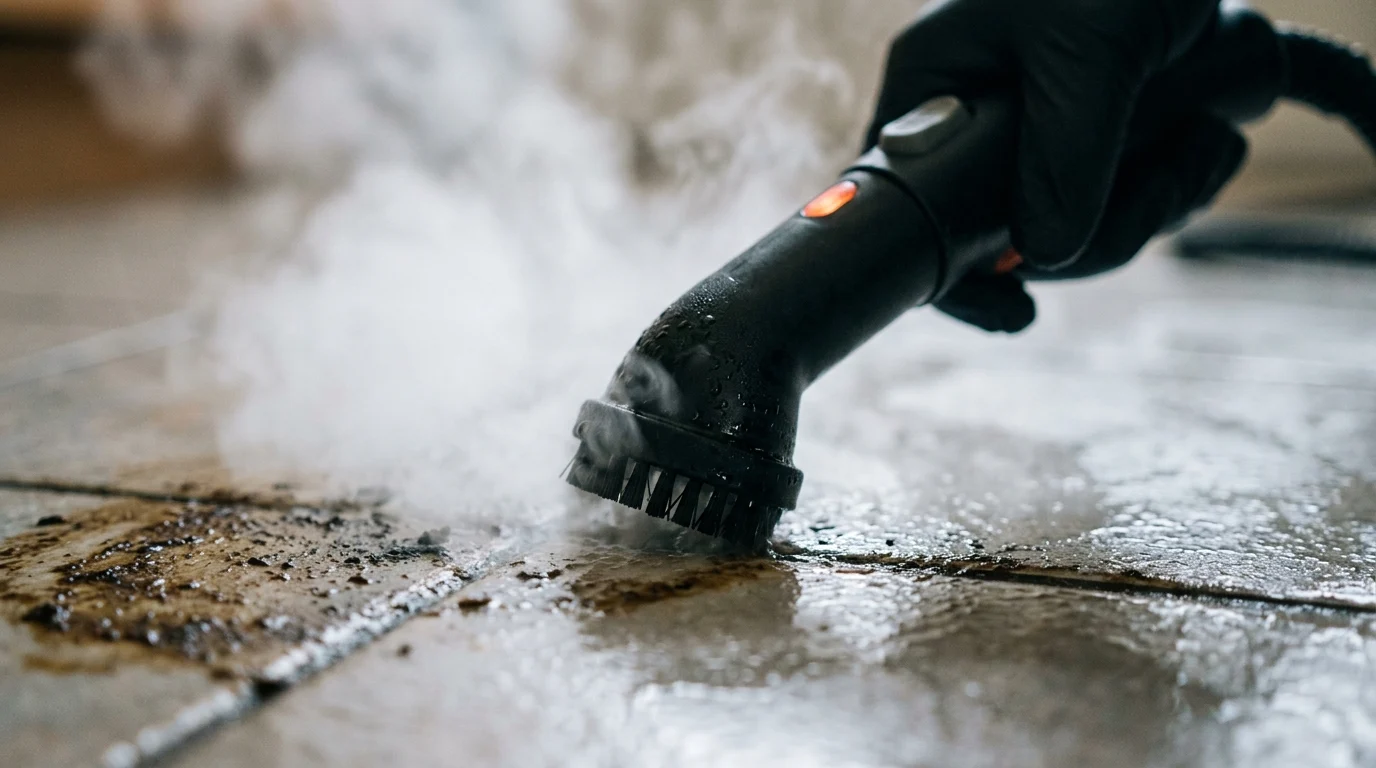
The mechanics of steam cleaning rely strictly on thermodynamics rather than chemical reactions. By applying intense thermal energy and focused mechanical force simultaneously, pressurized vapor disrupts the physical bonds holding dirt, synthetic oils, and biological biofilms to various surfaces.
How Heat, Pressure, and Moisture Break Down Soil
When superheated vapor contacts a soiled surface, the rapid transfer of heat causes microscopic pores to expand, releasing trapped particulates. Simultaneously, the extreme heat melts hardened lipids and greases. Because most organic oils liquefy between 30°C and 50°C, introducing 120°C steam helps emulsify these fats. However, actual cleaning efficacy depends heavily on nozzle distance, dwell time, and the specific soil type.
The pressurized delivery acts as a mechanical agitator, blasting the loosened soil away from the surface. The remarkably low moisture content of the vapor suspends the debris in a microscopic emulsion, allowing it to be easily wiped away with a microfiber cloth or immediately extracted via an integrated vacuum system.
Key Specifications That Affect Cleaning Performance
Cleaning efficacy is governed by the balance of temperature, wattage, and Steam Pressure. A higher boiler pressure, typically measured in bar, determines the exit velocity and penetrative power of the vapor. A standard commercial unit operates at a continuous 4 to 8 bar.
Wattage dictates the thermal recovery time; a 1500W system can heat a 1.6-liter tank rapidly, whereas lower-wattage residential units suffer from rapid pressure loss during continuous spraying, dropping below the effective 3-bar threshold.
| Specification | Light-Duty / Portable | Commercial / Heavy-Duty | Primary Application |
|---|---|---|---|
| Power Output | 1000W – 1500W | 2000W – 3000W+ | Spot cleaning, residential |
| Operating Pressure | 3 – 4 Bar | 6 – 10 Bar | Deep degreasing, grout |
| Boiler Temperature | 120°C – 135°C | 150°C – 180°C | Sanitization, heavy soil |
| Water Capacity | 0.5L – 1.5L | 2.0L – 5.0L+ | Short bursts, tight spaces |
How to Choose the Right Steam Cleaner
Selecting the appropriate thermal cleaning equipment requires balancing the physical demands of the facility with the performance specifications of the hardware. Procurement teams must systematically evaluate the specific nature of the soiling, the total square footage of the space, and the ergonomic constraints faced by the maintenance staff during daily operations.
Steam Cleaning vs. Chemical Cleaning
Understanding the differences between these methods is a crucial first step in selecting the right equipment. Chemical cleaning relies heavily on dwell time—often requiring 5 to 10 minutes for EPA-registered disinfectants and degreasers to chemically break down soils. While steam delivers a sudden heat shock to loosen dirt, true thermal sanitization also requires sustained contact time and temperature rather than just a quick pass.
While chemical agents consume high volumes of water for dilution and post-cleaning rinsing, steam drastically reduces overall water consumption. A high-efficiency unit often utilizes less than 2 liters of water per hour of continuous operation. However, buyers should note that chemical cleaning is still necessary for highly specific inorganic stains, such as heavy rust or calcium mineral scaling, where thermal energy alone cannot break the chemical bonds.
Practical Selection and Safe Use Tips
When buying equipment for a facility, it is critical to match the form factor and boiler type to the specific cleaning job. A compact Portable Steam Cleaner is ideal for detailing vehicle interiors, sanitizing high-touch door handles, or navigating tight spaces where trailing hoses become a hazard.
Conversely, selecting a specialized Steam Cleaner for Bathroom environments might prioritize specialized stiff-bristle grout brushes and continuous-fill boilers. Continuous-fill systems feature dual tanks, allowing operators to add water without depressurizing the main boiler, eliminating the standard cooling downtime required by batch-fill models.
Safety and surface compatibility remain paramount. High-temperature steam can damage unsealed wood, electronics, water-sensitive fabrics, and certain adhesives, so operators must verify surface tolerance before cleaning. Furthermore, staff must receive rigorous training to handle equipment generating vapor at over 120°C to avoid severe thermal burns, ensuring the mandatory use of insulated wands, protective eyewear, and heat-resistant gloves during all operational phases.
Key Takeaways
- Choose a unit that delivers nozzle temperatures near 100°C to 130°C for effective thermal loosening of grease, soil, and biofilm.
- Use dry steam with about 5% to 6% liquid water when cleaning porous surfaces to support faster drying and reduce mold risk.
- Match pressure to the task, with 4 to 8 bar typically suitable for commercial grout, equipment, flooring, and upholstery cleaning.
- Select 1500W to 3000W equipment when sustained operation matters, because higher wattage improves heat recovery during long cleaning cycles.
- Control nozzle distance, dwell time, and wiping or extraction technique because steam performance depends on both heat transfer and soil removal.
Frequently Asked Questions
What makes a steam cleaner “high-temperature”?
A high-temperature steam cleaner heats water under pressure, often producing boiler steam around 120°C to 170°C and delivering vapor near 100°C to 130°C at the nozzle.
How does steam remove grease without detergent?
Heat softens and liquefies oils, while pressurized vapor loosens them from pores, seams, and textured surfaces. The residue can then be wiped away with microfiber or extracted.
Is dry steam safer for porous surfaces?
Yes. Dry steam typically contains only about 5% to 6% liquid water, so surfaces dry faster and are less likely to support mold growth than with heavy wet cleaning.
What pressure is useful for commercial cleaning?
Many commercial steam cleaners operate around 4 to 8 bar. Higher pressure improves vapor velocity and helps dislodge soil from grout, machinery, upholstery, and hard-to-reach areas.
Why does wattage matter in a steam cleaner?
Wattage affects heat-up speed and thermal recovery. Units rated around 1500W to 3000W are better suited for sustained cleaning because they maintain steam output under repeated use.
Post time: Sep-07-2026